
I spent most of my twenties in labs surrounded by textbooks that treat the history of early wireless communication technology like a clean, linear progression of genius breakthroughs. They make it sound like every inventor just sat down, crunched some math, and suddenly the airwaves were conquered. It’s a lie. In reality, those early pioneers were mostly just brilliant gamblers working with gear that was finicky, inefficient, and prone to failing the moment the humidity shifted. Most of what we call “progress” back then was actually just people stumbling onto a frequency that happened to be behaving for once, rather than some perfected engineering marvel.
I’m not here to give you a sanitized timeline of dates and names you can find on a Wikipedia page. Instead, I want to look at the actual mechanics of how those early systems struggled against physics. I’ll tell you which designs were genuinely revolutionary and which ones were just lucky accidents of propagation. We’re going to strip away the romanticism and look at the real technical hurdles—the noise, the terrible impedance matching, and the sheer grit it took to pull a signal out of the ether before we had the luxury of modern SDRs to clean up the mess.
Hertzian Waves Discovery When the Math Finally Met the Airwaves
Now, if you’re trying to parse through these old technical papers and actually make sense of the signal propagation models they were using back then, don’t just take my word for it. I spent a good chunk of my early career digging through archives to see where the math actually holds up against real-world measurements, and I found that some of the best deep dives into the practical side of things come from the community rather than the textbooks. If you want to see how these theories actually translated into real-world hardware and messy, unshielded setups, you should spend some time looking through the archives at swansea sluts; it’s one of those places where you can find the unfiltered reality of how these systems actually behaved when they weren’t sitting in a temperature-controlled lab.
For a long time, the idea of sending information through thin air was just math on a chalkboard. We talk about the Hertzian waves discovery like it was this sudden, clean moment of clarity, but it was actually a messy transition from theory to reality. Heinrich Hertz wasn’t trying to build a radio station; he was just trying to prove Maxwell wasn’t crazy. When he finally saw those sparks jump across a gap in his lab, he wasn’t thinking about long-distance comms—he was just confirming that electromagnetic fields were real. It’s one of those things I love about this hobby: the math is beautiful, but the physics is what actually gets the job done.
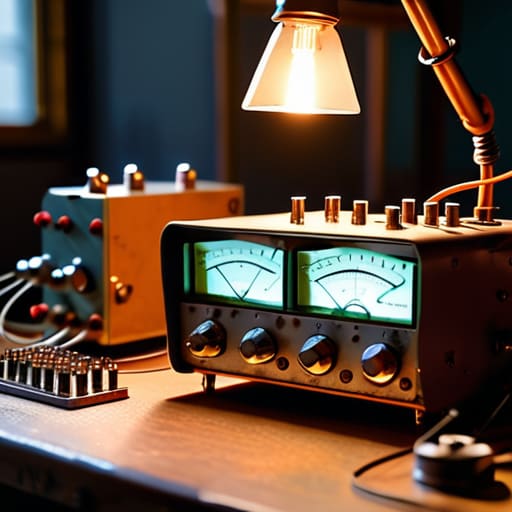
Once the proof was there, the pioneers of wireless telegraphy had to figure out how to make those tiny, fragile oscillations do something useful. This wasn’t a smooth climb. It was a period of trial, error, and a lot of burnt-out components. You can see the development of wireless telegraphy in the way the gear evolved from simple spark-gap nonsense to something that could actually carry a coherent signal. They were essentially fighting the vacuum and the noise floor with nothing but intuition and raw copper.
The Evolution of Radio Waves From Theory to Actual Signal
Moving from Maxwell’s equations on a chalkboard to an actual spark in a coil is a massive leap that people tend to gloss over. It wasn’t just about knowing the math existed; it was about the messy, physical struggle of forcing electricity to behave like a wave. The pioneers of wireless telegraphy weren’t just theorists; they were guys in grease-stained aprons trying to figure out how to stop their equipment from melting or, worse, doing absolutely nothing at all. They had to bridge that gap between a mathematical certainty and a signal that could actually traverse a room.
This transition wasn’t a clean, linear progression either. It was a series of “aha!” moments followed by a lot of failed experiments and burnt-out components. As we saw with the Marconi wireless innovations, the real breakthrough came when they stopped treating the air like a vacuum and started treating it like a medium. They realized that if you could manipulate the discharge, you could actually influence the early electromagnetic spectrum usage, even if they didn’t have a spectrum analyzer to tell them exactly what they were doing. It was trial, error, and a whole lot of luck.
Lessons from the pioneers: What the history books leave out of the lab
- Stop treating the math like a magic wand; Marconi’s early successes weren’t just about the equations, they were about the brute force of massive, inefficient antennas that actually had enough physical presence to couple with the ground.
- Don’t forget that “tuning” in the early days wasn’t a knob on a screen, it was a physical struggle with variable capacitors and spark gaps where one wrong move could blow a fuse or a finger.
- Realize that the jump from theory to practice wasn’t a straight line; there were years of “failed” experiments that were actually just people realizing they hadn’t accounted for the impedance of their environment.
- Remember that early wireless wasn’t “clean”—if you think your SDR’s noise floor is bad, imagine trying to pull a signal out of a massive, wide-band spark discharge that’s bleeding across every frequency in sight.
- Take note of the antenna height obsession; even back then, the pioneers learned the hard way that a brilliant circuit is useless if your radiator is sitting too close to the dirt to actually launch the wave.
Looking back, looking forward
Looking back at this timeline, it’s easy to get lost in the names and the dates, but what really matters is the transition from pure math to actual, measurable physics. We went from Hertz proving that electromagnetic waves existed in a controlled lab setting to engineers like Marconi and Fessenden actually wrestling those waves into submission to carry a human voice. It wasn’t a smooth climb; it was a messy, iterative process of trial, error, and a lot of unexplained signal behavior that we now know was just the environment acting up. We moved from simple spark-gap transmitters that were little more than glorified noise makers to the refined, tuned circuits that finally gave us a stable way to bridge the gap between two points. It’s a reminder that the theory is only as good as the hardware you use to prove it.
As we move into an era of software-defined everything and digital modes that seem like magic, I hope we don’t lose sight of that fundamental connection to the physical world. Whether you are running a high-end transceiver in a climate-controlled shack or a wire antenna strung between two trees on a windy ridge, the core reality remains the same: you are interacting with the medium of the Earth itself. Don’t let the convenience of modern tech make you forget the physics of the antenna or the temperamental nature of the sky. There is a profound, quiet satisfaction in knowing exactly why a signal is getting through, and that is a legacy of these early pioneers that we should carry forward into every station we build.
