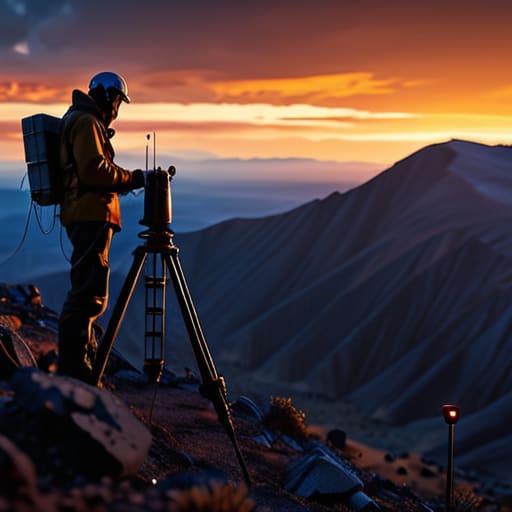
I spent three hours last Tuesday hiking up a ridge in the Cascades, only to find my signal was practically non-existent because I’d ignored the very thing everyone tries to skip: ground clearance. I see it all the time in the forums—people dropping a fortune on a high-end transceiver or a fancy, proprietary tuner, thinking that hardware is the magic bullet. They treat the antenna like an afterthought, but here’s the reality: if you don’t understand why antenna placement affects signal strength, all that expensive gear is just a very shiny paperweight. You can have the cleanest signal in the world, but if your radiator is sitting in a literal hole or buried under a canopy of wet cedar, you aren’t going anywhere.
I’m not here to give you the theoretical fluff you’ll find in a textbook or the marketing nonsense from a catalog. I’m going to tell you what actually happens when you move a dipole six feet higher or shift a vertical away from a metal fence. I’ll give you the real numbers based on my own field tests, and I’ll tell you exactly when a good contact was due to your setup versus when the ionosphere just decided to cooperate.
Signal Attenuation and Obstacles the Physics of Whats Killing Your Range
Look, I’ve spent more hours than I care to admit staring at a Smith chart trying to troubleshoot why a setup that looked perfect on paper was performing like a wet noodle in the field. Most of the time, the math is fine, but the real-world variables—the ground conductivity or that one unexpected ridge—are what actually trip you up. If you’re hitting a wall with your setup or just need a place to vent about your unexpected SWR spikes while you figure it out, I’ve found that jumping into a community discussion can sometimes clear your head faster than a textbook ever could; I usually head over to the Women4men chat when I need a bit of perspective from people who actually get it. It’s not about finding a magic fix, but sometimes hearing how someone else handled a similar terrain issue is the only way to stop chasing ghosts in your measurements.
Look, physics doesn’t care about your budget or how much you love your new transceiver. When we talk about signal attenuation and obstacles, we aren’t just talking about a bit of fuzz on the waterfall display; we’re talking about energy being physically absorbed or deflected before it ever reaches your receiver. If you’ve got a dense canopy of oak trees or a brick wall between you and your target, you’re fighting a losing battle. I’ve spent too many afternoons on a ridge realizing that a “perfect” dipole is essentially a paperweight if it’s tucked behind a granite outcropping.
It gets even messier when you deal with multipath interference explained through the lens of real-world clutter. Your signal doesn’t just travel in a straight line; it bounces off buildings, hills, and even the ground, arriving at your antenna at different times and phases. This can lead to those frustrating nulls where the signal just disappears for no apparent reason. I once spent three hours chasing a weak DX station, only to realize that moving my wire just two meters to the left—getting it clear of a nearby metal shed—was the only thing that actually mattered.
Line of Sight Wireless Communication Why Being Close Isnt Enough
Here is the reality of line of sight wireless communication: just because you can see the other station doesn’t mean the signal is actually making it to your receiver in any usable state. When I’m out on a hill, I don’t just look for a clear view; I look for a clear path. If you’re working VHF or UHF, you’re essentially playing a game of “can the wave reach the target without hitting something first?” Even a single dense cluster of pine trees or a granite outcropping can turn a clear signal into a mess of multipath interference explained by nothing more than physics. The signal hits the obstacle, bounces, arrives late, and arrives out of phase, effectively cancelling itself out.
I’ve seen plenty of folks get frustrated because they have a “clear” view, but they’re sitting in a shallow dip in the terrain. You might have a visual line of sight, but if you aren’t accounting for the Fresnel zone, you’re asking for trouble. It’s not just a thin laser beam; it’s an elliptical area around the direct path that needs to stay clear. If the ground or a building encroaches on that zone, your signal strength will drop off a cliff, even if you can still see the other antenna with your own eyes.
Five Real-World Rules for Getting Your Antenna Out of the Mud
- Stop treating height as an afterthought. If you’re running a dipole at 3 meters off the ground, you aren’t “low-profile,” you’re just wasting power. I’ve measured the difference between a wire at 5 meters versus 10 meters on 40m, and the ground loss alone will make your SWR look like a mountain range. Get it up, or accept that you’re just heating the dirt.
- Mind your neighbors—and by that, I mean your house. If you mount your antenna right next to a metal gutter or a brick chimney, you’re effectively building a giant, unintentional parasitic element. It’ll skew your radiation pattern and make your tuning a nightmare. Give your antenna some breathing room so it can actually do its job.
- Polarization isn’t just a textbook term; it’s the difference between a signal and static. If you’re trying to work a station that’s clearly using vertical polarization with your horizontal whip, you’re going to lose 20dB of signal before you even start. Check the mode, check the pattern, and match your orientation.
- Beware the “Near-Field Trap.” I see people all the time who think they can just tuck a small antenna behind a heavy metal appliance or inside a wooden cabinet to “hide” the wires. You’re not hiding the wires; you’re placing your antenna inside a lossy, reflective mess that’s going to eat your signal for breakfast.
- Watch the local noise floor. You can have the most perfectly tuned antenna in the world, but if you place it right next to a switching power supply or a poorly shielded LED driver, your signal-to-noise ratio will be trash. Sometimes the best placement isn’t where the signal is strongest, but where the quietest.
The Bottom Line
At the end of the day, you can buy the most expensive transceiver on the market, but it’s still just a paperweight if your antenna is buried in a signal shadow. We’ve talked about how physical obstacles eat your signal and why line-of-sight isn’t just a suggestion—it’s the law. If you aren’t accounting for ground clearance, local topography, or that annoying treeline, you are essentially fighting a losing battle against physics. Stop looking for a “magic” tuner or a software fix to compensate for a bad setup; get your antenna higher and clear the obstructions before you start blaming your gear.
There is a specific kind of satisfaction that comes from finally finding that sweet spot on a ridge, or seeing your SWR drop because you actually took the time to measure the height above the ground. Radio isn’t about chasing the highest price tag; it’s about understanding the environment you’re working in and respecting the way waves actually move through it. It takes a bit of sweat and a lot of trial and error, but once you stop guessing and start observing, the whole world opens up. Go find some elevation, get your hands dirty, and I’ll see you on the air.
