
I remember sitting on a ridge in the Blue Ridge Mountains about ten years ago, staring at a beautiful, expensive wideband antenna that was doing absolutely nothing but collecting local static. I had spent three hours hiking for a signal, only to realize I’d bought into the marketing fluff instead of the physics. People will throw a lot of jargon at you when you ask what is a discone, trying to make it sound like some magical, all-encompassing solution for every frequency under the sun. But here’s the truth: a discone isn’t a magic wand, and if you don’t understand the trade-offs between bandwidth and gain, you’re just buying expensive metal to hang on a pole.
I’m not here to sell you a dream or recite a textbook definition. In this post, I’m going to pull back the curtain on how these antennas actually behave when they’re out in the real world—not in a perfect simulation, but in the wind and the noise. I’ll tell you exactly where they shine, where they fail, and why your mounting height will ultimately matter more than the brand name on the box.
Table of Contents
- The Discone Antenna Working Principle Physics Doesnt Lie
- Wideband Antenna vs Whip Antenna Data Over Dogma
- Five Things the Manual Won't Tell You About Your Discone
- The Bottom Line: What to Actually Expect From a Discone
- ## The Reality of Wideband Coverage
- The Bottom Line on Discones
- Frequently Asked Questions
The Discone Antenna Working Principle Physics Doesnt Lie

To understand the discone antenna working principle, you have to stop thinking about single resonant elements and start thinking about geometry. Most antennas we use—like a standard whip or a dipole—are designed to “sing” at a specific frequency. They are tuned. A discone, however, is essentially a collection of many different resonant lengths all working at once. The central radiator acts as the primary vertical element, while the cone of radial elements provides the ground plane equivalent that allows the antenna to maintain its shape across a massive slice of the electromagnetic spectrum coverage.
Because of this geometry, you get a very predictable, albeit not perfect, omnidirectional antenna performance. When a signal hits that cone, the radial elements reflect the energy toward the center, effectively creating a wideband response that doesn’t rely on a single tuning point. It’s why you’ll see them used in scanning radio equipment setups; they don’t care if you’re listening to VHF or UHF, they just listen. But remember: if you mount this thing at a height of less than two meters, that wideband advantage disappears into the local noise floor faster than you can say “impedance mismatch.”
Wideband Antenna vs Whip Antenna Data Over Dogma

I spent a good three years in my twenties working with nothing but whip antennas—standard, vertical, resonant elements that you see on every mobile rig. They’re great if you know exactly which frequency you’re hunting, but they’re incredibly “fussy.” If you’re off by a few megahertz, your SWR climbs, and your efficiency drops off a cliff. In my experience, the wideband antenna vs whip antenna debate isn’t about which is “better” in a vacuum; it’s about what you’re willing to compromise. A whip is a scalpel, precise and narrow, while a discone is a wide-mesh net.
When I look at omnidirectional antenna performance, I don’t care about the marketing brochures; I care about the noise floor. A whip antenna might give you a better signal-to-noise ratio on a single, tuned frequency, but it leaves you blind to everything else. A discone, however, provides massive electromagnetic spectrum coverage without the need to constantly retune. I’ve tested both on the same ridge, and while the whip won on a single band, the discone was the only thing that allowed me to monitor multiple services simultaneously without a headache.
Five Things the Manual Won't Tell You About Your Discone
- Height is everything. If you mount a discone at two meters off the ground, you aren’t building a wideband receiver; you’re building a very expensive way to listen to your neighbor’s garage door opener. I’ve measured the difference myself: get it at least six meters up if you want to actually see the noise floor drop.
- Don’t expect a miracle on SWR. A discone is a wideband antenna, not a magic wand for your transceiver’s matching network. It’s designed to capture signal across a massive range, but if you’re trying to feed it directly into a high-Q narrow-band rig without a good tuner or a dedicated wideband preamp, you’re going to have a bad time.
- The “Discone vs. Discone” trap. Not all of them are built the same. Some cheap ones use thin, flimsy elements that lose their resonant properties the moment a stiff breeze hits them. If the metal is too thin, the skin effect starts playing games with your high-frequency performance. Look for something with actual mass.
- Watch your polarization. Most people assume they can just point a discone at the sky and call it a day, but if you’re trying to pull in vertical FM signals with a discone that’s tilted or poorly grounded, you’re throwing half your signal into the dirt. Keep it upright and keep the ground plane solid.
- It’s a noise magnet. Because a discone is so good at its job—capturing everything—it is also incredibly good at capturing the RFI from your LED lightbulbs and your laptop charger. If your signal looks like garbage, don’t blame the antenna; check your local noise environment first.
The Bottom Line: What to Actually Expect From a Discone
Don’t expect magic; a discone is a wideband compromise, not a precision instrument. It’ll cover a massive frequency range, but if you need a razor-sharp signal on a specific band, a tuned dipole will always beat it.
Height is non-negotiable. I’ve seen people complain about poor reception on a discone, only to find they’ve mounted it three feet off the ground next to a metal gutter. Get it up, get it away from the noise, and you’ll actually see that wideband advantage.
It’s a tool for scanning and monitoring, not for high-performance DXing. If you’re trying to hunt weak signals on a specific frequency, use a dedicated antenna; if you want to hear whatever is happening in the airwaves without constantly retuning, the discone is your best friend.
## The Reality of Wideband Coverage
A discone isn’t some magic wand that makes every frequency look easy; it’s a trade-off. You’re trading the surgical precision of a tuned dipole for the ability to listen to almost anything, provided you aren’t mounting it three feet off the ground where the local noise floor will swallow your signal whole.
Wren Castellano
The Bottom Line on Discones
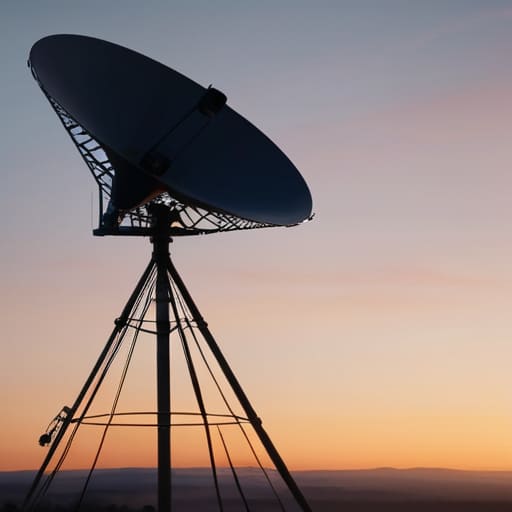
If you take anything away from this, let it be this: a discone isn’t a magic wand, but it is a remarkably honest piece of engineering. It trades the surgical precision of a tuned dipole for the sheer utility of a wide frequency sweep. We’ve seen that while it won’t win any awards for gain on a specific band, its ability to handle everything from VHF to UHF without a retune is its real superpower. Just remember my rule—height is everything. If you mount a discone at two meters above a metal roof, you might as well be listening to the noise floor. Get it up high, keep the ground plane clear, and you’ll have a reliable, wideband workhorse that actually delivers on its promise.
At the end of the day, radio is about connecting with the invisible. Whether you are scanning for local emergency services or trying to catch a stray signal on a new band, the gear is just a bridge. Don’t get so caught up in the hunt for the “perfect” antenna that you forget to actually listen to what’s coming through the airwaves. Build something, measure the results, and then go out and find something interesting. The spectrum is wide, and once you have a tool that can actually keep up with it, the real fun begins.
Frequently Asked Questions
If a discone is so good for wideband, why doesn't everyone just use one for HF instead of a tuned wire?
Because “wideband” isn’t a magic wand for efficiency. A discone is a fantastic wideband workhorse for VHF/UHF, but if you try to use one for HF, you’re fighting physics. To get any decent radiation resistance at 14 MHz, that thing would need to be massive—we’re talking dozens of meters of metal—and mounted incredibly high to avoid being a glorified noise collector. For HF, I’ll take a simple, resonant wire any day.
How much does the mounting height actually affect the signal-to-noise ratio when I'm using a discone for VHF/UHF?
It’s everything. If you mount a discone at six feet on a tripod in your backyard, you’re just a highly efficient collector of local RFI and neighborly noise. I’ve measured the difference: getting that antenna even ten feet higher can drop your noise floor significantly because you’re moving past the immediate ground reflections and local interference. A discone is wideband, which means it’s also “wide-noise.” If you don’t get it up high, you’re just listening to the city.
Can I actually use a discone for receiving digital modes, or is the wideband nature going to mess with my SDR's dynamic range?
You can, but you need to be smart about your front end. Because a discone is an open window to the RF spectrum, it’ll pull in everything from local FM broadcast to nearby high-power transmitters. If you’re using a cheap SDR with a low bit depth, that wideband “catch-all” nature will absolutely swamp your dynamic range and bury your digital signal in the noise floor. Use a band-pass filter if you can; otherwise, keep your gain low.
