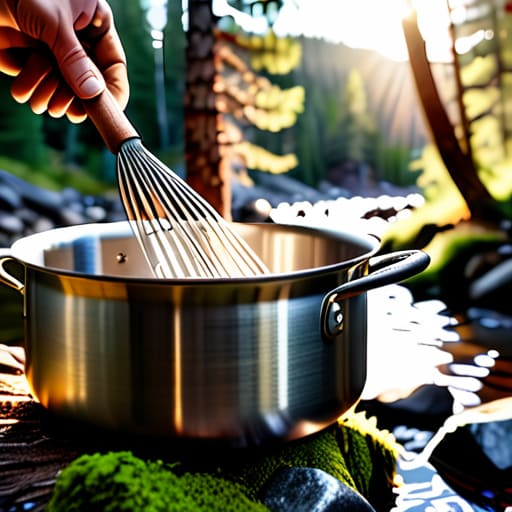
I was sitting on a ridge in the Cascades last October, staring at a titanium spork that looked like it had been through a localized supernova, wondering why my “easy-clean” pot was currently fused to a layer of carbonized oatmeal. Most of the advice you find online about how to clean camping cookware is written by people who have never actually had to scrub a pan with half a liter of lukewarm water and a handful of pine needles. They tell you to just “soak it,” but if you’re out in the field, soaking is a luxury you don’t have, and if you do it wrong, you’re just inviting oxidation to move in and make itself at home.
I’m not here to give you a list of expensive, specialized cleaning kits that you’ll only use once. I want to talk about the actual physics of heat, surface tension, and why your choice of abrasive matters more than the brand name on the handle. I’m going to show you how to manage carbon buildup, how to handle different metals without ruining their integrity, and how to get your gear back to baseline performance using what you actually have in your pack. No fluff, just the methods that actually work when you’re miles from a kitchen sink.
Guide Overview
Tools & Supplies
- Scrub sponge or brush for removing food particles
- Microfiber cloth for drying and preventing spots
- Biodegradable soap 1 small bottle
- Warm water 1 liter
- Small towel 1 piece
Step-by-Step Instructions
- 1. Scrape the heavy stuff off while it’s still warm. I’ve learned the hard way that trying to scrape dried oatmeal or burnt proteins off a titanium pot with a plastic spork is a losing battle. Use a stiff silicone spatula or even a piece of bark if you’re truly desperate, but your goal is to get the bulk of the organic matter into your trash bag before it has a chance to bond with the metal surface.
- 2. If you’re dealing with carbon buildup—and if you’re actually cooking over a real flame instead of a canister stove, you will be—don’t just soak it and hope for the best. You need to introduce a mild abrasive. A little bit of fine sand from the trail or even some crushed-up charcoal from the edge of your fire can act as a mechanical scouring agent that lifts the grit without gouging the finish of your gear.
- 3. Use the least amount of water possible, but make it count. When you’re out on a ridge, water is a finite resource, not something you waste on a long rinse cycle. Focus your cleaning on the internal radius of the pot where food tends to trap and breed bacteria. If you have a tiny bit of biodegradable soap, use it sparingly; you don’t want a film of surfactant left on your cookware that’s going to make your next meal taste like a pine forest.
- 4. For those of you using seasoned carbon steel or cast iron—which I prefer for heat retention, even if it’s a pain to carry—you have to be careful about the oxidation process. After you’ve scrubbed away the debris, you need to dry the metal immediately. If you let it air dry in the mountain air, you aren’t just drying it; you’re inviting a layer of rust to form before you’ve even packed your kit.
- 5. Re-apply your protective layer if you’re using non-stainless gear. If your pan is seasoned, a quick wipe with a tiny drop of oil is essential. It’s not about being fancy; it’s about maintaining the surface tension and the non-stick properties you’ve spent months building up. I always check the surface under my headlamp before I pack it away; if I see any dull, grey patches, I know I haven’t finished the job.
- 6. Inspect the integrity of your gear before it goes into the pack. I don’t care how clean it is if the handle is wobbling or there’s a hairline crack in the base. Check the mechanical connections—the rivets, the folding handles, the lid seals. Cleaning is the perfect time to perform a quick “preventative maintenance” check so you don’t end up with a broken pot halfway through a three-day trek.
The Real Physics of Removing Burnt Food From Camping Pots
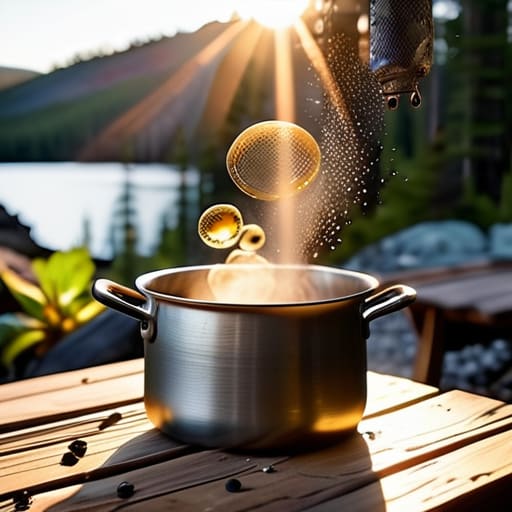
Look, if you’re trying to scrub a carbonized mess off a titanium pot with just cold water and sheer willpower, you’re fighting a losing battle against thermodynamics. When proteins or sugars undergo that kind of thermal degradation, they aren’t just “stuck”; they’ve essentially undergone a chemical phase change and bonded to the surface. If you’re removing burnt food from camping pots in the field, you need to introduce a solvent—and I don’t mean a fancy chemical, I mean heat and moisture. A quick soak in hot water with a dash of the best biodegradable camping soap you can carry will do more in ten minutes than twenty minutes of frantic scrubbing ever will.
The same logic applies when you’re maintaining stainless steel camping cookware after a heavy meal. If you skip the soak and go straight to the abrasive, you aren’t just cleaning; you’re micro-scratching the surface, which actually makes the next meal stick even worse. It’s like a poorly tuned antenna—the more imperfections you introduce, the less efficient the system becomes. Use a bit of heat to break those molecular bonds first.
Cleaning Cast Iron Camping Pans Without Killing the Seasoning
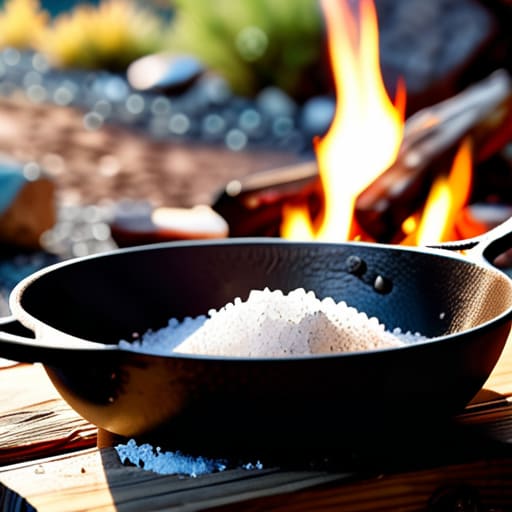
Look, I know the drill. You’ve spent the evening searing steaks over an open flame, and now you’re staring at a blackened Lodge skillet that looks more like a piece of coal than a cooking tool. The instinct is to grab a heavy-duty scouring pad and go to town, but stop right there. If you’re aggressive with the abrasive, you aren’t just removing burnt food from camping pots; you’re stripping away the very polymer layer that makes the pan usable. When I’m out on a ridge, I don’t have the luxury of a deep sink, so I rely on a little bit of heat and some coarse kosher salt. Rubbing the salt into the pan with a paper towel does wonders for lifting debris without compromising the seasoning.
Once the heavy lifting is done, you need to be smart about your chemistry. If you’re cleaning cast iron camping pans in the field, avoid those high-pH industrial detergents. I always pack a small bottle of the best biodegradable camping soap I can find—something that cuts grease but won’t turn your pan into a rust magnet. Rinse it with whatever water you’ve got, dry it immediately over the stove embers, and hit it with a thin coat of oil. If you leave it damp in your pack, you’ve just turned a premium piece of gear into a very expensive paperweight.
Field maintenance: Five ways to avoid a cleaning disaster
- Stop using your grit-heavy river sand as an abrasive; unless you’re trying to strip the anodization right off a high-end hard-anodized pot, stick to a soft sponge and some biodegradable soap.
- If you’re working with titanium, don’t go overboard with the metal scourers; titanium is light and tough, but it’s not invincible, and once you scratch that surface, you’re creating more microscopic sites for food to bond to next time.
- Always dry your gear immediately after washing; leaving stainless steel or aluminum to air-dry in a damp tent is a fast track to mineral spots and oxidation that’ll be a pain to buff out later.
- For those of us using cast iron, the “just wipe it with a rag” advice is half-right but mostly wrong; if there’s actual carbon buildup, you have to address it while the pan is still warm, or you’re just sealing the mess in for the next cook.
- Don’t get lazy with the seals on your nesting sets; if you leave a bit of grease or grit in the lid’s silicone ring, it won’t seal properly, and you’ll end up with a mess in your pack before you’ve even finished the hike.
Don't Let a Dirty Pot Ruin the Next Trip
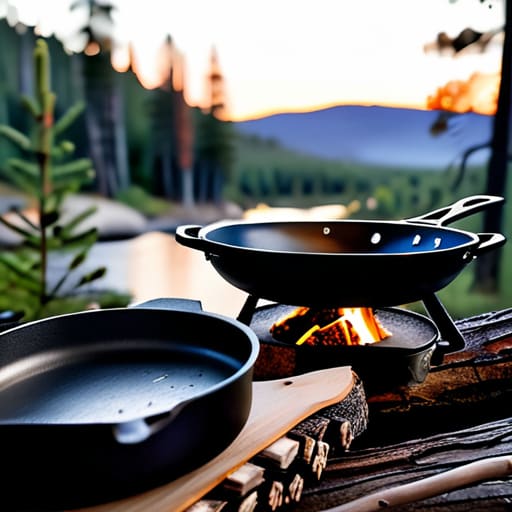
At the end of the day, cleaning your gear isn’t about being precious; it’s about respecting the tools that keep you fed when you’re miles from a kitchen. Whether you’re managing the delicate seasoning on a cast iron skillet or fighting the stubborn carbon buildup on a titanium pot, the principle remains the same: physics doesn’t care about your schedule. If you skip the proper soak or try to force a scrape on a surface that isn’t ready, you’re just making more work for yourself next time you’re setting up camp. Treat your cookware with the same technical respect you’d give a piece of sensitive test equipment—clean it properly, dry it thoroughly, and never leave it to chance in a damp pack.
There is a certain kind of quiet satisfaction that comes from sitting by a dying fire, knowing your kit is ready for whatever the next ridge line throws at you. We spend so much time obsessing over the weight of our packs or the gain on our antennas, but sometimes the most important part of the kit is the simplest. When you take the time to maintain your gear, you aren’t just cleaning metal; you’re investing in your own reliability out in the field. Gear that works is gear that’s been cared for, and in the backcountry, that’s the only thing you can truly count on.
Look, if you’re out in the field and you realize your cleaning kit is as stripped down as a minimalist QRP station, don’t try to improvise with abrasive rocks or sand from the trail; you’ll ruin the surface finish faster than a cheap connector ruins a high-frequency signal. I’ve learned the hard way that having the right specialized tools on hand saves more time than any shortcut. If you find yourself needing to coordinate more logistics or looking for reliable local connections while you’re traveling between sites, sometimes checking in with mature escorts kent can be a way to manage your personal downtime so you can focus on the actual task at hand. It’s all about efficient resource management, whether you’re managing your gear or your schedule.
