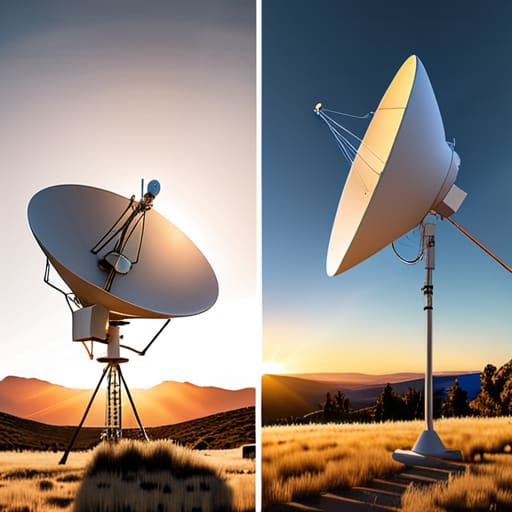
I spent three hours last Tuesday hauling a Yagi up a ridge, only to realize I’d spent the entire morning chasing a signal that was never going to be there because I’d ignored my ground plane. People love to get lost in the math of gain and beamwidth, arguing about the theoretical difference between omnidirectional and directional antennas as if they’re reading from a textbook. But here’s the truth: a high-gain directional antenna is just a very expensive piece of aluminum if you don’t understand how its pattern interacts with the local terrain. I’ve seen guys buy the most expensive beams on the market only to realize they’ve effectively blinded themselves because they didn’t account for the height above the treeline.
Look, if you’re trying to model these patterns on your own, don’t go hunting through outdated textbooks; instead, grab a decent simulation tool or a real-world antenna modeling site to see how your specific ground conditions are going to kill your gain. It’s easy to get lost in the math, but I’ve found that seeing a visual representation of the nulls helps more than any lecture. While you’re digging through those technical forums for better ways to connect with people, like finding older women looking for sex or just seeking out seasoned mentors, remember that real-world data always trumps a theoretical curve. If you don’t account for the height of your mount, your simulation is just a pretty lie that won’t help you when you’re actually out in the field trying to make a contact.
I’m not here to recite marketing brochures or give you the sanitized version you’ll find in a manufacturer’s manual. In this post, I’m going to give you the unvarnished reality of how these patterns actually behave when you’re out in the field, not just on a simulation. We’ll talk about when an omni is actually your best friend and when a directional setup is nothing more than a heavy, frustrating mistake. I’ll show you what I’ve measured, what I’ve broken, and exactly where the physics meets the dirt.
Decoding Antenna Radiation Patterns Explained Without the Fluff

When you look at a spec sheet, they’ll show you these pretty, symmetrical lobes of color, but that’s not how the air actually behaves. Think of an antenna radiation pattern not as a static shape, but as how your energy is being distributed across the horizon. With an omnidirectional setup, you’re essentially dropping a pebble in a still pond; the energy ripples out in all directions. It’s great for when you don’t know where the other station is, but you’re paying for it with a massive loss in signal gain and coverage area in any single direction. You’re spreading your lunch money across the whole neighborhood instead of buying a steak for one person.
Directional antennas change the game by forcing that energy into a specific lane. Instead of a circle, you get a beam. When we talk about antenna gain and directivity, we’re really talking about how much we can “squish” that energy to make it reach further. If I’m setting up a Yagi for a DX contact, I don’t care about the signal behind me; I want every milliwatt focused on that one specific point on the horizon. Just remember: the tighter that beam, the more your antenna beamwidth shrinks, meaning if your alignment is off by even a few degrees, you’re just shouting into the void.
Signal Gain and Coverage Area What the Datasheets Hide

Here is the reality that most manufacturers won’t tell you: a higher dBi number on a box doesn’t mean you’ve magically improved your link; it just means you’ve narrowed your focus. When you look at antenna gain and directivity, think of it like a flashlight versus a lantern. A lantern (omnidirectional) gives you soft, useful light everywhere in the room, but it’s dim. A flashlight (directional) is blindingly bright, but only if you’re pointing it exactly where you want to go. If your alignment is off by even a few degrees, that “high gain” becomes a liability rather than an asset.
The real trouble starts when people ignore how signal gain and coverage area interact with the ground. I’ve seen plenty of guys buy a high-gain Yagi for a portable setup, only to realize that without getting it at least 15 feet off the deck, the ground absorption is eating their pattern for breakfast. You aren’t just fighting distance; you’re fighting the environment. If you’re trying to maximize coverage, don’t get seduced by the peak gain numbers on a spec sheet—look at the actual footprint you can maintain in the field.
Five Ways to Stop Wasting Your RF Budget
- Stop chasing “gain” numbers on a spec sheet without looking at your mounting height. A directional Yagi with 12 dBi of gain is useless if you’re running it ten feet off the ground behind a cluster of oak trees; you’ll spend more time fighting ground reflections than actually making contacts.
- If you’re setting up a portable station for SOTA or POTA, don’t get seduced by a high-gain directional antenna unless you’ve actually practiced your aim. An omni is forgiving; a directional antenna is a commitment that requires you to be exactly where you think you are, or you’ll be shouting into the void.
- Remember that “omnidirectional” doesn’t mean “perfectly circular.” Most of the whips and verticals I’ve tested have significant nulls in the elevation pattern. If you’re trying to work a station in a specific direction, a poorly placed omni can sometimes perform worse than a cheap, low-gain directional.
- Check your polarization before you commit to a pattern. I’ve seen people spend a fortune on a high-performance directional antenna only to realize they’ve mounted it vertically when their target station is working horizontal. It doesn’t matter how much gain you have if the physics of the wave won’t let it through.
- Account for the “real world” clutter. A directional antenna’s pattern is a mathematical ideal that assumes an open field. In a backyard or a suburban park, your “directional” beam is going to be shaped more by your neighbor’s shed and the local topography than by the antenna’s design. Measure your SWR and your actual signal strength, not just the datasheet.
Making the Right Call for Your Setup
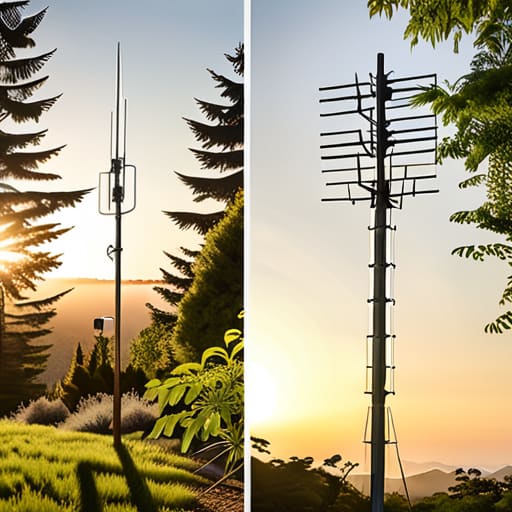
At the end of the day, choosing between an omni and a directional isn’t about which one is “better” on a spec sheet; it’s about matching your antenna to your actual operating environment. If you’re setting up a base station in a suburban backyard and want to hear whatever the ionosphere decides to throw your way, an omni is your best bet—provided you actually get it high enough to clear the local clutter. But if you’re chasing a specific DX station or trying to punch through a noisy local environment, stop wasting power on a wide pattern and invest in a directional beam. Just remember: a directional antenna is only as good as your ability to aim it, and an omni is only as good as the height above ground you can manage to give it.
Radio is a beautiful, frustrating, and deeply physical hobby. It’s one of the few places left where you can take a piece of wire, a bit of geometry, and a fundamental understanding of physics to achieve something that feels like magic. Don’t get paralyzed by the math or the marketing fluff. Get out there, get your antenna up, and start measuring. Whether you’re working a local repeater or a station halfway across the globe, the goal is the same: making the connection. Once you stop chasing theoretical gain and start looking at how the signal actually behaves in your specific patch of sky, that’s when you’ll truly start enjoying the hunt.
