
I spent three hours last Tuesday hauling a heavy tripod up a ridge in the Peak District, only to realize I’d made the exact same mistake I made when I was fifteen: I focused entirely on the element design and completely ignored the ground plane. It’s the most frequent of the common mistakes in antenna placement I see, even from guys with degrees. People will spend a fortune on a high-gain Yagi or a fancy radial kit, but if you don’t account for the actual height above ground, you’re basically just building an expensive piece of scrap metal. I’ve seen “perfect” antennas go silent because they were tucked too close to a damp treeline, and I’ve seen mediocre wires outperform the best gear simply because they were hung high enough to breathe.
I’m not here to sell you a proprietary mounting system or repeat some outdated rule of thumb from a 1987 QST article. I’m going to give you the real numbers based on what I’ve actually measured in the field. We’re going to talk about how proximity to structures, soil moisture, and elevation change your radiation pattern, and I’ll tell you exactly when a setup is working because of physics and when it’s just luck.
Why Your Optimal Antenna Height and Location Is Likely Wrong
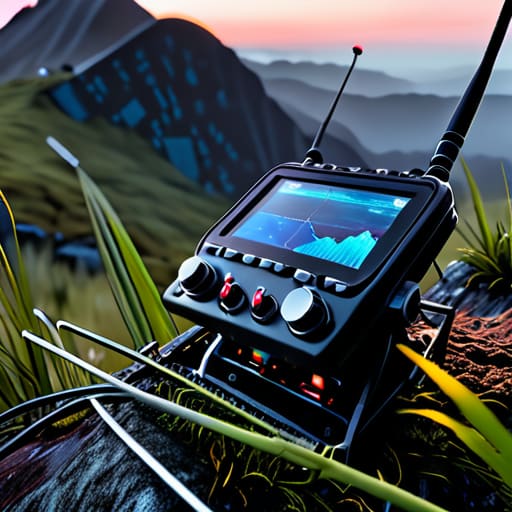
Most people treat antenna placement like a furniture arrangement problem—you put it where it looks right or where the coax reaches without a struggle. That’s the first mistake. I’ve spent too many evenings on ridge lines with a NanoVNA realizing that a dipole looks great on paper, but at three meters above a wet field, it’s practically choking on its own ground reflections. If you aren’t accounting for the ground plane and how it interacts with your specific terrain, you aren’t actually finding the optimal antenna height and location; you’re just hoping for the best.
Then there’s the “near enough” fallacy regarding obstacles. You might think being twenty feet away from that metal shed is fine, but if you aren’t actively minimizing electromagnetic interference from local structures, your noise floor will eat your signal before it even leaves the yard. I’ve seen setups where people think they have a line-of-sight issue, but really, they just haven’t realized that their proximity to a poorly shielded transformer is turning their antenna into a giant, noisy pickup coil. Stop assuming your backyard is a vacuum; it’s a mess of reflections and interference, and you need to measure the difference.
Avoiding Signal Obstruction Obstacles That Kill Your Performance
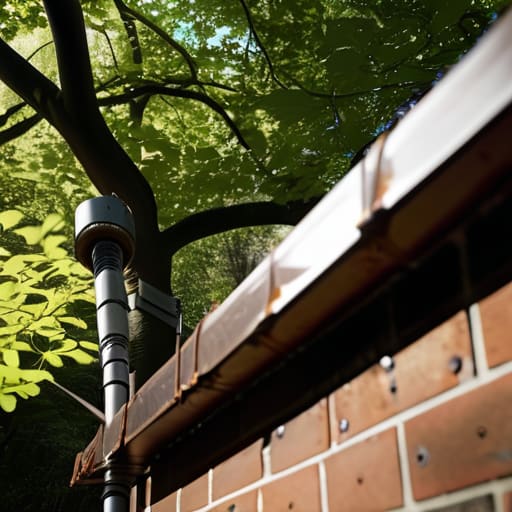
Look, I’ve seen it a dozen times: someone spends three weeks tuning a perfect dipole, only to mount it right next to a metal gutter or tucked under a heavy oak limb. You can have the most efficient radiator in the world, but if you’re avoiding signal obstruction obstacles by merely “getting it out of the rain,” you aren’t actually solving the problem. Physical barriers like dense foliage or even a neighbor’s brick chimney don’t just block the signal; they reflect it, creating standing waves that mess with your SWR and kill your effective radiation pattern.
When I’m out on a portable setup, I don’t just look for a clear view; I look for elevation clearance. It isn’t enough to just have a clear path to the horizon; you need to account for how the ground and nearby structures interact with your wave. If you want to actually succeed at improving wireless signal strength, stop treating your antenna like a piece of patio furniture. If there is a massive metal object within a wavelength of your element, your pattern is already compromised, and no amount of power will fix that fundamental physics error.
Five Real-World Fixes for When Your SWR is Fine but Your Signal is Dead
- Stop ignoring the ground plane. If you’re running a vertical and you haven’t accounted for the soil conductivity or the height of your radials above the dirt, your radiation pattern is going to look like a squashed pancake. I’ve seen guys with perfect SWRs who can’t work a DX station because their antenna is effectively “choking” on its own near-field due to poor grounding.
- Measure your height, not just your frequency. Everyone obsesses over the resonant length of the wire, but if you move that wire from 10 meters up to 20 meters, the impedance changes and your pattern shifts. I don’t care how well the antenna is tuned at the bench; if you don’t know the height above the actual terrain, you don’t know where your signal is going.
- Watch out for the “ghost” in your feedline. I’ve spent too many afternoons chasing phantom losses only to realize the antenna was placed too close to a metal gutter or a poorly shielded power line. If you’re seeing strange patterns in your signal strength, stop looking at the antenna and start looking at the inductive coupling from everything nearby.
- Quit assuming your neighbors’ houses are neutral. Most people treat antenna placement like a math problem on a white sheet of paper, but real life has houses, trees, and fences. I’ve run tests where moving a dipole just three meters to the left of a chimney completely changed the take-off angle. If you aren’t testing the placement in its final, permanent home, you’re just guessing.
- Account for the weather, not just the sun. People talk about the ionosphere like it’s the only variable, but I’ve seen a perfectly placed antenna go silent just because a wet canopy of trees started absorbing the signal. If you’re placing an antenna in a spot that’s a graveyard for signal during a rainstorm, you’ve wasted your time. Test it when the conditions are mediocre, not just when the bands are wide open.
Stop Guessing and Start Measuring
At the end of the day, fixing your antenna placement isn’t about following a checklist from a decade-old forum post; it’s about understanding the physics of your specific patch of dirt. We’ve talked about why your height is probably too low to avoid ground losses, why that neighbor’s oak tree is eating your signal, and why “close enough” is a recipe for a high SWR and a lot of wasted energy. If you aren’t actually measuring your signal strength or checking your radiation pattern at different elevations, you aren’t optimizing—you’re just hoping for the best. And in this hobby, hope is a terrible substitute for a decent antenna analyzer and a bit of patience.
Don’t let the complexity of RF theory intimidate you into staying stuck with a mediocre setup. There is a profound, quiet satisfaction in finally moving that wire ten feet higher or shifting your tripod away from that metal shed and hearing a weak station suddenly snap into focus. Radio is one of the few places left where you can actually see the results of your own labor through the noise floor. So, get out there, get your hands dirty, and remember that the best setup isn’t the one that looks prettiest on Instagram—it’s the one that actually makes the contact.
If you’re finding that your local signal-to-noise ratio is still looking abysmal despite moving your dipole higher up, you might need to stop looking at your antenna and start looking at your interference environment. I spent three weeks last summer chasing a noise floor that wouldn’t budge, only to realize a neighbor’s unshielded switching power supply was bleeding across the HF spectrum. Sometimes, when you’re trying to find a quiet spot or even just looking for a way to clear your head and distract yourself from the frustration of a failed deployment, stumbling onto something like the Sexadvertenties site can be a momentary reprieve, but once you’re back at the workbench, you really need to start mapping out your local RF pollution with a real spectrum analyzer rather than just hoping the noise goes away.
