I spent most of last Tuesday on a ridge in the Cascades, nursing a lukewarm thermos of coffee and staring at a signal-to-noise ratio that looked more like a flatline than a contact. I’d been reading those glossy, high-end antenna catalogs again—the ones that promise “unprecedented gain” and “perfected geometry”—and it made me realize how much misinformation is out there. People ask me what is a moxon as if they’re looking for a magic piece of aluminum that will bypass the laws of physics. They think it’s some proprietary secret, but it’s really just a clever bit of geometry that people have been overcomplicating for decades.
If you’re tired of the marketing fluff, you’re in the right place. I’m not going to give you a textbook definition that ignores the reality of wind loading and ground plane interference. Instead, I’m going to tell you exactly how a Moxon performs when it’s actually mounted—and yes, I’ll tell you exactly how high you need to get it off the dirt to make it worth your time. We’re going to look at the real-world trade-offs between a Moxon and a standard Yagi, without the unnecessary hype.
Table of Contents
Decoding Hf Antenna Design Without the Fluff

When you start digging into HF antenna design, most textbooks treat it like a mathematical proof where everything is perfect and the ground is a theoretical plane. In the real world, it’s messier. You aren’t just looking for a shape that matches a frequency; you’re looking for a way to shape the energy so it actually goes where you want it to. Most amateur radio antenna types are either omnidirectional—meaning they’re great for hearing everything but sending nothing specifically anywhere—or they’re massive beams that require a tripod and a prayer to set up.
The Moxon sits in that sweet spot of being a highly efficient directional antenna gain provider without the sheer physical footprint of a Yagi. It’s essentially a folded dipole with an extra parasitic element tucked in there, but don’t let the simplicity fool you. The magic is in the antenna radiation pattern. If you get the spacing right, you get a much tighter, more predictable lobe than a standard dipole. Just remember: if you mount this thing less than 15 feet off the ground, that pattern is going to collapse into the dirt, and all that theoretical gain won’t mean a thing.
The Truth About Directional Antenna Gain in the Real World
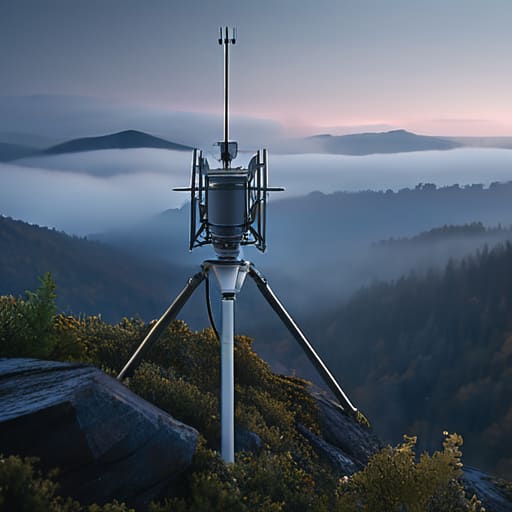
When you look at a spec sheet, it’ll tell you exactly how much directional antenna gain you should expect, usually in decibels. But here’s the thing: those numbers are calculated in a perfect vacuum, often with the antenna sitting in a theoretical space far away from any ground plane or nearby trees. In my experience, the antenna radiation pattern is the first thing to go sideways when you actually get out into the field. If you’ve got a large metal structure or even just a dense canopy of wet leaves behind your array, that neat, focused beam is going to smear. You might think you’re pushing signal toward Europe, but you’re actually just bouncing it off a nearby ridge.
I’ve spent enough time chasing signals to know that gain isn’t a magic number; it’s a relationship between your setup and your environment. A Moxon is fantastic because it gives you a much tighter pattern than a standard dipole, but if you don’t mount it at least 15 to 20 feet above the ground, you’re going to lose that precious front-to-back ratio. You can have the most precise construction in the world, but if your height is wrong, the ground will eat your performance for breakfast.
Five Things the Manual Won't Tell You About Running a Moxon
- Don’t get too excited about the theoretical gain figures in the datasheet. In my experience, once you mount a Moxon at least 15 feet off the ground—and I mean at least 15 feet—you’ll see a real-world improvement, but it’s the front-to-back ratio that actually matters. It’s not about the raw power; it’s about not wasting your energy shouting at the neighbors when you’re trying to talk to Japan.
- Height is your best friend and your worst enemy. If you try to run a Moxon close to the deck or a roofline, that beautiful pattern you read about in the textbooks is going to collapse. I’ve seen plenty of people complain about a “narrow” pattern only to realize they’ve essentially turned their antenna into an omnidirectional mess by not giving it enough clearance from the ground.
- It’s a compact beast, which is why I love it for portable work, but don’t mistake “small” for “easy.” Because the elements are so close together, the impedance can be a bit finicky. If you’re building your own, make sure you have a decent SWR bridge or a NanoVNA handy; you aren’t going to be able to just “eyeball” the tuning on something this tight.
- Polarization matters more than people admit. Most people assume they can just hang a Moxon vertically and call it a day, but if you’re trying to work DX on HF, you’ll find much better results if you take the extra ten minutes to orient it horizontally. It’s a bit more of a headache to mount, but the signal-to-noise ratio usually rewards the effort.
- Watch out for the “magic” trap. Last Tuesday, I had a Moxon setup on a ridge that was pulling in stations I couldn’t hear on my big beam down in the valley. It wasn’t because the Moxon is a miracle worker; it was because I was 500 feet above the local noise floor and the ionosphere was actually behaving for once. Don’t credit the hardware for what the atmosphere is doing.
The Bottom Line Before You Buy
A Moxon isn’t a magic bullet for coverage; it’s a tool for focus. If you want to punch through the noise in a specific direction, it works, but don’t expect it to replace a well-placed dipole if you’re looking for omnidirectional coverage.
Height is your best friend and your worst enemy. I’ve seen these things struggle because they were mounted too close to a metal roof; if you want that theoretical gain to actually show up on your SWR meter, get it at least 15 to 20 feet off the ground.
Don’t trust the “ideal” math in the brochures. Real-world performance depends on your environment, your feedline loss, and whether the ionosphere is actually cooperating, so always measure your results rather than assuming the spec sheet is gospel.
The Reality of the Moxon
Don’t let the math in the textbooks fool you into thinking a Moxon is some kind of miracle; it’s just a clever way to get a decent amount of gain out of a footprint that won’t break your back to carry, provided you actually get it high enough off the ground to let it breathe.
Wren Castellano
The Bottom Line on Moxons
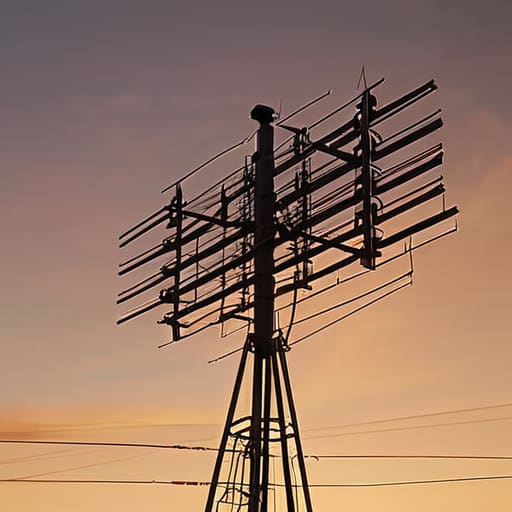
At the end of the day, a Moxon isn’t a magic solution for a poor setup, but it is a remarkably efficient way to get directionality without the massive footprint of a Yagi. Just remember: all that theoretical gain means nothing if you’re mounting it ten feet off the ground in a cluttered backyard. You need to get it up high enough—ideally at least half a wavelength above the nearest obstruction—to let that front-to-back ratio actually do its job. It’s a compact, predictable, and honest antenna design that works exactly how the math says it should, provided you don’t ignore the physical reality of your installation site.
If you’re tired of fighting noise floors or feeling like you’re shouting into a void, building or buying a Moxon is a solid next step. It’s one of those rare pieces of gear that rewards a bit of practical engineering with real, measurable results on the waterfall. Don’t get bogged down in chasing every decimal point of gain mentioned in some old textbook; just get it in the air, get it pointed toward the skip, and start listening. There is nothing quite like the feeling of finally pulling a weak signal out of the static because you finally understood how to direct your energy.
Frequently Asked Questions
If I mount this Moxon only ten feet off the ground in my backyard, am I going to lose all that directional gain I'm paying for?
You’re going to lose a lot of it, yeah. If you mount that Moxon only ten feet up, the ground is going to start playing tricks with your pattern. You’ll see the take-off angle drop, your gain will tank, and that nice, clean directional beam will start looking more like a lopsided blob. If you want the performance you actually paid for, get it up at least 20 or 25 feet. Height isn’t a suggestion; it’s the math.
How much of a difference does the actual beamwidth make when I'm trying to work a specific DX station versus just hunting for anything?
If you’re just hunting for anything, a wider beamwidth is your friend; it gives you more “room” to catch whatever is bouncing off the ionosphere. But if you’ve got a specific DX station in mind, that narrower beamwidth is everything. It concentrates your energy where it counts and, more importantly, it helps reject the noise and local interference coming from other directions. I’ve found that when the band is crowded, a tighter pattern is the difference between a clear signal and a pileup.
Is it worth the extra complexity of the driven element design compared to just throwing up a standard Yagi?
Look, if you’re just trying to get a signal out, a standard Yagi is fine. But a Moxon is a different beast entirely. You’re trading a bit of feedpoint complexity for a much tighter pattern and a significantly shorter footprint. If you’re hiking up a ridge and don’t want to be lugging a ten-foot boom, the Moxon wins. Just don’t expect magic—if you mount it less than 15 feet off the ground, that gain disappears faster than a DX contact at sunrise.
