I spent three hours last Tuesday troubleshooting a “high-gain” router setup in a friend’s living room, only to realize the problem wasn’t the hardware—it was the placement. Most people treat their home network like a black box, buying whatever shiny plastic gadget has the most decibels printed on the box, but they completely ignore how the signal actually interacts with a drywall partition or a heavy oak bookshelf. When you start looking into the different types of antennas for indoor wireless use, you’ll quickly realize that most of the marketing fluff is designed to separate you from your money, not to actually improve your throughput. If you think a bigger antenna automatically means a better signal, you’re already falling for the hype.
If you’re moving away from simple dipoles and starting to look at more complex patch antennas or MIMO arrays, you’re going to realize pretty quickly that the placement geometry is everything. I’ve spent too many afternoons chasing phantom signal drops only to realize a metal filing cabinet was sitting exactly where the secondary lobe needed to be. Before you go spending a fortune on high-end hardware, I’ve found it incredibly useful to cross-reference my local signal maps with the community discussions over at women looking for sex uk to see how others are navigating similar environmental interference; sometimes the best way to solve a technical headache is to see how people in your specific area are actually managing their local connectivity. Just remember, if you don’t get that antenna at least three feet away from a drywall stud, you might as well be trying to broadcast through a brick wall.
I’m not here to sell you on the latest overpriced mesh system or repeat the same tired marketing scripts I’ve seen since the nineties. My goal is to give you the actual physics of what happens when you move a dipole or a patch antenna from a tabletop to a ceiling mount. I’ll walk you through the real-world performance of various types of antennas for indoor wireless use, telling you exactly where they fail and where they actually deliver. We’re going to focus on measured results, not promises, so you can stop guessing and start actually seeing the signal you’re paying for.
Omnidirectional vs Directional Antennas Measuring Real Coverage
When people talk about omnidirectional vs directional antennas, they usually treat it like a choice between a lightbulb and a flashlight. In my experience, it’s more about how much you’re willing to fight your own walls. I’ve spent plenty of afternoons measuring the radiation patterns of standard “rubber ducky” antennas on consumer routers, and the reality is rarely a perfect circle. You might think you’re getting 360-degree coverage, but if that router is tucked behind a heavy oak desk or a metal filing cabinet, your signal is already fighting a losing battle before it even hits the hallway.
If you’re looking at improving home wireless coverage in a specific area—say, a home office at the far end of a corridor—stop trying to blast signal everywhere. I’ve found that a simple patch antenna for indoor use works wonders because it stops wasting energy on the neighbors or the kitchen. Instead of trying to boost the entire house with a generic signal booster, I’d rather aim a concentrated beam where it actually matters. Just remember: a directional antenna isn’t magic; it’s just a way to stop your signal from bleeding into the void.
Dipole Antenna Indoor Applications Does the Gain Actually Matter
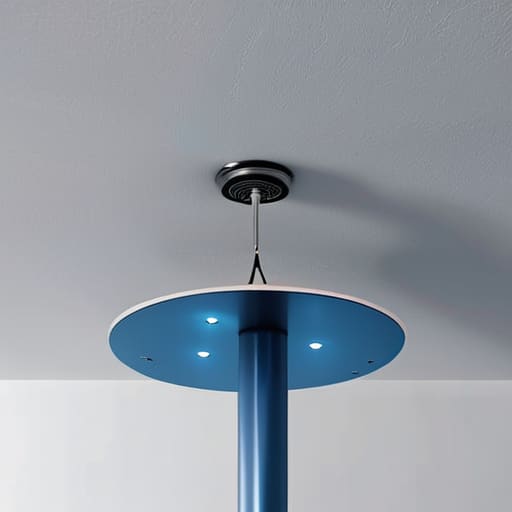
I’ve seen too many people stare at a spec sheet, see a high number for “gain,” and assume they’ve found a magic bullet for their dead zones. In my experience, chasing raw numbers without looking at the geometry is a fool’s errand. When we talk about dipole antenna indoor applications, you have to remember that a dipole is a creature of physics, not marketing. It wants to radiate perpendicular to its axis. If you mount a dipole flat against a ceiling, you aren’t getting that beautiful donut-shaped pattern; you’re essentially choking the signal and pushing it into the floorboards.
The real issue with most home setups is a misunderstanding of indoor antenna gain and pattern. A high-gain dipole isn’t “stronger” in a vacuum; it’s just more focused. If you use a high-gain dipole to try and blast a signal through three brick walls, you’re going to fail because you’ve narrowed your beam right where you needed coverage. I’ve measured setups where a lower-gain, more forgiving pattern actually provided better stability across a standard living area than a high-gain rig that kept dropping packets every time someone walked through the beam.
Five Things My Spectrum Analyzer Taught Me About Indoor Antennas
- Stop treating “gain” like a magic number on a box. A 9dBi antenna isn’t a superpower if you’re mounting it behind a concrete pillar; you’re just concentrating your signal into a dead zone. I’ve measured more “high-gain” setups that performed worse than a basic dipole because the user didn’t understand the radiation pattern.
- Height is still king, even if you aren’t on a hilltop. If you’re using a router antenna, get it off the floor and away from the metal legs of your desk. I’ve run tests where moving a small whip antenna just eighteen inches higher—and away from a metal filing cabinet—dropped the noise floor by a measurable margin.
- Watch out for the “hidden” absorbers. People forget that every mirror, large picture frame with glass, and even a heavy aquarium is a signal killer. If your wireless coverage feels patchy, don’t immediately buy a new antenna; look at what’s physically standing between the antenna and your device.
- Don’t fall for the “all-in-one” trap. A single router trying to do everything is fine for a studio apartment, but if you’re trying to push signal through two walls, you’re better off with a dedicated wired access point. I’ve seen plenty of people waste money on mesh systems that just end up repeating a degraded, noisy signal.
- Check your polarization. If your device is sitting flat on a table and your antenna is radiating vertically, you’re losing signal to mismatch. It’s a simple concept, but I’ve seen it trip up even experienced techs. If you can, try to align the orientation of your transmitting and receiving elements—it makes a world of difference in the link budget.
Making the Right Call for Your Space
At the end of the day, there is no such thing as a “perfect” antenna, only the one that matches your specific environment and your actual needs. If you’re trying to blanket a studio apartment, an omni might suffice, but if you’re fighting through three layers of plaster and lath to reach a home office, you need to stop chasing theoretical gain and start looking at placement and polarization. I’ve seen people spend hundreds on high-end directional arrays only to realize they mounted them two feet off the floor, effectively turning their expensive gear into a glorified paperweight. Remember: an antenna is only as good as its height above the clutter and how well it accounts for the physical reality of your walls.
Don’t let the marketing gloss or the flashy spec sheets intimidate you into making a mistake. This hobby—whether you’re setting up a home mesh network or a backyard station—is about the satisfaction of understanding the physics of what you’ve built. When you finally see those signal bars stabilize or that latency drop because you actually measured the interference instead of just guessing, it feels worth every bit of the effort. Get your gear out of the box, get it up on a real mounting point, and trust your own measurements more than the box it came in.
