
I spent three years in a suburban cul-de-sac where the local HOA treated a single rogue guyline like a personal insult to their aesthetic sensibilities. I remember standing on my ladder, sweating through my shirt, trying to figure out what is a stealth antenna actually going to achieve for my signal before the neighbor in 4B called the authorities. There is this pervasive myth in the forums that a stealth antenna is some high-tech, specialized piece of gear you can just order from a catalog to make your signal invisible. That’s nonsense. In reality, it’s usually just a series of compromises—trading a bit of gain and a lot of efficiency for the ability to run a dipole without getting a fine in your mailbox.
I’m not here to sell you on a magic bullet or a glorified piece of fishing line. My goal is to give you the actual physics of the trade-off. I’ll tell you exactly how much performance you’re going to lose when you tuck that wire into your eaves, and I’ll tell you the minimum height you need to keep your radiation pattern from collapsing into the dirt. We’re going to look at real-world deployment, from thin insulated wire to non-resonant configurations, so you know exactly what you’re getting into before you climb that ladder.
Table of Contents
Low Profile Antenna Design vs Traditional Metal Spires
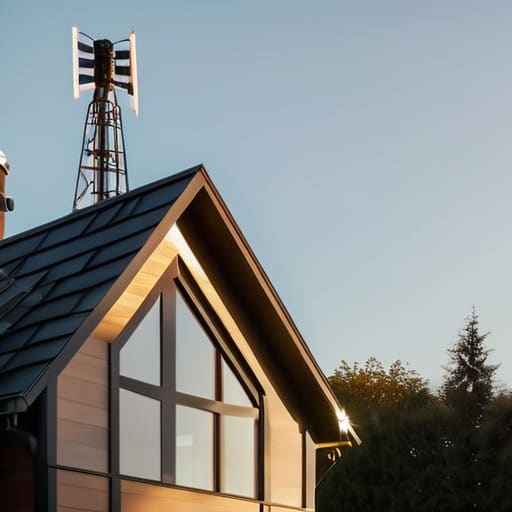
When you look at a traditional setup, you’re usually looking at a vertical element—a big, shiny metal pole or a heavy dipole mounted high on a mast. They are efficient, sure, but they scream “radio operator” to anyone with eyes. If you live in a neighborhood where people take their curb appeal seriously, a ten-meter tower is basically a lightning rod for complaints. Traditional antennas rely on height and clear line-of-sight to do their job, but that often clashes directly with antenna aesthetics for homes.
The real shift happens when you move toward a low profile antenna design. Instead of fighting the environment with a massive spire, you’re working with the architecture. We’re talking about thin wires tucked into the eaves, or even magnetic loops hidden inside a window frame. You are essentially trading raw gain and ease of tuning for non-obtrusive antenna mounting. It’s a compromise, and I’ll be the first to tell you that you’ll lose some efficiency compared to a high-mounted vertical, but if the trade-off is keeping your neighbors from measuring your backyard with a ruler, it’s usually worth the extra tuning time.
Achieving Concealed Signal Reception Without the Mystery
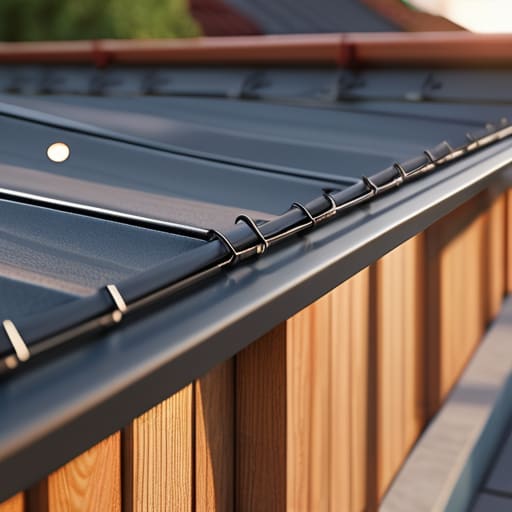
When people talk about concealed signal reception, they tend to treat it like a magic trick. They think you can just wave a wand and have a high-gain vertical disappear into thin air. That isn’t how physics works. To get actual results, you have to stop thinking about “invisibility” and start thinking about non-obtrusive antenna mounting. You aren’t trying to delete the antenna from the electromagnetic spectrum; you’re just trying to make it look like a piece of guttering or a support wire for a trellis.
The reality is that you are almost always making a trade-off. If you hide a wire in the eaves of your house to satisfy the neighbors, you are likely losing some efficiency because you’re forcing the antenna to operate closer to the structure than I’d like. I’ve measured several setups where a well-placed wire, even at a suboptimal height, outperformed a massive, ugly tower simply because the impedance stayed stable across the band. If you want to succeed, stop chasing the myth of the perfect hidden radiator and start focusing on where you can tuck your wire so it actually has a clear view of the horizon.
Five Real-World Rules for Stealth Operation
- Don’t expect magic from thin wire. When you swap a beefy, elevated vertical for a thin wire tucked into your roofline, you are losing something. You’re trading radiation resistance and a good take-off angle for privacy. If you’re going stealth, accept that you’ll need to work a bit harder—or wait for better propagation—to make the same contacts you used to make with a tower.
- Height is still king, even when you’re hiding. I can’t stress this enough: a stealth antenna at 10 feet is a completely different animal than one at 30 feet. If you can tuck your wire into the eaves or run it along a ridge line, do it. Every extra foot of elevation you can scavenge without alerting the neighbors is worth its weight in copper.
- Watch your ground plane. Most “stealth” setups end up being end-fed wires because nobody wants to run a radial field across their manicured lawn. If you go the EFHW route, make sure your counterpoise is actually doing something, or you’ll end up with RF in your shack that’ll make your transceiver’s casing feel like a hot plate.
- Match your wire to the environment. If you’re trying to hide a wire in a tree line, use something that mimics the surroundings, but don’t go so heavy on the insulation that you’re adding unnecessary capacitive loading. I’ve seen people use thick, black jacketed wire that looks great for stealth, but it’s a nightmare to tune when you’re trying to squeeze a narrow band out of a cramped space.
- Test your SWR before the sun goes down. There is nothing more frustrating than spending three hours rigging a “hidden” wire only to realize the neighbor’s new metal shed is completely de-tuning your resonant frequency. Get it up, measure it, and make sure it stays stable before you sit down with your coffee and wait for the bands to open.
The Bottom Line on Going Stealth
You aren’t getting a free lunch; hiding your antenna in the eaves or behind a fence almost always means a trade-off in efficiency, so pick your compromise wisely.
Height is still king, so if you’re dropping your wire down into a gutter or near a roofline, expect your radiation pattern to look a lot more complicated than the textbook says.
Stealth is as much about psychology as it is about physics—it’s about finding a way to get the signal out without turning your backyard into a local landmark for the HOA.
The Real Cost of Quiet
Look, a stealth antenna isn’t some magical invisibility cloak; it’s a compromise. You’re essentially trading a bit of gain and a lot of ease-of-tuning just to keep the neighbors from complaining about a twenty-foot whip in the backyard. If you can accept that your radiation pattern is going to be a little less ideal because you’re hiding a wire in the eaves, then it’s a tool. If you’re expecting it to perform like a heavy-duty vertical on a pedestal, you’re going to be disappointed.
Wren Castellano
The Reality of the Compromise
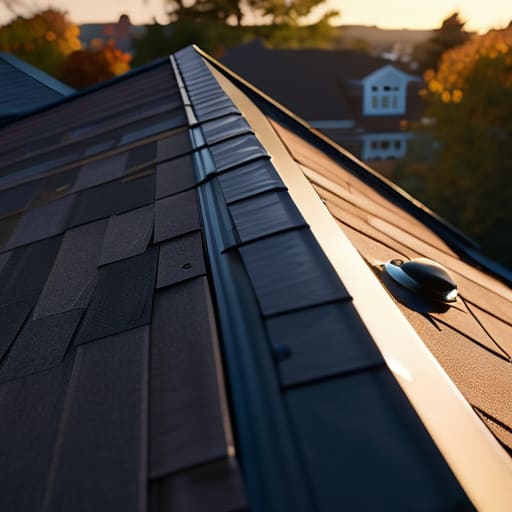
At the end of the day, choosing a stealth antenna means accepting a trade-off. You aren’t going to get the same omnidirectional efficiency from a wire tucked into your roofline as you would from a massive vertical mounted on a ten-foot mast. You have to account for the loss in gain and the potential for higher ground losses, especially if you’re running your wires close to the structure. But if you measure your SWR accurately, keep your feedline away from metal gutters, and—most importantly—mind your antenna height above ground, you can still make solid contacts. It’s not about having the biggest signal in the neighborhood; it’s about having a functional, quiet station that actually lets you get on the air without a visit from the HOA.
Don’t let the limitations of a concealed setup discourage you from getting out there. Radio is about the connection, not the hardware footprint. Whether you’re running a discrete wire in a suburban backyard or a tiny portable setup on a ridge, the goal remains the same: finding that window when the bands are open and the signal is clear. There is a unique kind of satisfaction in knowing your station is working perfectly, even if the neighbors think you’re just running a standard television setup. Get your wires up, get your measurements right, and go see who is out there listening.
Frequently Asked Questions
If I’m hiding my wire in the eaves to satisfy the HOA, how much ground loss am I actually going to take on compared to a dedicated pole?
Look, you’re going to take a hit, but it’s not always a dealbreaker. When you move a wire from a dedicated pole down into the eaves, you’re losing that precious clearance. If your wire is sitting right against the fascia or tucked under shingles, you’re increasing capacitive coupling to the structure. I’ve measured setups where the loss was negligible, but if you’re hugging the ground or a wet roof, expect a 1–2 dB drop in efficiency. It’s a trade-off.
Can I actually use a stealth wire for HF contesting, or is this strictly for local monitoring and casual DX?
Look, if you’re planning to go head-to-head in a major CQ contest, don’t expect a stealth wire to carry you to a trophy. You’re trading gain and radiation pattern for a lack of HOA complaints. I’ve run a 40m wire tucked into a hedge at about 10 meters up; it worked fine for casual DX when the band was open, but it lacks the “oomph” of a well-tuned vertical. It’s a tool for survival, not dominance.
How much of a difference does the height above ground make when I'm forced to run a low-profile setup instead of a proper vertical?
It makes a massive difference—more than most people realize. When you drop from a ten-meter mast to a wire tucked in your eaves, you aren’t just losing height; you’re losing your ground plane’s effectiveness. A proper vertical at 15 meters above ground gives you a clean takeoff angle. A low-profile setup, sitting maybe two meters up, forces your signal into the dirt. You’ll see a significant drop in take-off angle and much higher loss.
