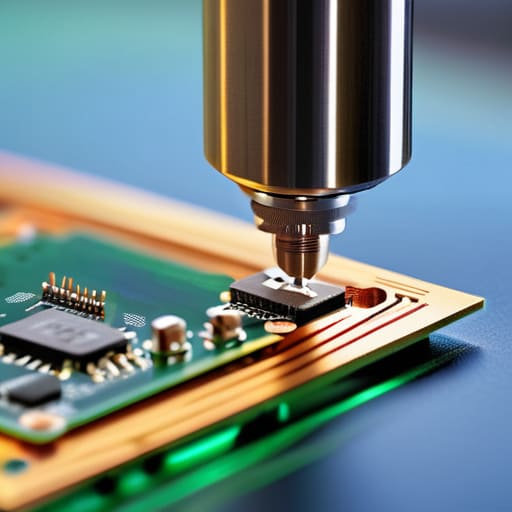
I once spent three hours hunched over a custom-built low-pass filter, swearing at a cheap, $40 “precision” iron that promised everything and delivered nothing. I was trying to hit a tiny pad on a high-frequency trace, but every time the tip touched the copper, the temperature plummeted, leaving me with a cold, bulbous solder joint that looked more like a teardrop than a connection. It’s a frustrating rite of passage, but it’s exactly why so many people get lost when trying to figure out how to choose a soldering station for rf applications. You don’t need a laboratory-grade setup that costs as much as a used transceiver, but you cannot rely on a generic hobbyist tool that lacks the thermal recovery needed for high-frequency work.
In this post, I’m stripping away the marketing fluff and the “pro-sumer” nonsense. I’m going to show you how to look past the shiny chassis and focus on the actual thermal stability and tip geometry that matter when you’re working on sensitive RF paths. I’ll tell you what I’ve measured, what has failed me in the field, and exactly where you should spend your money—and where you should absolutely walk away.
Table of Contents
- Precision Temperature Regulation vs Real World Thermal Stability
- Why High Frequency Soldering Requirements Demand More Than Luck
- Five Things to Look for Before You Pull the Trigger
- The Bottom Line: What Your Bench Actually Needs
- ## The Myth of the "Hot Enough" Iron
- Making the Call
- Frequently Asked Questions
Precision Temperature Regulation vs Real World Thermal Stability
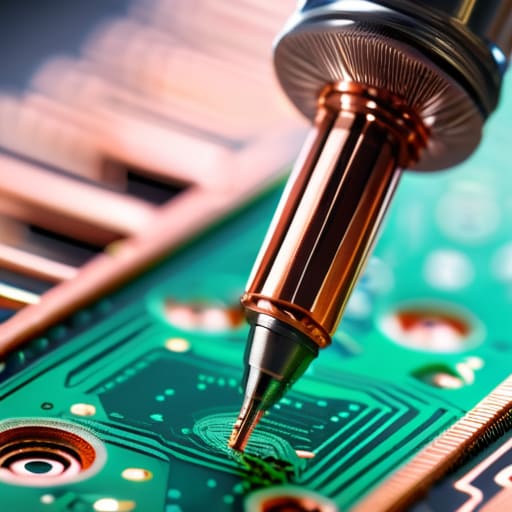
Most manufacturers love to brag about their “precision temperature regulation” numbers, usually citing a tiny deviation within a few degrees on a spec sheet. But here’s the thing: sitting on a bench in a climate-controlled lab is one thing; actually touching a tip to a multi-layer PCB is another. When you’re dealing with high frequency soldering requirements, you aren’t just fighting the ambient air; you’re fighting the heat sink effect of the copper planes themselves. If your station can’t recover its temperature the millisecond you make contact, you’re going to end up with a cold joint that looks fine to the naked eye but fails the moment you hit it with a signal.
I’ve spent too many nights staring at an oscilloscope because a joint didn’t quite flow right. When you’re working on sensitive RF traces, thermal stability in soldering is what prevents those nasty, high-impedance connections that ruin your SWR. You don’t just need a steady number on a digital display; you need a tool that maintains its thermal mass under load. If the temperature dips every time you touch a ground plane, you’re not really soldering—you’re just hoping for the best.
Why High Frequency Soldering Requirements Demand More Than Luck
When you’re working on a standard low-frequency power supply, a cold joint might just cause a nuisance buzz or a component that fails prematurely. But when you move into the realm of RF, the stakes change entirely. In high-frequency circuit assembly, the physical geometry of your solder joint becomes part of the circuit itself. If your station can’t maintain consistent heat, you end up with uneven wetting or, worse, micro-fractures that act like tiny, unpredictable capacitors. This isn’t just about making things stick; it’s about maintaining the impedance of the trace you just worked so hard to lay down.
I’ve seen too many people try to “wing it” with a cheap iron, hoping the heat will soak through a ground plane. That’s a recipe for disaster. If you aren’t managing thermal stability in soldering, you’re essentially introducing noise into your signal path. Poorly controlled heat leads to inconsistent solder fillets, which can cause parasitic capacitance or even contribute to preventing signal interference from being an actual possibility. If the solder doesn’t flow perfectly according to the spec, you aren’t building a radio; you’re building a very expensive, very unpredictable heater.
Five Things to Look for Before You Pull the Trigger
- Check the thermal recovery time, not just the max temperature. It doesn’t matter if the station says it hits 450°C if the temperature drops to a crawl the moment you touch a heavy ground plane. You need a station that fights back against the heat sink effect of your PCB.
- Prioritize digital PID control over analog dials. In RF work, especially when you’re dealing with sensitive components or tight trace spacing, “close enough” isn’t good enough. I need to know that if I set it to 340°C, it stays at 340°C, not 330°C one second and 350°C the next.
- Invest in a station with high-quality, replaceable tips that actually hold their plating. Cheap, generic tips lose their coating in a week, and once you start getting solder balls sticking to the sides because of a pitted surface, your precision is gone.
- Look for a station that supports a wide range of tip geometries. You’ll be doing everything from fine-pitch SMD work on a transceiver board to beefy connections on a power amplifier, and trying to do both with one mediocre tip shape is a recipe for charred boards.
- Don’t ignore the ergonomics of the iron itself. If the handle is a heavy, unbalanced brick, your hand will shake by the time you reach the third component on a dense layout. A steady hand is half the battle when you’re working near high-frequency traces.
The Bottom Line: What Your Bench Actually Needs
Stop chasing the highest wattage number on the box; what matters is thermal recovery. If your iron drops ten degrees the second it touches a ground plane on a heavy RF trace and stays there for three seconds, you aren’t soldering, you’re just making a mess.
Don’t trust a cheap digital readout that claims precision but lacks the actual PID control to back it up. If the station can’t maintain a steady temperature while you’re working a thick copper bus, your solder joints will be inconsistent, and in RF, inconsistency is just another word for signal loss.
Buy for the application, not the brand name. If you’re just fixing a broken connector, a basic iron is fine, but if you’re building filters or working on high-frequency traces, you need a station that treats temperature as a constant, not a suggestion.
## The Myth of the "Hot Enough" Iron
“If you’re just joining leads on a piece of scrap, any iron will do. But when you’re working on a high-frequency layout where a single cold joint or a microscopic bridge can ruin your entire signal-to-noise ratio, you don’t need an iron that just gets hot; you need one that stays there. I’ve seen too many people struggle with high-impedance traces because their cheap station couldn’t recover its temperature the second the tip touched the pad, leaving them with a mess of oxidation and a very expensive paperweight.”
Wren Castellano
Making the Call
At the end of the day, choosing a soldering station for RF work isn’t about buying the most expensive brand name on the shelf; it’s about ensuring that when you touch a tip to a high-frequency trace, the temperature doesn’t tank the moment the solder flows. You need a tool that prioritizes thermal recovery and stability over flashy digital displays. Remember that if you can’t maintain a consistent heat profile, you’re not just risking a cold joint—you’re risking the parasitic capacitance and impedance mismatches that turn a well-designed filter into a useless piece of scrap. Don’t settle for a hobbyist iron that promises precision but fails the moment it hits a real ground plane; measure the recovery time if you can, and buy for the thermal load you actually face.
There is a specific kind of satisfaction that comes from looking at a finished PCB, knowing that every connection is as solid as the day it was laid down. We spend so much time worrying about antenna height, feedline loss, and whether the ionosphere is going to cooperate, but the foundation of it all starts at your workbench. When you invest in the right gear, you aren’t just buying a tool; you’re protecting your time and your sanity. So, pick a station that actually meets the specs, build your rigs with confidence, and then get out there and see who’s listening. The airwaves are waiting, and they don’t care how much you spent on your rig—only how well you built it.
Frequently Asked Questions
Should I be looking for a station with a digital readout, or does the actual PID controller stability matter more than the number on the screen?
Look, a digital readout is just a fancy way to lie to yourself if the underlying controller is garbage. I’ve seen plenty of “precision” stations where the screen says 350°C, but the moment the tip touches a heavy ground plane, the temperature craters and stays there. Don’t get distracted by the pretty numbers; look for a station with a robust PID algorithm that actually recovers. I’d rather have a dim LCD and a rock-solid thermal profile than a high-res display on a rig that can’t handle a real workload.
Is it worth the extra money to get specialized RF tips, or can I get away with standard lead-free tips if I manage my thermal mass correctly?
Look, if you’re just swapping out a capacitor on a power supply, standard lead-free tips are fine if you’ve got the thermal mass to back them up. But if you’re working on high-frequency traces or tiny SMD components on a transceiver PCB, don’t skimp. Specialized RF tips are designed to transfer heat predictably without the thermal lag that leads to scorched pads. I’ve seen too many people “manage” their way into a ruined board when they should have just bought the right tip.
How much does the choice of solder weight and alloy actually affect the thermal recovery time when I'm working on tight, high-frequency traces?
It matters more than most people realize. If you’re using a heavy 0.8mm leaded wire on a tiny, high-density RF trace, you’re essentially dumping a massive heat sink onto your work area. The alloy matters too; leaded solder has better wetting and lower melting points, which gives your station a fighting chance. If you use thick, lead-free wire on a delicate trace, you’ll likely starve the tip of heat before the joint even flows.
