I remember sitting in my first real RF lab, surrounded by high-end signal generators that cost more than my first car, watching a technician swear that a “premium” clock source was the secret to their signal purity. It was a load of rubbish. He was chasing ghosts in the noise floor while ignoring the fact that his entire setup was drifting because he was using a bottom-shelf component. People get so caught up in the marketing jargon that they forget the basics: when you’re asking what is a crystal oscillator and why it actually matters, you aren’t looking for a magic box; you’re looking for stability. If your frequency is wandering every time the sun goes down or the temperature shifts five degrees, all that expensive shielding in the world won’t save your link.
In this post, I’m stripping away the textbook fluff and the sales pitches. I’m going to show you how these little pieces of quartz actually behave when they’re under real-world thermal stress, and why your choice of oscillator is the difference between a clean signal and a drifting mess. I’ll give you the numbers that actually matter, not the ones printed on a glossy datasheet.
Table of Contents
- The Piezoelectric Effect in Electronics Beyond the Hype
- Quartz Crystal Resonator Physics Real Precision Not Luck
- Five Real-World Lessons from the Bench: Keeping Your Frequency from Drifting
- The Bottom Line: Why Stability Isn't Optional
- ## The Anchor in the Drift
- Bringing It All Back to the Bench
- Frequently Asked Questions
The Piezoelectric Effect in Electronics Beyond the Hype
At its core, we’re talking about the piezoelectric effect in electronics, which sounds a lot more intimidating than it actually is. Essentially, when you apply an electric field to a specific material—usually quartz—it physically deforms. If you flip that polarity, it deforms back. In a quartz crystal resonator, we use this mechanical “shiver” to create a highly predictable vibration. It’s not just some theoretical magic; it’s a physical movement that happens millions of times a second, providing the heartbeat for your rig.
But here is where the textbooks usually gloss over the reality of the workbench: physics doesn’t care about your ideal schematic. While the effect is incredibly reliable for clock signal generation, the physical crystal is still a piece of matter subject to its environment. You can have the most elegant oscillator circuit design in the world, but if you aren’t accounting for the temperature coefficient of frequency, your signal is going to wander. I’ve seen plenty of hobbyists get frustrated when their gear drifts during a summer DX session, only to realize they ignored how thermal expansion messes with that tiny, mechanical vibration.
Quartz Crystal Resonator Physics Real Precision Not Luck
When we talk about a quartz crystal resonator, we aren’t just talking about a piece of rock sitting in a vacuum; we are talking about a mechanical device performing a high-speed dance. Inside that little metal can, the quartz is cut at a specific angle to exploit its physical properties. This isn’t just theoretical physics—it’s the reason your transceiver doesn’t drift three kilohertz into the neighbor’s frequency every time the sun goes down. The precision comes from the fact that the crystal vibrates at its own natural mechanical resonance, which is incredibly consistent compared to almost any other way we have to achieve clock signal generation.
However, physics is rarely polite. Even with a high-quality cut, you have to contend with the temperature coefficient of frequency. I’ve spent too many nights on a ridge in the Cascades watching my frequency wander because the ambient temperature dropped twenty degrees in an hour. You can have the most expensive oscillator circuit design in the world, but if you haven’t accounted for how thermal expansion affects that physical lattice, you’re just guessing. Real precision requires understanding that the crystal is a mechanical component first, and an electronic one second.
Five Real-World Lessons from the Bench: Keeping Your Frequency from Drifting
- Temperature is your biggest enemy; if you’re building a rig for portable use, don’t just pick any quartz—look for an AT-cut crystal, because it’s designed to minimize frequency shifts when the sun hits your gear or the temperature drops on a ridge.
- Stop treating the oscillator like a black box; if you see your signal wandering more than a few Hz every time the sun comes up, you need to look at your load capacitance, not just blame the component.
- Grounding isn’t a suggestion, it’s a requirement; a crystal oscillator is sensitive to noise, and if your PCB layout is a mess of long traces, you’ll spend more time chasing interference than actually making contacts.
- Don’t get blinded by the datasheet; just because a manufacturer says it’s “stable” doesn’t mean it will stay dead-on when you’re operating in a high-humidity environment or near a high-power transmitter.
- If you’re chasing high-precision stability for something like a GPSDO or a high-end SDR, remember that the physical mounting matters—vibration from a cooling fan can actually introduce jitter that no amount of software correction will fix.
The Bottom Line: Why Stability Isn't Optional
A crystal oscillator isn’t just a component; it’s the heartbeat of your rig, and if that heart skips a beat due to thermal drift, your signal is effectively useless to anyone listening.
Don’t fall for the “close enough” trap—the piezoelectric effect provides the physical mechanism for precision, but the quality of the quartz and how it’s housed determines whether you stay on frequency or wander across the band.
Real-world stability depends on more than just the spec sheet; you have to account for how temperature shifts and physical vibrations actually impact the crystal’s ability to hold a steady rhythm.
## The Anchor in the Drift
“You can have the most expensive transceiver on the market, but if your timing source is drifting like a cheap SDR on a hot afternoon, you aren’t communicating—you’re just shouting into the void and hoping someone happens to be tuned to your mistake.”
Wren Castellano
Bringing It All Back to the Bench
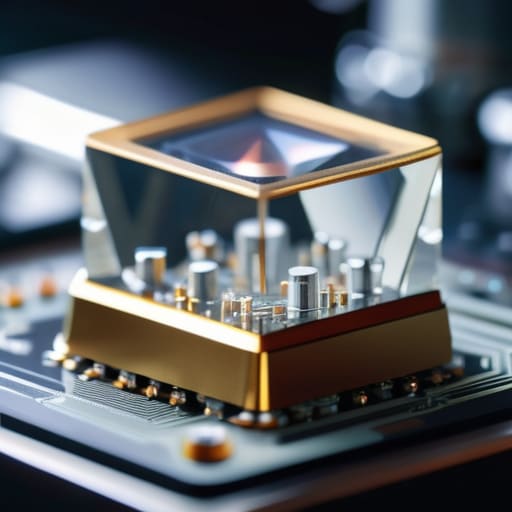
At the end of the day, a crystal oscillator isn’t some magical black box that just happens to spit out a frequency; it is a physical component governed by the rigid laws of piezoelectricity. We’ve looked at how the mechanical vibration of a quartz wafer provides that essential stability, and why relying on cheap, temperature-unstable circuits is a recipe for a signal that wanders right off your target frequency the moment the sun goes down. Whether you are building a simple SDR project or maintaining a high-end transceiver, remember that frequency stability is a physical reality, not a software setting. If you don’t respect the thermal drift and the mechanical properties of the resonator, you aren’t really engineering—you’re just hoping for the best.
I know it’s easy to get caught up in the flashy specs of the latest digital rigs, but never lose sight of the fundamental physics happening under the hood. There is a profound satisfaction in understanding the tiny, vibrating heart of your gear, knowing exactly why your signal stays locked even when the temperature drops on a winter night in the hills. Radio is one of the few places left where the math actually meets the metal, and once you master these basics, you stop being a user and start being an operator. So, get your meter out, check your stability, and stop guessing at your signal integrity.
Frequently Asked Questions
Why does my rig's frequency drift every time the temperature drops on a portable setup, and can a better crystal actually stop it?
It’s not your imagination, and it’s not just “the ionosphere being moody.” When you’re out on a ridge and the sun goes down, that temperature drop is physically squeezing the quartz. Most consumer-grade rigs use crystals that aren’t temperature-compensated well enough for the real world. A high-quality TCXO (Temperature Compensated Crystal Oscillator) won’t make it perfect, but it’ll stop your signal from wandering halfway across the band just because the dew started falling.
When am I actually going to see the difference between a standard TCXO and a high-end OCXO in my daily operating?
You’ll notice the difference when the temperature starts swinging. If you’re running a TCXO in a shack that isn’t climate-controlled, or out on a ridge where the sun hits your rig at noon, you’ll see your frequency drift. An OCXO stays rock-solid because it’s essentially living in its own little oven. If you’re doing narrow-band digital modes or chasing weak signals on a tight frequency, that stability is the difference between a clean lock and a pile of noise.
If I'm building my own gear, how much does the physical layout of the circuit around the oscillator actually affect the stability?
If you’re building your own gear, the layout isn’t just “important”—it’s everything. You can buy the most expensive TCXO on the market, but if you route high-current traces right next to your oscillator, you’re just building a very expensive, drifting mess. I’ve seen plenty of boards fail because the layout let thermal drift or EMI creep into the signal path. Keep it isolated, keep the traces short, and for heaven’s sake, watch your ground plane.
