I remember sitting on a ridge in the Cascades three years ago, staring at my NanoVNA and wondering why my “perfect” dipole was behaving like a complete disaster. I had followed every textbook diagram to the letter, yet my SWR was jumping around like a caffeinated squirrel every time the wind picked up. That was the moment I realized that knowing the theory of how to feed an antenna with ladder line is one thing, but understanding how the physical environment fights you is another entirely. Most people will tell you that ladder line is a magic bullet for bandwidth, but they rarely mention that if you don’t manage your feedline height and bend radii, you’re just building a very expensive piece of rope.
In this guide, I’m going to skip the academic fluff and get straight to the measurements that actually matter. I’ll show you exactly how to set up a balanced feed system that won’t drive you crazy, including the specific heights I’ve found necessary to keep your losses low on the lower bands. We’re going to talk about real-world constraints—like how to transition from that high-impedance line to your coax without creating a massive notch in your signal—so you can stop guessing and start actually making contacts.
Table of Contents
- Step-by-Step Instructions
- Measuring Impedance Matching for Dipole Antennas in the Real World
- Coaxial Cable to Ladder Line Connection Without the Magic Tricks
- Five Things the Theory Books Leave Out About Ladder Line
- The Bottom Line: What Actually Matters When You’re Hanging Wire
- The Impedance Myth
- The Real-World Verdict
- Frequently Asked Questions
Guide Overview
Tools & Supplies
- Wire strippers for cleaning ladder line ends
- Scissors or utility knife for cutting materials
- Measuring tape for antenna length accuracy
- Ladder line (twin-lead) 50-100 feet
- Coaxial cable (RG-8X or RG-58) 1 length
- Balun or 1:1 Choke (optional but recommended) 1 unit
- Electrical tape or heat shrink tubing 1 roll
- Connectors (matching coax type) 1 set
Step-by-Step Instructions
- 1. First, you need to pick your line. Don’t just grab whatever scraps of flat wire you have in the junk drawer; you need to ensure the dielectric is actually rated for the environment. I typically use a high-quality, wide ribbon cable or dedicated ladder line with a low loss factor, because if you’re using cheap, thin plastic that’s going to degrade after one summer in the sun, you’re just wasting your time.
- 2. Measure your feed point distance with a steady hand. This isn’t a “guess and check” situation where you hope for the best; you need to calculate your electrical length based on the specific frequency you’re targeting. I’ve found that if you’re aiming for the 20-meter band, you need to be extremely precise with your measurements, or you’ll find yourself chasing a moving target every time the temperature shifts.
- 3. Set up your Balun or Unun at the feed point. This is where most people trip up. You can’t just twist the wires together and call it a day; you need a well-constructed 4:1 or 1:1 current balun to prevent your coax from becoming part of the antenna. I always insist on a sturdy, well-insulated housing here, because if the common mode current starts running back down your shield, your receiver is going to be a mess of RFI.
- 4. Hang the antenna and the ladder line with enough clearance to avoid “near-field” interference. This is my biggest pet peeve: people try to run the ladder line right up against a metal gutter or a wooden pole. You need to keep that line at least 12 to 18 inches away from any conductive surface to prevent the impedance from swinging wildly. If you don’t give it space, your SWR readings will be nothing but lies.
- 5. Connect your coax to the ladder line using a proper transition. You’ll likely be using a small matching transformer or a specific junction box to bridge the gap between the balanced line and your unbalanced coax. Make sure your connections are tight and weather-proofed; I’ve lost more than one Saturday morning troubleshooting a “broken” antenna only to find a bit of moisture had crept into a loose screw terminal.
- 6. Get your analyzer out and actually look at the data. Don’t just look for a “low” SWR and walk away. I want to see the bandwidth of the resonance—is it a sharp, narrow spike that disappears if a bird lands on the wire, or is it a broad, healthy dip? If the dip is too narrow, you might need to adjust the length of your ladder line or the height of the antenna to get a more usable operating window.
- 7. Finally, test it in real-world conditions. A perfect reading on an antenna analyzer in your backyard doesn’t mean much if the antenna is only 5 feet off the ground. I always take my setup to a hill where I can get some actual elevation, because if you aren’t getting height, you aren’t getting signal, no matter how pretty your SWR curve looks on the screen.
Measuring Impedance Matching for Dipole Antennas in the Real World
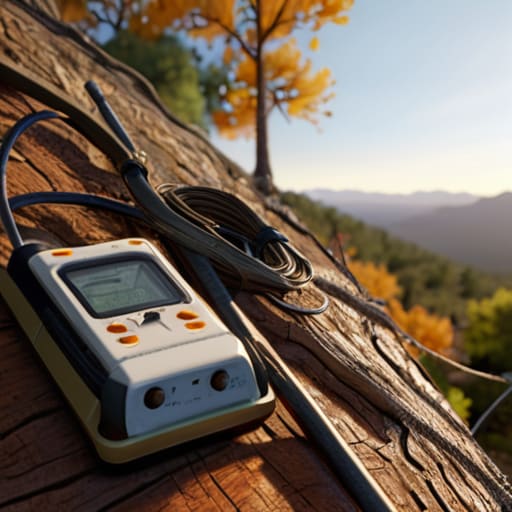
Now, here is where most people get tripped up: they assume the SWR reading on their transceiver tells the whole story. It doesn’t. When I’m out on a ridge, I don’t just look at the display; I look at how the environment is interacting with the feedline. If you are working with a wire dipole, your impedance matching for dipole antennas is going to shift the second you move that ladder line away from the ground or near a tree limb. I’ve seen plenty of setups that look perfect on a bench, but once you get that ladder line hung at a real-world ladder line installation height—say, 10 feet up in a scrub oak—the impedance swings wildly because the ground plane is no longer a theoretical constant.
Don’t be afraid to move the feedpoint. If your SWR is creeping up, don’t immediately reach for a tuner; try adjusting the physical position of the line first. I’ve found that even a six-inch shift in where the line hangs can be the difference between a clean signal and a noisy mess. Also, keep an eye on your coaxial cable to ladder line connection. If that transition point isn’t tight and shielded, you’ll end up feeding RF right back into your shack instead of out into the ether.
Coaxial Cable to Ladder Line Connection Without the Magic Tricks
Now, this is where most people trip up and start looking for a “magic” box to fix their problems. You’ll see plenty of forum posts suggesting you just slap a 4:1 balun on the end of your coax and call it a day, but that’s not how physics works with a high-impedance line. If you are transitioning from your coax to the ladder line, you aren’t looking for a transformer; you’re looking for a way to bridge the gap between an unbalanced signal and a balanced line without creating a massive common-mode current mess. I’ve spent too many afternoons troubleshooting “ghost” signals that were actually just my coax acting like part of the antenna because the unbalanced to balanced feedline conversion was handled poorly.
The cleanest way to do this is to keep your coax as short as humanly possible before it hits the ladder line. I typically run my coax straight from the transceiver to a small junction box, then immediately transition to the ladder line. If you’re forced to run coax alongside the ladder line for a few feet, you’re going to see your antenna feedline VSWR ratio start to dance in ways that don’t make sense. Don’t bother with fancy matching networks here; just focus on a solid, clean physical connection and keep that transition point as close to the radio as the wire allows.
Five Things the Theory Books Leave Out About Ladder Line
- Stop assuming your feedline is invisible; if you run ladder line too close to a metal gutter or a fence, you’re essentially building a giant, unintentional transformer that’ll wreck your impedance. Keep it clear of anything conductive for at least a foot if you want those measurements to mean anything.
- Don’t get lazy with the tension. I’ve seen too many people let the line sag like a wet noodle, and once that geometry changes, your SWR follows suit. If you want a predictable match on 40 meters, you need to tension that line properly, even if it means an extra ten minutes of wrestling with the guy wires.
- Watch your height—and I mean really watch it. I’ve found that running ladder line at 10 feet vs 20 feet above the ground changes the coupling to the earth enough to shift your resonant frequency by several hundred kilohertz. If you’re building a low-impedance system, don’t be surprised when it refuses to play nice because you didn’t account for ground proximity.
- Forget the “set it and forget it” mentality with your balun or matching network. Because ladder line is so sensitive to its environment, a heavy rain or even a particularly humid morning can shift your match. I always keep my NanoVNA in my pack for this reason; if the band conditions are good but your SWR is climbing, check the line before you blame the ionosphere.
- Treat your connections like they actually matter. A loose screw on a terminal block or a poorly crimped lug might work fine in a controlled lab, but out on a hillside in a bit of wind, that high-impedance line will turn every tiny resistance into a massive headache. Tighten everything twice, then tighten it once more.
The Bottom Line: What Actually Matters When You’re Hanging Wire
Stop treating ladder line like a magic wand; it only works if you respect the physics of height. If you don’t get that feedline high enough off the ground to minimize capacitive coupling to the earth, your SWR is going to be a moving target regardless of how much you tune it.
Real-world impedance isn’t a static number in a textbook. When I’m out in the field, I’ve learned that your match will shift based on how much moisture is in the air and how close that line is to a tree branch, so always leave yourself a little room for error in your tuning.
Don’t overcomplicate the transition from coax to ladder line. You don’t need a laboratory-grade balun to get started, but you do need a clean, solid connection and a clear understanding of where your impedance transformation actually begins.
The Impedance Myth
People love to talk about ladder line like it’s some mystical cure-all for high SWR, but let’s be clear: it’s just a way to keep your feedline from eating your signal. If you don’t hang that line high enough to actually let the current flow, all the twin-lead in the world won’t save your pattern from collapsing into the dirt.
Wren Castellano
The Real-World Verdict
At the end of the day, feeding an antenna with ladder line isn’t some mystical ritual; it’s just physics, and it’s physics that works if you respect the variables. We’ve covered the necessity of keeping that line away from your coax to avoid inductive coupling, the importance of a clean transition at the matching network, and why you can’t just ignore the physical height of your feed point. I’ve seen too many people struggle with high SWR on a dipole simply because they tried to treat a wideband transmission line like a standard RG-8X. If you follow the steps we discussed—measuring your impedance properly and ensuring your connection to the coax is tight and shielded—you aren’t just guessing anymore. You are building a system based on measured reality rather than old-school hearsay.
There is a specific kind of satisfaction that comes from looking up at a wire in a tree and knowing exactly why it’s performing the way it is. In an era where we can just plug in an SDR and click a button, there is still immense value in the tactile, slightly messy work of building your own feed systems. It might take a bit more time to get the geometry right, and your hands might get a little more calloused, but that’s the price of admission. Don’t be afraid to fail a few times or find that your ground plane isn’t quite where you thought it was. That’s not a mistake; it’s just more data for your next build. Get out there, get it measured, and I’ll see you on the bands.
Frequently Asked Questions
If I'm using a balanced ladder line, do I really need to worry about the common-mode current returning on my coax shield, or will a simple 1:1 choke at the feed point handle it?
Look, a 1:1 choke at the feed point is a good start, but it isn’t a magic wand. If your ladder line isn’t perfectly balanced or if your geometry is slightly off, that common-mode current will still find its way back down your coax shield. I’ve seen setups where the choke was fine, but the operator was still getting RF in the shack because the current was bypassing the choke via the ground system. Put a choke at the feed point, sure, but I’d also put one right where the coax enters the shack. It’s better to over-engineer the isolation than to spend an hour chasing phantom interference.
How much does the proximity of the ladder line to nearby metal objects, like a porch railing or a metal roof, actually mess with my SWR readings?
It messes with them more than most people realize. If you’re running your ladder line right next to a metal porch railing, you aren’t just feeding an antenna anymore; you’re feeding a complex, unintentional parasitic element. I’ve measured SWR shifts of 0.5 or more just by moving the line six inches away from a metal gutter. The proximity changes the capacitance between the lines and the ground plane, throwing your impedance right out the window. Keep it clear.
I've heard people say you can't use ladder line in the rain, but what's the actual impact on the impedance—does it just drift, or does it completely kill the match?
It won’t kill the match instantly, but it’ll definitely make it drift. When the dielectric gets wet, the characteristic impedance drops because water’s permittivity is much higher than air. I’ve seen a well-tuned 450-ohm line dip down toward 300 ohms in a heavy downpour. It’s not a catastrophe, but your SWR will climb, and your resonant frequency will shift lower. If you’re operating in a damp valley, just expect to re-tune.
