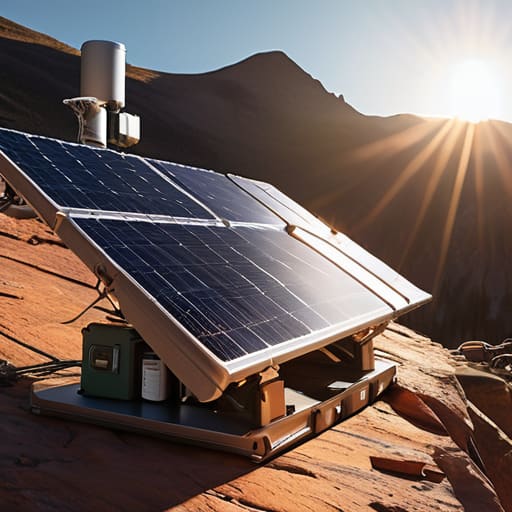
I spent three hours last Tuesday hiking up a ridge in the Cascades, only to realize my “high-efficiency” folding panel was doing nothing but soaking up heat while my battery levels cratered. It’s the same old story: someone reads a glossy spec sheet and thinks they’ve mastered the physics of power. If you’re looking for a guide on how to choose a solar panel for radio based on what a marketing department says about “peak wattage,” you’re in the wrong place. Real-world solar isn’t about what the box says happens in a laboratory under perfect, perpendicular light; it’s about how many actual amps you’re getting when you’re tucked under a canopy of Douglas firs or dealing with a cloud bank rolling in from the coast.
I’m not here to sell you a kit or push some overpriced brand just because their logo looks good on a tactical backpack. I’m going to show you how to look at voltage regulation and actual current delivery so you don’t end up sitting in the dark with a dead rig and a useless piece of silicon. I’ll give you the numbers I’ve measured in the field, and I’ll tell you exactly when a panel is worth the weight in your pack and when it’s just expensive dead weight.
Table of Contents
- The Real Solar Power Requirements for Your Transceiver
- Stop Using Vague Estimates a Practical Solar Panel Wattage Calculation
- Five Things the Spec Sheet Won't Tell You
- The Bottom Line Before You Hit the Trail
- ## Forget the Label on the Back
- Getting Out of the Lab and Into the Field
- Frequently Asked Questions
The Real Solar Power Requirements for Your Transceiver
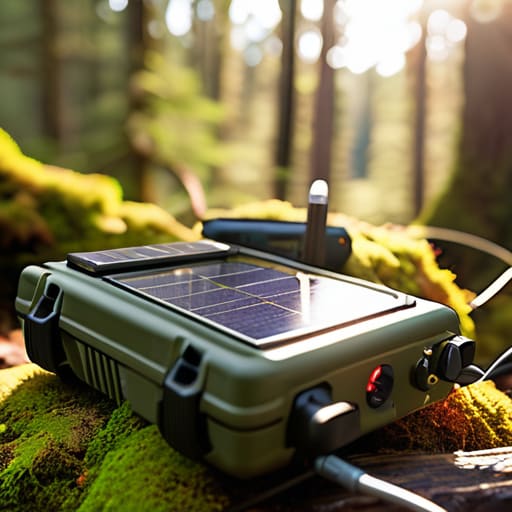
Before you go shopping, you need to stop looking at the “peak power” sticker on the back of the panel and start looking at your actual current draw. If you’re running a lightweight QRP rig, your solar power requirements for transceiver operation are modest, but if you’re trying to push 50 watts through a high-gain antenna, your appetite changes instantly. I once tried to run a mid-tier HF rig off a tiny 10-watt panel I thought would be “enough” for a weekend hike; I spent more time staring at a dead battery than actually making contacts. You have to account for the voltage sag that happens when you key the mic.
You also need to decide how you’re managing the handoff between the sun and your storage. If you’re serious about battery charging for portable radio setups, don’t skimp on the controller. I’ve seen people try to save twenty bucks with a cheap PWM controller, only to find out they’re losing nearly 30% of their potential energy because the voltage isn’t being optimized. If you can swing the extra weight and the cost, an MPPT vs PWM comparison usually ends with MPPT being the clear winner for anyone who actually wants to operate when the clouds roll in.
Stop Using Vague Estimates a Practical Solar Panel Wattage Calculation
Look, I’ve seen too many people pull a 20-watt panel out of a backpack and wonder why their rig dies the moment they key the mic on a high-power mode. If you’re running a modern SDR or a heavy-duty HF transceiver, you can’t just guess. A proper solar panel wattage calculation starts with your actual draw, not the “peak” number printed on the back of the panel in fine print. You need to account for the quiescent current of your radio, the efficiency loss in your cables, and—this is the part everyone forgets—the reality that a “100W” panel is rarely giving you 100W when it’s sitting under a light canopy or at a 45-degree angle.
To do this right, calculate your total daily amp-hour consumption and match it to your battery’s capacity. If you’re looking at battery charging for portable radio setups, you need enough overhead to replenish what you use during the night or during a heavy DX session. I usually aim for a buffer of at least 30% more than my math suggests. It’s better to carry an extra pound of silicon than to spend your evening staring at a dead battery while the ionosphere is wide open.
Five Things the Spec Sheet Won't Tell You
- Stop chasing peak wattage and look at the voltage range. Most portable rigs or battery chargers need a specific voltage window to actually work, and if your panel’s Vmp (voltage at maximum power) drops too low when a cloud passes by, your charging controller is going to quit on you right when you need it most.
- Account for the “shadow tax.” If you’re setting up on a ridge and a single branch casts a shadow across even a small corner of a cheap polycrystalline panel, your output doesn’t just dip—it can crater. I’ve seen 50W panels drop to the equivalent of a flashlight because of a stray leaf; if you can, look for panels with bypass diodes that actually do their job.
- Buy for the reality of your location, not the math in your office. If you’re operating in the Pacific Northwest or tucked into a valley, a massive 100W rigid panel is a heavy, expensive paperweight. You need high-efficiency monocrystalline cells that can squeeze every bit of juice out of a low-angle sun or a gray afternoon.
- Check the build quality of the junction box and the connectors. I’ve seen plenty of “bargain” panels where the MC4 connectors feel like they’re held together with prayer and hope. If you’re out in the wind or a light drizzle, a loose connection or a poorly sealed box is going to introduce more resistance than the sun ever could.
- Match your panel to your battery chemistry, not your radio. Your radio is the load, but your battery is the reservoir. If you’re using LiFePO4—which you should be—make sure your solar controller is actually tuned to handle those specific charging profiles, otherwise you’re just wasting good sunlight trying to force current into a battery that won’t take it.
The Bottom Line Before You Hit the Trail
Stop chasing peak wattage numbers on a sticker; calculate your actual current draw at the transceiver and add a 30% buffer for when the clouds roll in or the sun dips behind a ridge.
Voltage matters as much as amperage—ensure your panel’s output range actually plays nice with your regulator and battery, or you’ll just be wasting energy as heat.
Build for the worst-case scenario, not the sunny afternoon; if your setup can’t keep the lights on during a low-light window, it isn’t a reliable power source, it’s just a heavy piece of glass in your pack.
## Forget the Label on the Back
Stop treating the wattage rating on a solar panel like it’s a law of physics; it’s a best-case scenario measured in a lab under perfect conditions. If you’re out on a ridge at 3:00 PM with a bit of canopy overhead and the sun dipping low, that 50-watt panel is going to behave a lot more like a 15-watt panel, and if your math didn’t account for that drop, you’re going to be sitting in the dark with a dead battery.
Wren Castellano
Getting Out of the Lab and Into the Field
At the end of the day, choosing a solar panel isn’t about matching a spec sheet to a marketing brochure; it’s about understanding your actual duty cycle and the reality of your environment. You’ve done the math on your transceiver’s draw, you’ve accounted for the inevitable loss in your charge controller, and you’ve realized that a 20-watt panel under a canopy of oak trees is going to behave very differently than one sitting on a granite ridge. Don’t let the nominal ratings fool you into thinking you’re set for life. Always build in a buffer for those cloudy afternoons and remember that real-world efficiency is rarely as pretty as the math on your napkin.
There is a specific kind of magic that happens when you’re sitting on a hillside, miles from the nearest socket, and you hear a weak signal pull itself out of the noise because your battery held steady. That connection is earned through the gear you choose and the way you prepare for the elements. Radio is about more than just transmitting; it’s about the independence that comes from mastering your own power source. So, go ahead and get out there, test your setups, and see how they perform when the sun starts to dip. Just make sure you’ve got enough juice left to call home.
Frequently Asked Questions
If I'm operating in the shade of some trees or under a canopy, how much of a buffer do I need to add to my wattage calculations to keep from dropping my voltage?
If you’re operating under a canopy, forget your textbook calculations. Dappled light is a killer; those rapid fluctuations in irradiance will drive your charge controller crazy. I usually add a 50% buffer to my calculated wattage just to stay safe. If your math says you need 40W, pack a 60W panel. It’s better to have excess headroom you aren’t using than to watch your voltage sag and lose a contact because a cloud drifted by.
Does the type of charge controller I use actually impact how much usable power I get from a smaller, portable panel?
It matters more than most people realize, especially when you’re working with a small panel. If you use a cheap PWM controller, you’re essentially just a glorified switch; you’re throwing away a significant chunk of the panel’s potential because the controller forces the panel to match the battery’s voltage. If you switch to an MPPT, you’re actually managing the panel’s maximum power point. On a cloudy day or in the brush, that difference is the margin between a working rig and a dead battery.
I've seen those rigid glass panels and these new foldable ones; is the efficiency difference worth the extra weight when I'm hiking up to a summit?
Look, if you’re hiking a summit, every ounce counts, but don’t let “lightweight” fool you into buying junk. Those rigid glass panels are more efficient and handle heat better—which is ironic because heat actually kills solar output. However, for portable work, I’ve found the foldable ETFE-coated panels are the sweet spot. They take a beating in a pack and the efficiency loss compared to glass is negligible compared to the massive headache of lugging a heavy, fragile frame up a trail.
