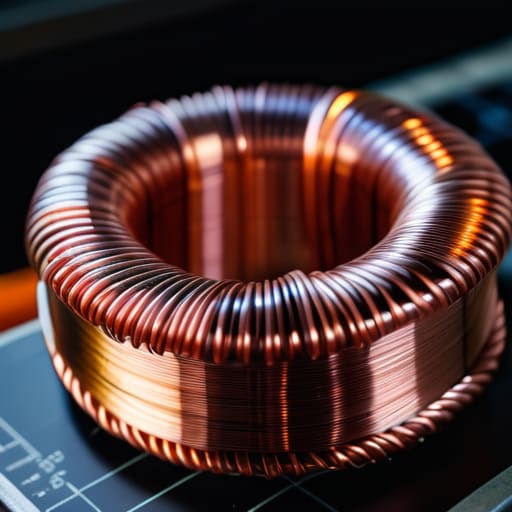
I spent three hours in my workshop last Tuesday staring at a pile of mismatched ferrite cores, feeling that familiar itch of frustration because a forum thread had convinced me I needed a specialized, high-cost component for a simple matching network. People love to wrap basic physics in layers of expensive jargon, making you feel like you need a PhD just to understand what is a toroid and why it isn’t some magical black box. Let’s get one thing straight: it’s a doughnut-shaped core, and while the material science matters, most of the “magic” people talk about is just efficient magnetic containment that keeps your signal from leaking into your neighbor’s toaster.
I’m not here to give you a lecture from a textbook that hasn’t been updated since the Reagan administration. My goal is to show you how these things actually behave when you’re winding them on a Tuesday night with a lukewarm cup of coffee. I’ll tell you which cores are worth your hard-earned money and which ones are just overpriced plastic disguised as precision components. We’re going to talk about turns, winding tension, and real-world saturation, because if you don’t understand the geometry, you’re just guessing with your radio.
Table of Contents
- The Real Truth About Electromagnetic Induction in a Toroid
- Permeability of Magnetic Cores Why Materials Matter More Than Math
- Five Ways to Stop Treating Your Toroids Like Magic Beans
- The Bottom Line: Don't Overcomplicate It
- ## Stop Treating Magnetics Like Magic
- Stop Guessing and Start Measuring
- Frequently Asked Questions
The Real Truth About Electromagnetic Induction in a Toroid
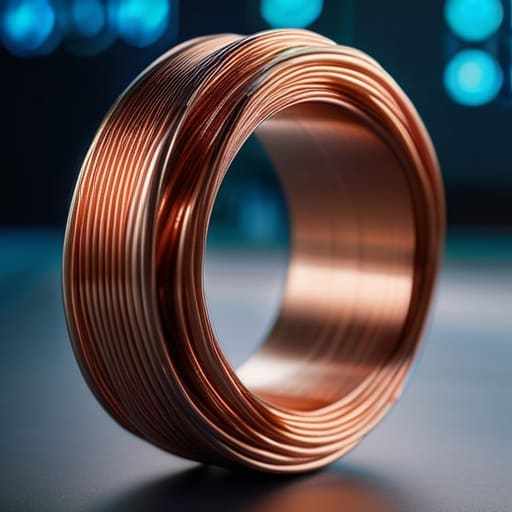
People love to talk about the “magic” of induction, but let’s strip the mysticism away. At its heart, the toroidal transformer working principle is just about containment. When you run current through a wire, it creates a magnetic field that wants to wander off in every direction like a lost kid in a mall. In a standard E-core or a square transformer, that field leaks out, causing interference or just wasting energy. But with a toroid, that doughnut shape forces the magnetic flux to stay trapped within the ring. Because the path is closed and continuous, the magnetic flux density in toroids stays concentrated exactly where you want it, which is why your signal doesn’t turn into a mess of EMI for the rest of your house.
It isn’t just about the shape, though; it’s about what’s inside the ring. The permeability of magnetic cores determines how much “grip” that core has on the magnetic field. If you’re using a cheap ferrite for a high-power RF application, you’re going to find out the hard way that the core can only handle so much before it saturates and stops behaving. I’ve seen plenty of guys try to build high-Q filters using the wrong material, only to wonder why their impedance curve looks like a mountain range instead of a smooth line. It’s not magic—it’s just physics, and it’s picky.
Permeability of Magnetic Cores Why Materials Matter More Than Math
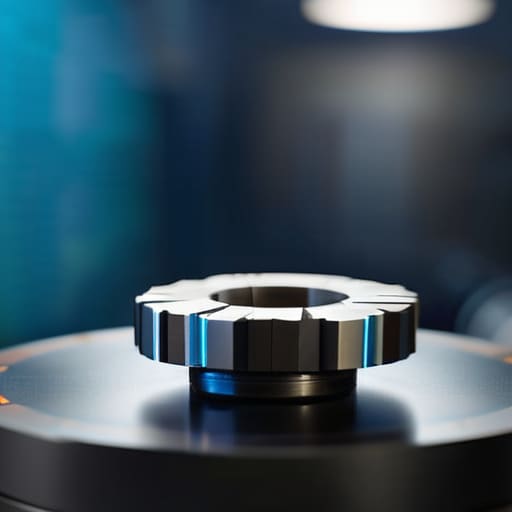
You can run all the math you want on a piece of paper, but if you pick the wrong material, your calculations are just expensive fiction. When we talk about the permeability of magnetic cores, we aren’t just discussing a number in a datasheet; we are talking about how much “room” you’re giving the magnetic field to move. If you use a low-permeability material where you should have used a high-mu ferrite, you’ll end up with a massive amount of leakage and a lot of wasted heat. I’ve seen plenty of beginners try to build a high-gain inductor using a core that’s essentially just glorified iron, only to wonder why their impedance curve looks like a mountain range instead of a smooth line.
The real magic happens when you match the material to the frequency. A core that works beautifully for a 60Hz toroidal transformer working principle is going to be absolute junk for an RF filter at 14 MHz. At higher frequencies, you have to worry about core losses and how the material handles the shifting field. It isn’t just about getting the inductance right; it’s about managing the energy so it stays inside the core rather than bleeding out into your surroundings.
Five Ways to Stop Treating Your Toroids Like Magic Beans
- Stop obsessing over the math for a second and look at the core size. I’ve seen plenty of beginners try to shove a high-current transformer winding onto a tiny ferrite bead they pulled out of a broken power supply, only to wonder why the core is melting or why the inductance is tanking. If your component is running hot, it’s not “magic”—it’s physically saturated.
- Mind your winding geometry. A toroid is only efficient if you actually keep the magnetic field contained within that doughnut shape. If you’re sloppy with your turns and let the wire wander too far from the core, you’re basically building a very inefficient, very expensive air-core inductor that leaks EMI like a sieve.
- Don’t ignore the DC resistance of your wire. In my experience, people spend all this time picking the perfect high-permeability material but then use wire so thin that the resistive losses eat their entire signal before it even leaves the coil. If you’re building for high power, use thicker gauge than you think you need.
- Remember that “one size” does not fit all when it comes to frequency. A toroid that works beautifully for a 50kHz notch filter is going to be a total brick when you try to use it in a high-frequency RF application. You have to match the material’s permeability to your operating frequency, or you’re just wasting your time.
- Watch out for air gaps. If you’re building something where you need to tune the inductance manually, you might be tempted to crack the core or use a spacer. Just know that even a tiny, uneven gap changes the permeability of the whole setup. If you’re going to do it, do it precisely, or just accept that your measurements are going to be a moving target.
The Bottom Line: Don't Overcomplicate It
Stop treating toroids like magic components; they are just tools for containing magnetic flux, and their effectiveness depends entirely on choosing a core material that matches your frequency range.
Math is a fine starting point, but it won’t save you if you ignore the physical reality of how your windings are laid out or how much heat that specific core can actually dump.
If you’re building something for the field, remember that a toroid’s performance isn’t just about the number of turns—it’s about the quality of the core and how well you’ve managed the leakage.
## Stop Treating Magnetics Like Magic
Look, a toroid isn’t some mystical component that performs alchemy; it’s just a doughnut-shaped piece of geometry designed to keep your magnetic field from leaking out and making a mess of everything else. If you understand that its real job is containment, you’ll stop fighting your impedance mismatches and start actually designing your circuits.
Wren Castellano
Stop Guessing and Start Measuring
At the end of the day, don’t let the math intimidate you into thinking a toroid is some mystical object. It’s a tool—a piece of geometry designed to keep your magnetic field contained so you aren’t leaking energy into everything else in your shack. We’ve talked about why the core material dictates your performance and why the way you wind that wire determines whether you’re building a high-quality filter or just a very expensive heater. If you get the permeability right and keep your windings tight, you’re ahead of 90% of the people out there. Just remember: the math provides the map, but the physical component is the terrain. If your measurements don’t match the datasheet, trust your meter, not the textbook.
There is a specific kind of satisfaction that comes from building something from scratch, seeing a signal clean up on your scope, and knowing exactly why it happened. Whether you’re designing a custom balun for a portable wire antenna or just cleaning up the noise on your SDR front end, understanding these fundamentals puts the power back in your hands. Don’t be afraid to blow a few cores or mess up a winding pattern while you’re learning; that’s just the price of admission. Get out there, build something, and measure the results. That is how you move from being someone who just follows schematics to someone who actually understands the physics of the airwaves.
Frequently Asked Questions
I’ve got a handful of these cores, but how do I actually know if I’m winding them correctly so I don't just end up with a giant, inefficient heater?
The quickest way to tell if you’re building a heater instead of an inductor is to watch your DC resistance versus your AC performance. If you’re winding too many turns of thin wire to hit a target inductance, you’re just creating a resistor. I always aim for the fewest turns possible with the thickest wire that fits the window. If the core gets hot during a simple test, your winding density is too high or your material is saturating.
Is there a real-world difference in my antenna tuner or filter if I use a cheaper ferrite versus a high-end powdered iron core?
Look, if you’re building a high-Q filter for a narrow band, that cheap ferrite is going to saturate and turn into a very expensive heater the moment you key the mic. Ferrites are great for high impedance and tight losses, but they’re temperamental. Powdered iron cores are much more forgiving with power handling and wide bandwidth. If you’re just matching a wire antenna in a backyard, the iron core is your friend; for precision filtering, don’t skimp.
How much does the physical size of the toroid actually matter for my power handling, or is that just another one of those "rules of thumb" that doesn't hold up under a real load?
It’s not just a rule of thumb; it’s physics. If you try to shove 50 watts through a tiny core designed for signal processing, that core is going to turn into a heater faster than you can say “SWR alarm.” It’s about volume and surface area. A larger core has more room for the magnetic flux to spread out and, more importantly, more surface area to dissipate the heat. Size is your thermal headroom.
