I spent three hours last Tuesday staring at a spec sheet for a guy-wire kit that cost more than my first car, all because a forum thread convinced me I needed a heavy-duty lattice structure for a simple dipole. It’s the same nonsense I see every year: people getting lost in the math of wind loading and structural shear before they’ve even looked at their actual ground conditions. Most of the advice you’ll find online regarding how to choose a tower is either written by someone trying to sell you a premium aluminum mast or someone who hasn’t actually had to climb one in a crosswind. You don’t need a skyscraper; you need a platform that won’t vibrate itself into a tuning nightmare every time the wind picks up.
I’m not here to sell you on the most expensive option, and I’m certainly not going to quote a textbook that assumes you’re building in a vacuum. Instead, I’m going to tell you what actually happens when you put weight on a mast at forty feet versus sixty feet. We’re going to look at real-world stability, the actual cost of maintenance, and how to match your steel to your specific antenna load without wasting a cent.
Table of Contents
The Real Math Behind Tower Load Capacity Calculations
Look, you can stare at a spec sheet all day, but a manufacturer’s “maximum load” is often a best-case scenario calculated in a vacuum. When I’m looking at tower load capacity calculations, I’m not just looking at the weight of the metal; I’m looking at the wind. A heavy Yagi might only weigh twenty pounds, but in a forty-knot gust, that antenna becomes a sail that’s trying to twist the entire mast. If you’re weighing a monopole vs lattice tower comparison, remember that the lattice structure handles wind better by letting it pass through, whereas a monopole takes the full brunt of the force, transferring every ounce of that torque directly into your foundation.
Before you bolt anything to a mast, you need a proper tower structural integrity assessment that accounts for your specific environment. I’ve seen guys install a beautiful setup only to have the whole thing lean five degrees after the first winter storm because they ignored the lateral load. You have to calculate the effective projected area of every piece of hardware you hang. If you don’t account for the windage of your feeders and even the radials, your math is just guesswork, and guesswork is how you end up with a pile of aluminum in your backyard.
Monopole vs Lattice Tower Comparison Data Over Hype
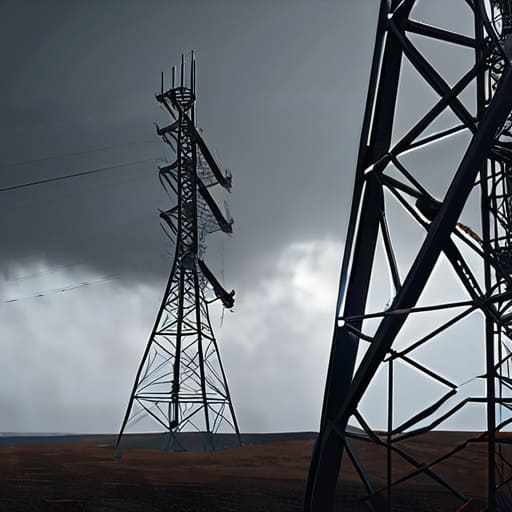
When you’re looking at a monopole vs lattice tower comparison, most people get distracted by how the monopole looks—it’s sleek, it’s modern, and it doesn’t look like a giant metal spiderweb in the backyard. But aesthetics don’t handle wind load. I’ve seen plenty of “sleek” installations fail because the owner ignored the actual tower structural integrity assessment required for their specific mounting height. A monopole is great for a single, lightweight whip or a small array where footprint is your biggest constraint, but the moment you start adding heavy rotators or multiple directional Yagis, that slender pole starts behaving like a tuning fork in a gale.
Lattice towers, on the other hand, are the workhorses for a reason. They offer a much higher strength-to-weight ratio because they let the wind pass through the structure rather than trying to fight it head-on. If your site selection criteria for towers involve a high-exposure ridge or a coastal area with heavy gusts, you want the lattice. You get more mounting real estate and much better stability for heavy gear, though you’ll pay for it in assembly time and more complex grounding. Don’t pick a monopole just because it’s easier to bolt together; pick it because your specific load profile actually allows it.
Five Things the Catalog Won't Tell You About Your Tower
- Stop looking at the static load and start looking at the wind. A tower might hold the weight of your antennas on a calm Tuesday, but when a 40mph gust hits that heavy Yagi, the leverage acts like a crowbar on your base mounting. I’ve seen plenty of “rated” towers buckle because someone forgot to calculate the dynamic force of a wind gust against the surface area of the elements.
- Grounding isn’t an afterthought; it’s part of the structure. If you’re putting up a lattice tower, you aren’t just building a perch for wires; you’re building a massive lightning rod. Don’t just slap a copper braid on the base and call it a day. I always run a dedicated ground ring around the base and bond the tower itself to it—it’s better to overbuild the ground than to watch your transceiver fry during a summer storm.
- Height is a trade-off, not a free lunch. Everyone wants to go higher to get away from the local noise floor, but every extra foot of steel adds significant wind load and requires more expensive guy-wire tensioning. Before you commit to a 50-foot mast, measure your actual signal-to-noise ratio at 30 feet. Sometimes, a well-tuned dipole at a lower height beats a noisy, swaying tower every single time.
- Watch your guy-wire tension like a hawk. If you’re going with a guyed tower, you need to realize that temperature swings change the tension. I’ve seen guys lose sleep because their tower started singing in the wind, only to find the lines were too tight for a cold snap. Get a decent tension gauge and check them seasonally; if you’re guessing by “feel,” you’re asking for a structural failure.
- Evaluate your footing based on your actual soil, not the manual. A catalog might say a tower is stable, but if you’re mounting into sandy loam or soft clay, that foundation is going to shift. I never trust a “bolt-down” kit without checking the compaction of the ground first. If the soil is soft, you’re going to need a concrete pier that actually reaches something solid, or you’ll be watching your tower lean a few degrees every year.
The Bottom Line Before You Start Digging
Stop guessing your wind load based on a manufacturer’s “ideal” rating; if you’re installing in a gap between hills or a coastal stretch, you need to calculate for the actual gusts you’ve measured, or that lattice tower is going to become a very expensive lawn ornament.
Don’t fall into the trap of choosing a tower based on height alone; a shorter, heavier-duty mast with a solid foundation will always outperform a taller, flimsy pole that sways enough to turn your directional Yagi into a random noise generator.
Always factor in your future self—if you think you might add a second element or a heavier rotatable beam in two years, buy the guy-wire tension and the structural capacity for that setup now, because retrofitting a foundation is a headache you don’t want.
Stop Guessing Your Wind Load
Most people pick a tower based on the height they want to reach, but they forget that wind doesn’t care about your signal report. I’ve seen guys install a beautiful lattice structure only to realize they didn’t account for the actual surface area of the Yagis they were hanging at sixty feet; if you aren’t calculating the specific wind load of your antenna array against the structural limits of that steel, you aren’t building a station, you’re building a very expensive lightning rod waiting to fall over.
Wren Castellano
Getting it Right the First Time
At the end of the day, choosing a tower isn’t about picking the shiny catalog option or following what the guy at the local club says worked for him in the nineties. It’s about the math you do before the first bolt is tightened. You have to account for the actual wind load of your specific antenna array, the reality of your soil’s holding power, and the fact that a lattice tower behaves very differently under stress than a smooth monopole. If you ignore the mechanical realities of your specific site, you aren’t just risking a broken mast; you’re risking a very expensive pile of scrap metal in your backyard. Measure your loads, respect your guy-wires, and don’t guess.
Once the steel is up and the feedline is secured, the real magic starts. There is nothing quite like the feeling of looking up at a structure you engineered yourself, knowing it can hold steady through a gale, and then hearing a weak signal pull through the noise on a band you thought was dead. Radio is a physical, tactile pursuit, and your tower is the foundation of that connection to the rest of the world. Build it with precision and intention, and I promise you, it will be the last time you have to worry about the hardware, leaving you free to focus on the only thing that actually matters: the signal.
Frequently Asked Questions
If I'm mounting a heavy Yagi at 50 feet, do I actually need a lattice tower, or can I get away with a heavy-duty guyed monopole?
At 50 feet, you’re in the gray zone. If that Yagi is a lightweight dipole or a small beam, a heavy-duty monopole is fine. But if you’re mounting a high-gain, heavy-element beam, the wind load is what kills you, not the weight. I’ve seen monopoles twist like a wet towel in a decent gust because the guy-wires weren’t tensioned to spec. If you don’t want to spend your weekends tightening guy-wires, go lattice.
How much does the actual wind speed in my specific valley matter compared to the manufacturer's "standard" wind load ratings?
It matters immensely. Manufacturer ratings are usually based on “standard” open-field wind speeds, but valleys change the math entirely. You’ve got venturi effects where the wind accelerates through the gap, and localized turbulence that hits your mast with much higher frequency than a textbook predicts. If you’re sitting in a wind tunnel between two ridges, that “standard” rating is just a suggestion. I’ve seen guy-wires snap on towers that were rated perfectly for the plains.
At what point does adding more height to my tower stop giving me better radiation patterns and start just becoming a massive liability for my guy-wire tension?
You hit the point of diminishing returns the moment your gain increase is eclipsed by the exponential rise in wind load. For a standard dipole at 50 feet, adding another 20 feet might sharpen your pattern, but that extra lever arm multiplies the torque on your base and the tension in your guy-wires. If you’re pushing past 60 feet without upgrading your guy-wire diameter or increasing your anchor footprint, you aren’t building a radiator; you’re building a lever for a storm to snap.
