
I was halfway up a ridge in the Cascades last summer, sweat stinging my eyes and my pack feeling five pounds heavier than it should, when I realized I’d left my specific bias-tee for the portable wire antenna sitting on my workbench back home. I had the rig, the power supply, and the antenna, but I was missing the one tiny piece of copper that actually made the whole system work. It’s a frustrating realization, but it’s the exact reason why most people approach the idea of how to do a station inventory all wrong. They think it’s about making a fancy spreadsheet of their expensive rigs, when really, it’s about knowing exactly which jumper cables, connectors, and specialized adapters are actually in your kit before you’re miles away from the nearest road.
I’m not going to give you a lecture on organizational theory or suggest you buy some overpriced, proprietary labeling system. Instead, I’m going to show you my personal, battle-tested method for auditing your gear so you never find yourself staring at a useless pile of hardware when the band conditions are finally perfect. We’re going to look at the small stuff—the stuff that actually fails—and I’ll tell you exactly how to log your components so you can operate with confidence instead of constant doubt.
Table of Contents
Implementing Real World Asset Tracking Procedures
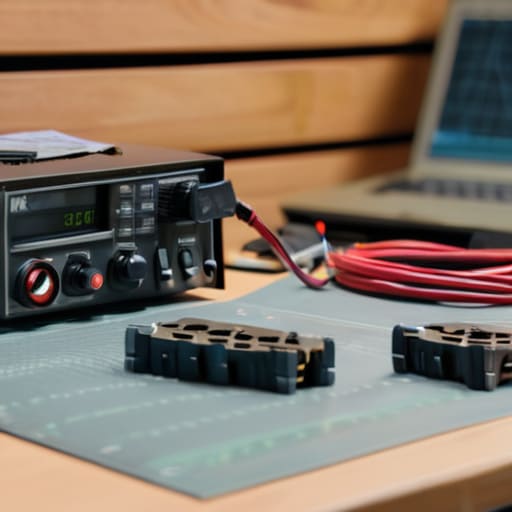
Don’t just throw everything into a spreadsheet and call it a day. Real-world asset tracking procedures in a radio shack need to account for the fact that gear moves—from the desk to the workbench, or from the shack to the backpack for a portable activation. I’ve learned the hard way that if you don’t note down exactly which coax jumper or specific adapter goes with a transceiver, you’ll find yourself staring at a pile of cables in the middle of a field with no way to connect your rig. I use a simple digital log, but I keep a physical stocktaking checklist taped to the inside of my gear cabinet. It’s the only way to catch a missing connector before you’ve already driven forty miles into the hills.
When you actually sit down to do the work, treat it like an inventory audit process rather than a chore. Group your gear by function—RF front ends, power supplies, antennas, and test gear—and log their current condition, not just their presence. If a meter is drifting or a power supply is running hot, note it in your equipment maintenance logs immediately. This prevents that sinking feeling of reaching for your primary analyzer only to realize it’s been dead for three months.
The Stocktaking Checklist for Actual Results
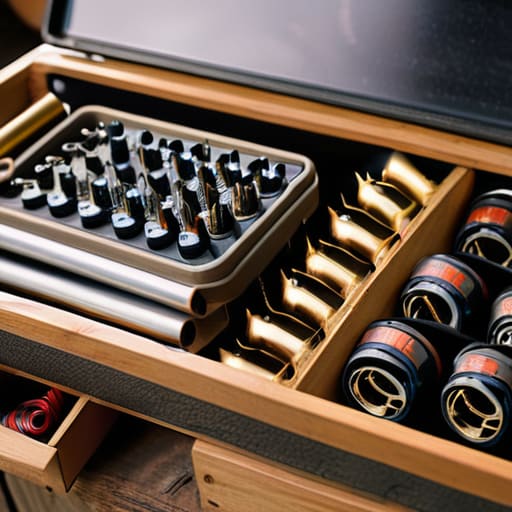
Don’t just make a list of names and hope for the best. A real stocktaking checklist needs to account for the stuff that actually fails when you’re under pressure. I’m not talking about just noting that you own an Icom transceiver; I mean noting the serial number, the current firmware version, and whether the battery still holds a charge after three months in a drawer. You need to include your consumables, too—spools of RG-8X, heat shrink, and various connectors. There is nothing quite as soul-crushing as hiking two miles up a ridge only to realize your only spare coax jumper is a frayed mess you forgot to swap out during your last check.
I also recommend integrating your equipment maintenance logs directly into this process. If you’re logging an antenna tuner, note its last calibration or if the electrolytic capacitors look like they’re bulging. If you find a mismatch between what your spreadsheet says and what’s actually on the shelf, don’t just ignore it. Document the discrepancy reporting immediately. If you don’t track why gear goes missing or breaks, you’re just spinning your wheels and wasting money on replacements you didn’t actually need.
Five Rules for Not Losing Your Mind (or Your Gear)
- Stop grouping everything by “radio stuff” and start grouping by function. A drawer full of random adapters, BNC connectors, and SMA-to-N jumpers is useless when you’re staring at a broken feedline in the middle of a field. Group your connectors, your tools, and your spares separately so you aren’t digging through a mountain of copper just to find one single crimp tool.
- Label your cables with more than just “Coax.” I want to see the length and the type written on a piece of heat shrink or a wrap. There is nothing more frustrating than pulling a 50-foot RG-8 segment out of a bin only to realize it’s actually a 25-foot RG-58 that’s going to give you way too much loss for the band you’re trying to work.
- Test your “spares” before they become part of the inventory. If you find a vintage power supply or a spare transceiver in a box, don’t just log it as “working condition.” Plug it in, check the voltage stability, and note it down. A “spare” that fails the moment you need it isn’t an asset; it’s just more clutter taking up space on your shelf.
- Document the “invisible” stuff, like your antenna heights and ground configurations. If you have a permanent installation, your inventory shouldn’t just say “Dipole.” It should say “3-element dipole, 22 feet AGL, mounted on a 30-foot mast.” When you eventually move or upgrade, you’ll actually know what baseline you’re trying to beat.
- Keep a “Go-Bag” sub-inventory that is strictly separate from your shack. I have a rule: if it’s in my portable kit, it stays in the kit. If you mix your field deployment gear with your bench testing gear, you’ll find yourself halfway up a hill only to realize you forgot the specific DT-8 jumper you need to connect your SDR to your antenna.
The Bottom Line for Your Shack
Stop treating your inventory like a theoretical exercise; if you haven’t physically touched the component and verified its condition, it doesn’t exist on your list.
Focus on the small stuff—the jumpers, the adapters, and the specific torque wrenches—because those are the exact items that will fail you when you’re halfway up a ridge with no signal.
Build your list around reliability and readiness, not just a pile of gear, so you can actually distinguish between a functional station and a collection of expensive paperweights.
The Cost of a Missing Jumper
A station inventory isn’t about making a pretty spreadsheet for your files; it’s about ensuring that when you finally find that perfect window of propagation, you aren’t staring at a dead SWR meter because you forgot you swapped out a coax jumper three months ago and left it in a drawer.
Wren Castellano
Don't Leave Your DX to Chance

At the end of the day, a station inventory isn’t about satisfying some bureaucratic urge to have a tidy spreadsheet; it’s about eliminating the variables that fail you when you actually need to work a station. You’ve logged the coax lengths, you’ve noted which power supplies are showing ripple on the scope, and you know exactly which jumpers are sitting in the bin versus which ones are actually in the shack. When you stop guessing and start actually knowing the state of your hardware, you stop fighting your own equipment and start focusing on the signal. It turns a chaotic pile of gear into a reliable toolset that functions exactly how you expect it to.
Radio is one of the few remaining disciplines where the connection between your hands and the physics of the airwaves is direct and uncompromising. Taking the time to do this right—to measure, to log, and to organize—is how you respect that connection. It might feel like a chore now, sitting there with a notebook and a multimeter, but I promise you, that effort pays dividends the moment the bands open up and you realize you have exactly what you need to make the contact. Build it right, track it well, and then get out there and go hunting for the DX.
Frequently Asked Questions
Do I really need to log every single jumper cable and connector, or is that just overkill for a small shack?
Look, if you’re running a tiny tabletop setup, maybe you don’t need a spreadsheet for every BNC connector. But if you’re doing portable work or have a growing shack, yes, log the jumpers. I’ve lost more time chasing a faulty coax patch in the field than I ever spent writing down part numbers. It’s not about being a perfectionist; it’s about knowing exactly what you have so you aren’t hunting for a specific length of RG-58 when the bands are finally open.
How often should I actually be doing this—once a year, or only when I feel like I've lost something?
If you wait until you’ve lost something, you’ve already failed. I do a deep dive every six months—usually when the seasons shift and I’m prepping my portable kit for the next hill climb. But honestly? Don’t make it a massive, daunting event. Just do a quick “sanity check” every time you pack up after a long session. If you treat it like a seasonal maintenance task rather than a crisis response, it stays manageable.
If I'm running a portable setup, should I keep a separate inventory for my field gear versus the stuff that stays bolted to the desk?
Absolutely. Keep them separate. Your desk gear is about stability and permanence; your field kit is about weight, fragility, and the specific failure points of being outdoors. When I’m packing for a summit, I don’t want to be scanning a list of heavy-duty power supplies I can’t carry. I need to know exactly which lightweight battery, specific coax jumpers, and antenna segments are in the bag. If it isn’t in the portable log, it doesn’t exist.
