
I remember sitting on a ridge in the Cascades three years ago, watching my expensive, “ruggedized” field transceiver struggle to stay awake because the battery voltage dropped like a stone the moment the temperature hit freezing. I had followed every generic checklist online about how to prepare gear for winter operating, but none of those lists mentioned that cold-soaking your connectors is just as important as having a heavy coat. People will try to sell you on high-tech, weather-sealed enclosures that cost more than a decent antenna, but if you haven’t addressed the basic physics of thermal contraction and moisture ingress, you’re just carrying an expensive paperweight up a mountain.
I’m not here to give you a sanitized manual or a list of things you can buy at a specialty retailer to solve your problems. Instead, I’m going to tell you what actually happens when the frost sets in—from the specific way I grease my N-type connectors to keep them from seizing, to why your SWR readings might lie to you when the dew point shifts. This is about practical, measured steps to ensure your station stays alive when the conditions get ugly, based on what I’ve actually measured in the field.
Table of Contents
- Low Temperature Battery Maintenance Science Over Sentiment
- Winterizing Outdoor Electronics Before the Frost Hits
- Five Things the Manual Won't Tell You About Operating in the Cold
- The Winter Checklist: What Actually Matters
- The Real Cost of a Cold Sled
- Final Checks Before the Freeze
- Frequently Asked Questions
Low Temperature Battery Maintenance Science Over Sentiment
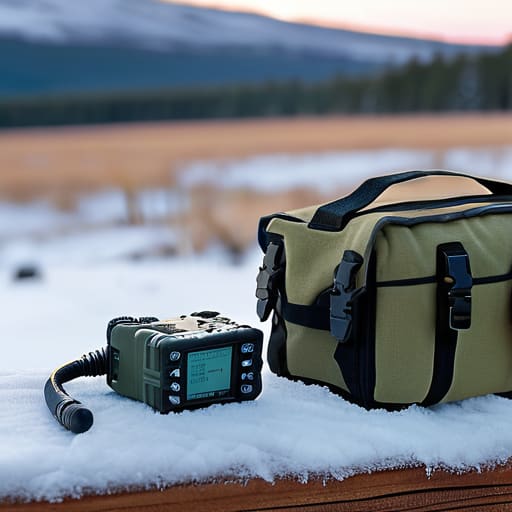
Everyone has a “feeling” about LiFePO4 batteries in the cold, but feelings don’t keep your transceiver alive when the voltage sag hits 11.2V mid-contact. If you’re running portable setups, you need to understand that chemistry doesn’t care about your enthusiasm. I’ve seen plenty of operators pack up a perfectly good battery only to find it won’t take a charge because the internal resistance spiked the moment the temperature dropped below freezing. For low temperature battery maintenance, my rule is simple: if it’s below zero, the battery stays inside your jacket or in a dedicated insulated case.
Don’t rely on those cheap, thin foam sleeves the manufacturers sell; they’re mostly marketing. I’ve tested a DIY setup using closed-cell foam and a small, regulated heating pad, and it’s the only way I trust my gear when I’m sitting on a ridge in November. When you’re winterizing outdoor electronics, the goal isn’t just to keep the battery warm, but to ensure the terminals stay dry. Condensation is the silent killer here—if you bring a frozen battery into a warm tent, you’re inviting moisture to settle right on the contacts.
Winterizing Outdoor Electronics Before the Frost Hits
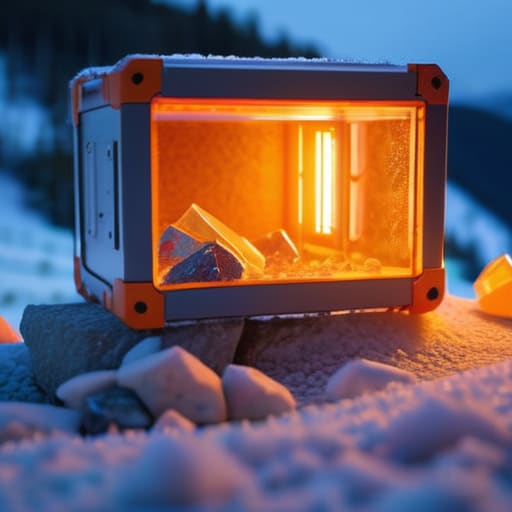
If you’re leaving any part of your station outside—whether it’s a remote repeater, a solar-powered sensor, or just a temporary wire setup on a hilltop—you need to stop thinking about temperature and start thinking about condensation. Most people focus on the cold itself, but it’s the moisture control in cold climates that actually kills your gear. When the sun goes down and the temperature drops, the air can’t hold the same amount of water, and that moisture finds every tiny gap in your enclosures. I’ve seen more PCBs fried by internal condensation than by actual freezing temperatures. I always pack my outdoor enclosures with extra silica gel packets, and I don’t just use the cheap ones; I use the rechargeable ones that change color so I actually know when they’ve reached capacity.
When it comes to winterizing outdoor electronics, don’t rely on “weatherproof” labels. That’s marketing, not physics. I’ve tested IP67-rated boxes that still let a fine mist of frost seep through the cable glands during a hard freeze. If you aren’t using dielectric grease on every single connector, you’re asking for trouble. That grease doesn’t just prevent corrosion; it acts as a physical barrier against the micro-movements of ice crystals that can actually crack a connector housing if you aren’t careful.
Five Things the Manual Won't Tell You About Operating in the Cold
- Check your coax connectors for micro-cracks now. I’ve seen enough cases where a tiny fissure in the jacket acts like a straw, sucking in moisture during a thaw, only to freeze and expand into a structural crack by mid-January. If you see any signs of degradation, replace the segment or re-seal it with self-amalgamating tape before the humidity climbs.
- Don’t rely on “weatherproof” ratings for your antenna insulators. I’ve tested several common plastic insulators in sub-zero cycles, and they get brittle fast. If you’re using a wire antenna mounted on a hill, make sure your insulators aren’t just waterproof, but impact-resistant, or the first heavy ice load will snap them like glass.
- Test your SWR with a cold rig, not a warm one. Electronics behave differently when the thermal mass of the components is dropping. I’ve had rigs that looked stable in a heated shack but started drifting or showing high reflected power the moment they hit 0°C in a portable setup. If your tuner is fighting the rig, it’s probably a thermal shift in the components, not your antenna.
- Re-evaluate your ground plane or radial setup. In summer, the soil is relatively forgiving, but frozen ground is an electrical insulator, not a conductor. If you’re running a vertical, your ground resistance is going to skyrocket the moment the frost line goes deep. I always add a few extra radials or a dedicated counterpoise when I know I’m operating on frozen dirt.
- Stop using cheap, stiff cables for your portable setups. Standard PVC-jacketed coax turns into a frozen garden hose when the temperature drops below -5°C, making it impossible to manage your lines or even get it through a small hole in a tent. Invest in something with a silicone or specialized low-temp jacket; it’s a pain to lug around, but at least you won’t be fighting your own gear just to get a signal out.
The Winter Checklist: What Actually Matters
Stop relying on “all-weather” labels; if you’re mounting an antenna or a remote preamp, assume the seals will fail once the frost cycles, and treat every connector like it’s going to seize.
Don’t let a voltage drop catch you mid-contact; test your battery capacity in the actual cold you expect to face, because a LiFePO4 cell that’s rock solid in your garage will sag under load the moment the mercury hits zero.
Keep your expectations grounded—if your signal disappears during a winter storm, it might be your gear, but it’s just as likely the ionosphere is behaving poorly, so keep a log of the weather alongside your S-meter readings.
The Real Cost of a Cold Sled
“You can buy the most expensive lithium pack on the market, but if you’re pulling it out of a freezing trunk and expecting it to hold a steady voltage under load, you’re chasing a fantasy; I’ve seen more rigs fail because of a thermal management oversight than actual component failure, so stop trusting the spec sheet and start measuring how your gear actually breathes when the temperature hits zero.”
Wren Castellano
Final Checks Before the Freeze
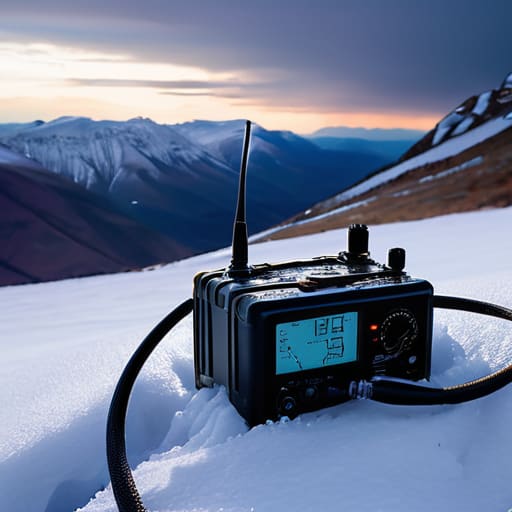
At the end of the day, winter operating isn’t about following a checklist you found on a forum from 2004; it’s about managing the physical realities of chemistry and physics. You’ve checked your battery chemistry to ensure they won’t die the moment the sun goes down, and you’ve secured your outdoor connections so they don’t become frozen, unmovable lumps of salt and ice. Remember, a well-designed antenna is useless if your coax is brittle from the cold or if your power source can’t handle the voltage sag. Don’t rely on hope when you’re out on a ridge in January; rely on the measurements you took in October. If you’ve done the work now, you won’t be spending your precious operating time troubleshooting a dead terminal or a cracked seal.
There is something uniquely rewarding about catching a weak signal through the heavy, cold air of a winter night, especially when you know your gear is actually up to the task. It’s easy to stay inside where it’s warm and let the radio sit in the shack, but the ionosphere doesn’t care about your comfort. When you finally get that contact—the one that only happened because the propagation was just right and your setup was rock solid—it makes every bit of the prep work worth it. Get your gear ready, respect the elements, and I’ll see you on the air.
Frequently Asked Questions
I’ve been using a standard dipole for years, but if I move my portable setup to a higher ridge in December, how much does the increased ground clearance actually change my SWR?
You’re asking the right question. People obsess over the wire length, but the ground is half the antenna. If you move from a valley floor to a ridge, you’re essentially changing your ground plane. That increased clearance usually lowers your capacitance to ground, which might actually shift your resonant frequency slightly higher. Your SWR will likely improve if you were previously “choking” on ground losses, but don’t expect a miracle—if your dipole was tuned for 20 feet, it might need a quick trim once you’re up at 100.
Is there a specific type of dielectric grease you’ve actually tested that won't turn into a gummy mess when the temperature swings from a warm truck to a freezing hilltop?
I’ve seen enough cheap silicone grease turn into something resembling molasses after one season of thermal cycling. If you want to avoid that gummy mess, stick to a high-quality, pure silicone dielectric grease—specifically something like MG Chemicals. I’ve tested it on connector seals from my heated truck cab down to a -10°C hilltop, and it holds its viscosity. Just don’t overdo it; a thin film is all you need to keep the moisture out.
When the ionosphere is acting up and the noise floor rises, should I be looking at better shielding for my SDR, or is it just a matter of waiting for a better opening?
Look, if the noise floor is climbing while the ionosphere is behaving, you’ve got a local interference problem. If it’s just the solar cycle or a bad opening, shielding won’t save you; you just have to wait for the conditions to settle. But if you’re seeing a constant rise regardless of the band, check your shielding. I’ve found that even a well-designed SDR can be undone by a poorly shielded power supply sitting two feet away.
