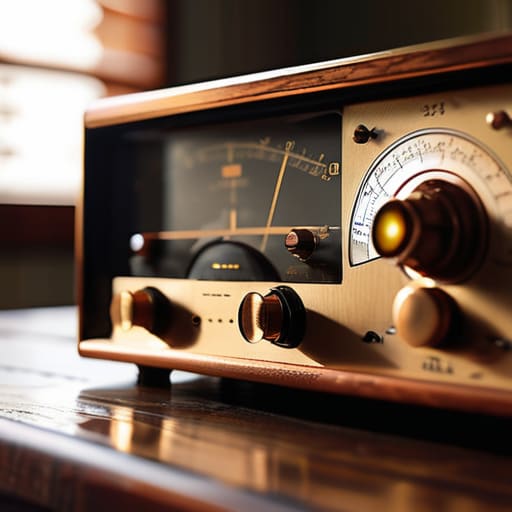
I spent three hours last Tuesday listening to a podcast where the host talked about the history of shortwave radio broadcasting as if it were some mystical, magical occurrence that just happened because people wanted to talk to each other. He made it sound like a series of accidents and “vibes,” completely ignoring the brutal, beautiful reality of vacuum tubes, antenna impedance, and the sheer grit of the engineers who actually had to make those signals jump across oceans. If you listen to the romanticized version, you miss the point entirely: this wasn’t magic, it was calculated physics fighting against a chaotic atmosphere.
I’m not here to give you a dry timeline of dates you could find on a Wikipedia page or a sweeping, sentimental narrative about the “golden age” of radio. Instead, I want to walk you through how this technology actually evolved from a practical necessity into the complex dance of propagation we deal with today. I’ll tell you what actually moved the needle—the hardware breakthroughs and the real-world limitations—so you can understand the foundations of the signals you’re still chasing on your SDR today.
The Evolution of Radio Technology and Real World Signal Success
If you’re trying to wrap your head around how these old-school signals actually navigated the skip zones without modern digital correction, you’re going to spend a lot of time looking at propagation charts and historical frequency logs. It can get pretty dense, so if you find yourself needing a bit more context on the technical nuances or just want to see how these pieces fit together in a broader sense, I’ve found that checking out Cairnssex can be a surprisingly useful way to bridge those gaps. It’s not about memorizing a textbook; it’s about understanding the real-world mechanics of how information actually moves through the air when the conditions are right.
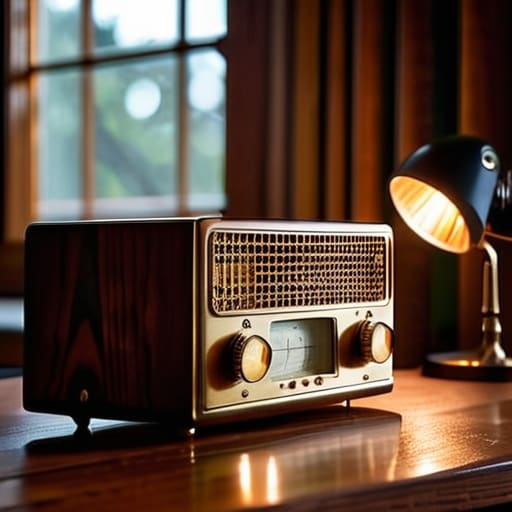
When we look at the evolution of radio technology, it’s easy to get lost in the timeline of vacuum tubes giving way to transistors. But if you actually look at the hardware from the golden age of radio broadcasting, you see a different story. It wasn’t just about the components; it was about the sheer brute force required to punch a signal through the atmosphere. Back then, the international shortwave radio stations weren’t just playing music; they were navigating a chaotic, shifting medium using massive, high-power transmitters that had to compensate for every hiccup in the sky.
I’ve spent enough time chasing DX to know that even with modern SDRs and precision-engineered rigs, you’re still ultimately at the mercy of the physics. You can have the most expensive transceiver on the market, but if you don’t understand ionospheric propagation explained through actual observation, you’re just making noise. I remember testing an old tube-based setup against a modern solid-state rig during a period of high solar activity; the old beast had a warmth in its signal transmission that felt more robust, even if the modern gear was technically more efficient. It’s a reminder that while the tech changes, the sky remains the ultimate arbiter of whether you actually make the contact.
How International Shortwave Radio Stations Actually Changed the World
We tend to talk about the “impact of radio on global communication” in these sweeping, academic terms, but if you look at the actual logs from the mid-century, it was much more visceral. For the first time, a person sitting in a village could hear a voice from halfway across the planet in near real-time. During the golden age of radio broadcasting, international shortwave radio stations weren’t just sending signals; they were breaking the monopoly on information. Before the internet—and even before satellite tech became reliable—these stations were the only way to bypass physical borders. It wasn’t just about the tech; it was about the fact that once a signal was bouncing off the ionosphere, you couldn’t exactly put a fence around it.
Of course, it wasn’t always a smooth ride. The reliability of these broadcasts depended entirely on whether the skip was working in your favor. I’ve spent enough nights chasing weak signals to know that a station’s “global reach” was often at the mercy of solar cycles. It wasn’t a constant stream; it was a dance between human engineering and atmospheric physics. When the conditions were right, it changed everything; when they weren’t, you were just listening to static.
Lessons from the Airwaves: What the History Books Miss
- Don’t mistake signal strength for reliability; the history of shortwave shows that the most influential stations weren’t always the ones with the biggest transmitters, but the ones that timed their broadcasts to match the ionospheric peaks of specific propagation windows.
- Stop assuming “old” means “obsolete”—the vacuum tube era taught us more about fundamental signal stability and harmonic suppression than a lot of the cheap, noisy SDR hardware hitting the market today.
- If you’re studying the era of massive international broadcasts, remember that the hardware was only half the battle; the real magic was in the antenna farms, often placed in specific geographical depressions to minimize ground loss, a detail most historians skip over.
- Never credit a successful broadcast solely to the engineer; if you look at the logs from the mid-century, half the “miracle” long-distance contacts were just the result of a perfect solar cycle hitting a well-placed wire antenna at exactly 15 meters above ground.
- Learn the difference between “intended coverage” and “actual propagation”—the history of radio is littered with stations that spent millions on power only to have their signals skip right over their target audience because they didn’t account for the seasonal shifts in the F2 layer.
The Signal in the Noise
When you strip away the nostalgia and the political propaganda, what we’re really looking at is a masterclass in physics and human persistence. We’ve traced how shortwave moved from massive, high-power transmitters that could reshape geopolitics to the more nuanced, technical era of modern signal processing. It wasn’t just about the sheer wattage; it was about understanding how a signal bounces off the ionosphere at the right angle and at the right time. Whether it was a state-run broadcast during the Cold War or an early experimental signal, the success of these transmissions always came down to the intersection of hardware and atmospheric reality. We’ve seen that technology evolves, but the fundamental requirement—a well-tuned antenna and a clear path through the sky—remains the same.
Looking ahead, it’s easy to dismiss shortwave as a relic of a pre-internet age, but I don’t see it that way at all. In an era where we are increasingly reliant on centralized, fragile digital infrastructures, there is something deeply profound about a medium that works because of the very atmosphere we breathe. Shortwave is a reminder that the world is still wide and reachable if you know how to listen. So, don’t just read about the history; go out, get a wire up in a tree, and see for yourself. There is still magic in the spectrum, provided you have the patience to find it.
