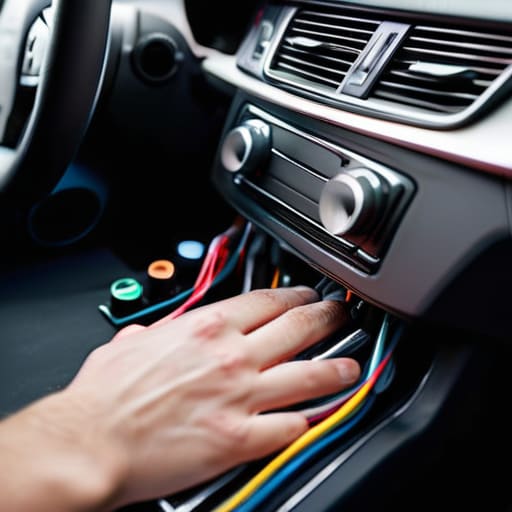
I remember sitting in my old hatchback ten years ago, staring at a SWR meter that refused to budge from 3.5:1, wondering why my expensive new mobile rig sounded like it was transmitting through a tin can. I had followed every “expert” tip online, but I was missing the most basic physics of the situation. Most people think learning how to operate mobile stations is just about buying a high-gain whip and plugging it into a cigarette lighter, but that’s a lie that costs you both money and signal. If you aren’t accounting for the ground plane or the way your vehicle’s metal body actually becomes part of your antenna system, you aren’t operating; you’re just making noise.
In this guide, I’m stripping away the marketing fluff and the outdated textbook theories to give you the real-world mechanics of mobile operation. We aren’t going to talk about theoretical gain; we’re going to talk about placement, power management, and noise floors. I’ll show you how to actually get a signal out of a moving vehicle, how to troubleshoot interference when your alternator starts acting up, and why your antenna height—even in a car—is the only thing that actually matters.
Table of Contents
- Step-by-Step Instructions
- Antenna Placement for Mobile Radio Physics Over Folklore
- Troubleshooting Vehicle Radio Noise Killing the Interference for Good
- Five Hard Truths for the Mobile Operator
- The Bottom Line: Don't Leave Your Signal to Chance
- The Reality of the Mobile Shack
- Getting Out of the Garage and Into the Field
- Frequently Asked Questions
Guide Overview
Tools & Supplies
- Smartphone or Tablet (the device being operated)
- User Manual (digital or physical reference for specific model features)
- Internet Connection (1 active connection)
- Power Source (1 charger or battery charge)
Step-by-Step Instructions
- 1. Stop thinking about your radio as a standalone box and start thinking about the entire signal path. Most people buy a high-end transceiver, bolt it into a bracket, and then wonder why they’re only hearing static. You need to trace everything from the microphone element to the antenna element. If you have a bad connection at the coax crimp, it doesn’t matter if you’re running a $2,000 rig; you’re essentially trying to scream through a pillow.
- 2. Get your antenna off the metal skin of the vehicle. I know, it’s a pain to drill through the roof or find a mounting bracket that doesn’t wobble, but if you’re mounting a whip right against the door frame, you’re just turning your car into a giant, inefficient shielding device. Aim for at least six inches of clearance from any major metal obstructions, and if you can get it on the roof, do it. The ground plane of your car is a tool, not a suggestion.
- 3. Don’t trust the SWR meter that came in the box if it’s a cheap plastic toy. If you’re serious about mobile operation, get a decent analog meter or a dedicated SWR bridge that you actually understand how to read. I’ve seen people see a reading of 1.5:1 and think they’re golden, only to realize later they were looking at the wrong scale. You need to know your standing wave ratio accurately because a high SWR in a moving vehicle—where vibration can shift your tuning—is a fast way to cook your final transistors.
- 4. Manage your power supply like your life depends on it. Vehicles are incredibly noisy electrical environments; your alternator is basically a giant, unshielded noise generator. Use high-quality, shielded power cables and, if you can afford it, a decent power filter. I’ve spent many a night chasing a persistent hum only to realize someone had used cheap, unshielded wire for their accessory lights. Keep your radio power lines separate from your charging lines whenever possible.
- 5. Plan your “operating windows” around your movement. Mobile operating isn’t the same as sitting in a shack with a stable AC line; your signal characteristics are going to change every time you turn a corner or drive under a bridge. If you’re trying to work a contact, try to find a steady state—a stoplight or a parking lot—rather than trying to key up while navigating a hairpin turn. It’s much easier to tune your frequency and listen to the noise floor when you aren’t fighting the steering wheel.
- 6. Keep a physical logbook or a very disciplined digital one, even if you’re just moving between towns. I want to know the approximate location and the heading of the vehicle when you made the contact. Because your antenna pattern is constantly shifting relative to the horizon and the surrounding terrain, knowing your direction of travel helps you realize that a contact wasn’t just “luck,” but actually a result of your antenna finally clearing a treeline.
Antenna Placement for Mobile Radio Physics Over Folklore

Look, I see people every weekend at the rallies buying these high-gain antennas that promise the world, only to mount them two inches above a metal dashboard inside a sedan. It doesn’t matter how much you spent on the rig; if you aren’t getting that element at least three feet above the beltline, you’re essentially fighting your own car for signal. Physics doesn’t care about the marketing brochure. A whip antenna needs ground plane, and in a vehicle, that’s your chassis. If you’re mounting on a fiberglass roof or a plastic bumper, you’re missing the very foundation the antenna needs to radiate.
When you’re actually doing your vehicle radio installation tips, pay attention to the proximity of your coax to the engine block and the alternator. I’ve spent more nights than I care to admit troubleshooting vehicle radio noise that was actually just a poorly shielded power lead acting like a broadcast tower for interference. If your SWR is fine but your audio sounds like it’s being transmitted through a blender, stop looking at the antenna and start looking at your grounding. Real-world mobile operation is about managing the environment, not just the gear.
Troubleshooting Vehicle Radio Noise Killing the Interference for Good
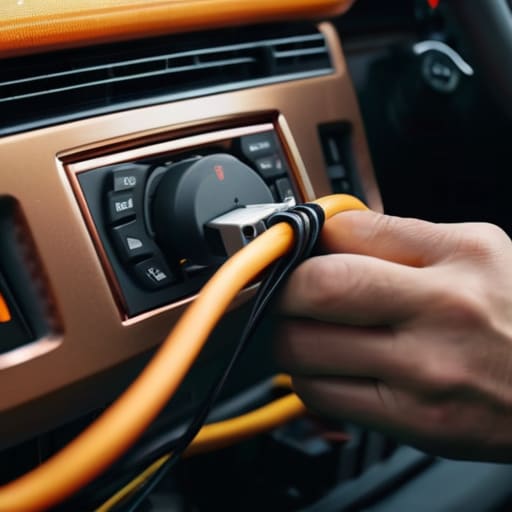
If you’ve spent an hour perfecting your antenna placement only to find your signal buried under a layer of static that sounds like a swarm of angry bees, don’t assume your radio is broken. Most of the time, you aren’t fighting the ionosphere; you’re fighting your own alternator or a poorly shielded ECU. When I’m troubleshooting vehicle radio noise, I don’t start by swapping out the transceiver. I start with the power leads. If you haven’t used high-quality, heavily shielded coax for your power connections, you’re essentially turning your entire wiring loom into a giant broadcast antenna for every bit of electronic junk your car produces.
One thing people overlook in their mobile radio setup tutorial is the ground loop. If your radio is grounded to one part of the chassis and your antenna mount is hitting another, you’ve just created a loop that invites interference to the party. I always suggest a dedicated ground strap—something thick, something short, and something bolted directly to a clean, paint-free patch of metal. If the noise persists, start unplugging things one by one. It’s tedious, I know, but it’s the only way to find out if that cheap LED dash kit you installed last week is the actual culprit.
Five Hard Truths for the Mobile Operator
- Stop trusting your SWR meter alone. A low SWR reading on a cheap handheld meter doesn’t mean your antenna is matched to the real world; it just means the meter’s internal components are happy. Use a decent directional coupler or a real analyzer if you want to know if you’re actually pushing power or just heating up your coax.
- Manage your power budget like your life depends on it. If you’re running off a secondary battery, don’t just assume it’ll last the whole session. I’ve sat on a ridge for four hours thinking I was fine, only to watch my voltage sag the second I keyed the mic. Measure your draw at idle and at peak; the math doesn’t lie.
- Grounding isn’t a suggestion, it’s the foundation. If you’re mounting a rig in a truck with a fiberglass body, you aren’t “mobile”—you’re operating an antenna system with no return path. You need a real, low-impedance ground connection to the chassis, or you’re going to spend more time fighting RF in your microphone than actually making contacts.
- Learn the rhythm of the band before you key up. Mobile operation is inherently more “noisy” than a shack, so don’t just blast away. Listen for the local noise floor first. If the floor is high because of some nearby industrial transformer or a bad alternator, you’ll know exactly how much “oomph” you actually need to get through.
- Keep your cables short and your bends wide. I see people running thin, cheap RG-58 through tight door seals and sharp corners every single week. Every time you crush that dielectric or kink the shield, you’re adding loss and changing the impedance. Treat your coax like it’s part of the antenna, because physics says it is.
The Bottom Line: Don't Leave Your Signal to Chance
Stop chasing “magic” gain figures on a spec sheet; if you don’t get your antenna mounted high enough to clear the vehicle’s roofline and local obstructions, those extra decibels are just numbers on a page that won’t actually reach anyone.
Interference isn’t a mystery to be solved with luck—it’s a physical reality that you fix by isolating your power supplies and checking your ground paths before you start blaming the radio itself.
Real-world mobile operation is about managing variables, not following a manual; always keep an eye on your SWR and noise floor, and remember that a well-placed, mediocre antenna will beat a high-end rig buried in a corner every single time.
The Reality of the Mobile Shack
You can buy the most expensive transceiver on the market, but if you’re mounting your antenna on a steel roof rack three feet off the ground, you aren’t operating a radio—you’re just making expensive noise. Mobile operating isn’t about the gear in your hand; it’s about how much respect you show the physics between your antenna and the earth.
Wren Castellano
Getting Out of the Garage and Into the Field
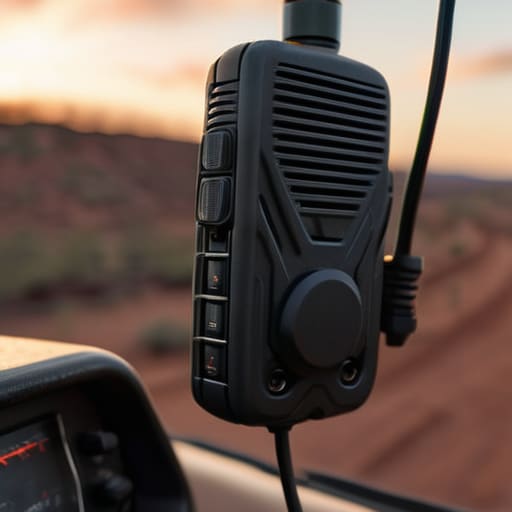
At the end of the day, mobile operation isn’t about having the most expensive rack-mount transceiver in your trunk; it’s about managing the constraints of your environment. You can’t fight physics, so stop trying to bypass them. If your antenna is mounted too low to the chassis, you’re going to deal with a high angle of radiation that won’t get you anywhere useful. If your alternator is screaming RFI into your receiver, no amount of software filtering is going to save your signal. Focus on the basics: get your antenna height right, clean up your power supply, and measure your SWR before you ever key the mic. If you respect the hardware and the electromagnetic environment, the rig will do its job.
There is a specific kind of magic that happens when you finally find a clear frequency while moving through a landscape, feeling the connection between the machine in your dash and a station hundreds of miles away. It’s a reminder that radio isn’t just a static hobby played from a desk; it’s a living, breathing part of the world around us. Don’t let the fear of a little noise or a tricky installation keep you parked in the driveway. Get the gear in the vehicle, drive until the view changes, and start making contacts. The airwaves are waiting, and real-world testing is the only way to truly learn.
Frequently Asked Questions
I’ve got a decent antenna, but if I’m mounting it on a roof rack instead of a dedicated whip, how much am I actually losing in terms of real-world signal?
If you’re mounting on a roof rack, you aren’t just losing signal; you’re changing the entire radiation pattern. A dedicated whip has a predictable vertical pattern, but a rack mount introduces a massive, conductive ground plane right under your feed point. If that rack is cluttered with crossbars, you’re going to see a significant drop in gain and a messy SWR. Expect to lose maybe 2-3 dB of effective radiated power, but the real killer is the pattern distortion.
How do I tell the difference between a bad ground loop and a noisy alternator when I'm out on the road?
If you’re hearing a whine that rises and falls with your engine RPM, you’re looking at alternator ripple—it’s a power supply issue. But if that noise stays constant or changes when you toggle a switch or move a component, you’ve likely got a ground loop. I always check the alternator first by tapping the throttle; if the pitch follows the revs, your filtering is weak. If it doesn’t, go hunting for your ground loops.
Is it worth investing in a high-end power supply for my mobile rig, or am I better off just over-specifying my battery setup and a decent regulator?
Look, if you’re staying in the vehicle, your battery is your best friend—just over-spec it. A massive deep-cycle setup gives you the headroom you need when the alternator isn’t helping. As for the power supply, don’t go chasing expensive boutique brands just for the name. I’d rather have a beefy, reliable switching supply with low ripple than a “premium” unit that costs a month’s mortgage. Just ensure it’s clean; noise is the real killer.
