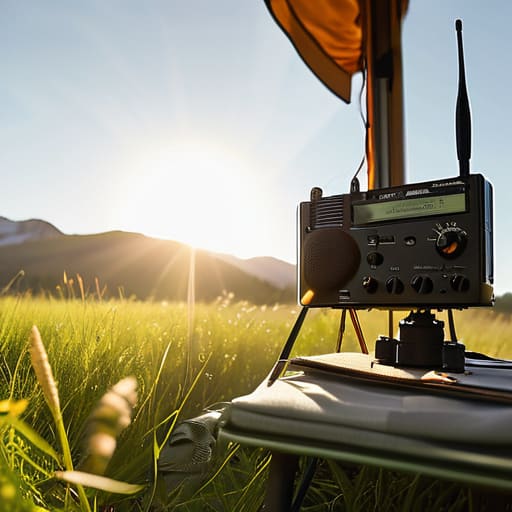
If you think you need a five-figure budget and a custom-engineered array of rotatable beams just to figure out how to get into VHF contesting, you’ve been listening to the wrong people. I see it all the time in the clubs: newcomers convinced they need a massive footprint and a mountain of gear before they can even make their first contact. That’s nonsense. I remember my first attempt at a local VHF sprint; I was sitting on a folding chair with a basic handheld and a piece of wire I’d strung up between two trees at about fifteen feet. I didn’t win any trophies that day, but I learned more about signal paths and local terrain in four hours than I did from six months of reading glossy manufacturer brochures.
In this guide, I’m going to strip away the gatekeeping and the expensive fluff. I won’t give you a list of “recommended” gear that’s just a way for companies to pad their margins; instead, I’ll tell you what actually moves the needle. We’re going to talk about real-world antenna heights, the importance of clear line-of-sight, and how to use what you already have to make a meaningful impact. My promise is simple: no hype, just the measured reality of what it takes to get on the air and stay there.
Table of Contents
- Moving Beyond Amateur Radio Contesting Basics and Myths
- Choosing a Handheld Transceiver for Contesting That Actually Performs
- Five Real-World Rules for Getting Your First VHF Contact
- The Bottom Line for Your First VHF Contest
- ## Stop Chasing the Paper Specs
- Stop Overthinking and Start Climbing
- Frequently Asked Questions
Moving Beyond Amateur Radio Contesting Basics and Myths
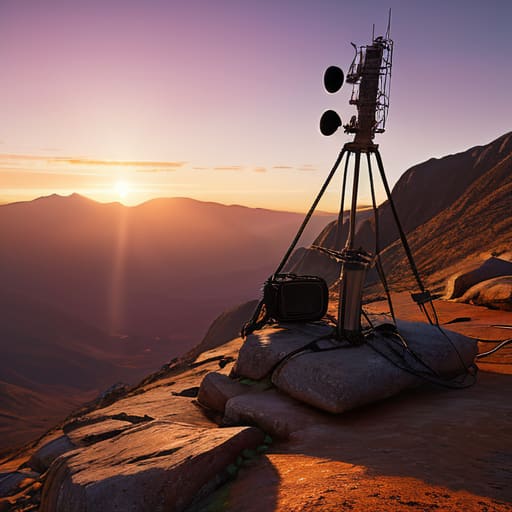
Most people approach the hobby by memorizing a list of amateur radio contesting basics from a decade-old manual, but there’s a massive gap between knowing the rules and actually making a contact when the noise floor rises. I see too many newcomers think that just having a high-end handheld transceiver for contesting is a silver bullet. It isn’t. A radio is just a box that vibrates; if your antenna is sitting in a garden shrub at three feet above ground, you aren’t contesting, you’re just making local noise. I’ve spent enough afternoons on ridges to know that your effective height dictates your success far more than your rig’s price tag.
We also need to stop pretending every contest is won on FM. While VHF repeater operation is a great way to learn the ropes, true contesting often requires understanding different operating modes for VHF contests, like SSB or even digital modes if the conditions allow. You have to stop chasing the myth that “more power” solves everything. I’ve seen a guy with 50 watts and a well-placed Yagi absolutely dominate a station running 100 watts from a cluttered backyard. It’s about improving signal propagation for contesting through smart placement and realizing that physics doesn’t care about your gear list.
Choosing a Handheld Transceiver for Contesting That Actually Performs
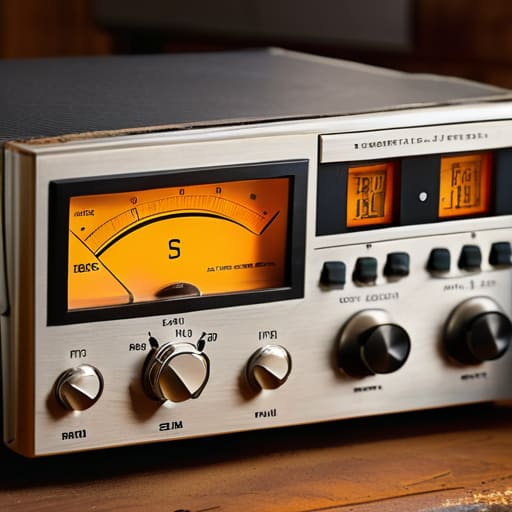
Look, if you walk into a shop and ask for a handheld transceiver for contesting, the salesperson is going to try to sell you the one with the flashiest screen or the most buttons. Don’t do it. In a contest environment, you don’t need a computer in your hand; you need a radio with a decent front-end that won’t choke the moment a nearby high-power station starts stepping on your frequency. I’ve spent too many afternoons watching my signal vanish because a cheap transceiver’s receiver desensitized the moment the band opened up.
When I’m out on a ridge, I prioritize a radio that handles operating modes for VHF contests—specifically FM—with minimal latency and a clear audio output. You need to hear the callsign through the noise, not through a digital filter that makes everything sound like it’s underwater. And for heaven’s sake, don’t rely on the stock rubber ducky antenna. I don’t care how much you spent on the rig; if you aren’t pairing that handheld with a decent, tuned whip or a portable dipole, you aren’t really contesting—you’re just making noise.
Five Real-World Rules for Getting Your First VHF Contact
- Stop obsessing over the rig and start looking up. I’ve seen people spend a month’s salary on a new handheld only to leave the antenna at the factory length, sitting six inches off the ground. If you aren’t getting at least 10 to 15 feet of clearance, you’re just fighting the ground plane instead of the contest. Height is your best friend on VHF; it’s the only thing that actually beats the curvature of the earth.
- Get a decent SWR meter or a NanoVNA, even if you think you can eyeball it. People tell you “it sounds fine,” but “fine” doesn’t win contests. I once spent an entire Saturday afternoon chasing a signal that wouldn’t come, only to realize my coax was kinked and my SWR was sitting at 3:1. Measure your feedline, measure your antenna, and don’t trust a “factory tuned” whip until you’ve seen the numbers yourself.
- Learn the art of the “quick and dirty” log. In VHF contesting, the pileups move fast. If you spend three minutes trying to write a perfect, legible entry in a paper logbook, you’ve already missed the next five stations. I use a digital logger on my phone for speed, but the key is discipline—get the callsign, the frequency, and the signal report down, then move on. Accuracy matters, but speed is what keeps you in the game.
- Don’t ignore the local repeater if you’re just starting out. While most contesting happens simplex, a lot of the “training” happens on local FM repeaters. It’s a low-stakes way to get used to the rhythm of rapid-fire exchanges and learning how to listen through the noise. It isn’t “real” contesting in the high-stakes sense, but it builds the muscle memory you’ll need when the bands actually open.
- Accept that some days the physics just won’t cooperate. You can have a perfect antenna, a high-gain handheld, and a clear line of sight, and still hear nothing but static. Sometimes it’s a temperature inversion, sometimes it’s just a bad ionospheric skip, and sometimes the local interference is just winning that day. If you aren’t getting hits, don’t tear your antenna down in frustration—check your connections, then go for that walk I mentioned earlier and try again tomorrow.
The Bottom Line for Your First VHF Contest
Stop obsessing over the most expensive rig; a handheld with a decent receiver and a decent battery will beat a flagship model if you actually get your antenna high enough to clear the local clutter.
Height is your most important variable—if you aren’t getting at least 10 to 15 feet of elevation above the immediate ground obstacles, you’re just listening to the noise floor instead of the contest.
Don’t take “rule of thumb” advice at face value; use a real SWR meter and a field strength meter to see what’s actually happening at your specific location before you commit to a setup.
## Stop Chasing the Paper Specs
“Everyone wants to talk about the wattage on the box, but in VHF contesting, your power is nothing if your antenna is sitting in a bush three feet off the ground. I’ve seen twenty-watt rigs out-perform a hundred watts simply because the operator actually bothered to get a vertical up in the air where it could see the horizon.”
Wren Castellano
Stop Overthinking and Start Climbing
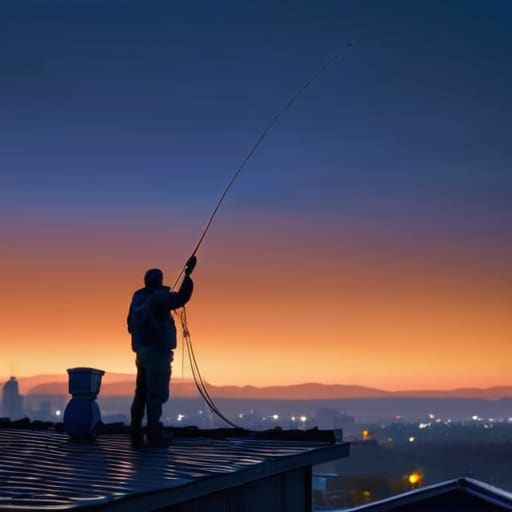
At the end of the day, getting into VHF contesting isn’t about owning the most expensive SDR or having a signal that punches through a brick wall. It’s about understanding that your gear is only as good as its placement. We’ve talked about ditching the outdated myths, picking a handheld that won’t die mid-pileup, and why you can’t ignore the physics of your environment. If you take nothing else away, remember that height is your best friend; I’ve seen more contests won by a cheap HT on a well-placed rooftop than by a high-end rig sitting on a desk in a basement. Don’t get caught in the trap of chasing specs on a datasheet when the real magic happens in the actual signal path.
There is a specific kind of rush that comes when the band opens up, the noise floor drops, and you suddenly realize you’re pulling in stations you had no business hearing. It’s a visceral connection to the physics of the air around you. Whether you are sitting on a ridge with a portable setup or just tweaking a wire in your backyard, don’t let the fear of “doing it wrong” keep you off the air. The ionosphere doesn’t care about your credentials, and neither does the contest judge. Just get out there, measure your results, and learn from the mistakes. That’s how you actually become a contester.
Frequently Asked Questions
I've got a decent handheld, but how much height do I actually need to clear the local treeline before I'm just wasting my battery?
Look, I’ve measured the drop-off myself, and if you aren’t at least 15 feet above the canopy, you’re just wasting your battery. A handheld is a tiny amount of juice; if you’re fighting a dense treeline, you’re losing more power to absorption and scattering than your radio can actually push out. Get yourself up a ridge or at least a sturdy ladder. If your antenna isn’t clear of the foliage, you’re just heating up leaves.
Is it worth investing in a dedicated repeater-to-repeater setup, or can I actually make meaningful contacts with just a decent Yagi and some patience?
Look, if you’ve got a decent Yagi and you’re willing to put in the work, you don’t need a dedicated repeater-to-repeater setup. I’ve spent afternoons on ridges with a handheld and a directional antenna that out-performed rigs twice my price. The key isn’t the gear complexity; it’s your ability to find the sweet spot between the repeater’s coverage and your antenna’s gain. Give me a clear line of sight and a bit of patience over expensive hardware any day.
How do I know if a contact was actually due to my signal path or if the ionosphere just happened to be behaving that afternoon?
You look at the trend, not the single contact. If you’re hitting stations at 50 watts through a local repeater, that’s your signal path. But if you suddenly start working DX with a signal report that defies your antenna’s calculated gain, the ionosphere is doing the heavy lifting. I keep a log of signal-to-noise ratios and local weather; if the band opens up suddenly after a period of high solar flux, it wasn’t your gear—it was luck.
