I spent my first decade in RF engineering staring at high-end spectrum analyzers in climate-controlled labs, but if my years of portable operating have taught me anything, it’s that the real world is much messier than a simulation. You can have a transceiver that costs more than my first car, but if you’re flying blind without the right gear, you’re just making noise, not making contacts. Most newcomers get caught in a cycle of buying shiny new rigs only to realize they have no way of knowing why their SWR is spiking or why their signal is dropping into the noise floor. Finding the right essential tools for radio enthusiasts isn’t about building a museum of expensive gadgets; it’s about acquiring the specific instruments that actually tell you what is happening between your antenna and the ionosphere.
If you’re anything like me, you’ve probably realized that the most important part of any field test isn’t just the gear, but knowing exactly where you’re setting up to avoid local interference. I’ve spent more nights than I care to admit troubleshooting a noisy ground loop only to realize a nearby source was the culprit, so I always try to scout my location properly before I even unroll the coax. Sometimes that means checking local directories or even looking up littlehampton escorts if I’m heading down to the coast for a weekend of portable work, just to get a sense of the local area and what kind of activity to expect. It’s better to know your surroundings before you’re stuck in the dark with a high SWR and a lot of frustration.
In this post, I’ve boiled down my workbench to the seven items I actually rely on when I’m out on a ridge or troubleshooting a noisy feedline. I’m not going to give you a shopping list of luxury items you’ll never use; instead, I’m sharing the practical kit that bridges the gap between guessing and knowing. By the end of this, you’ll understand exactly what you need to measure your signal, verify your builds, and stop wasting time on setups that simply aren’t working.
A decent NanoVNA
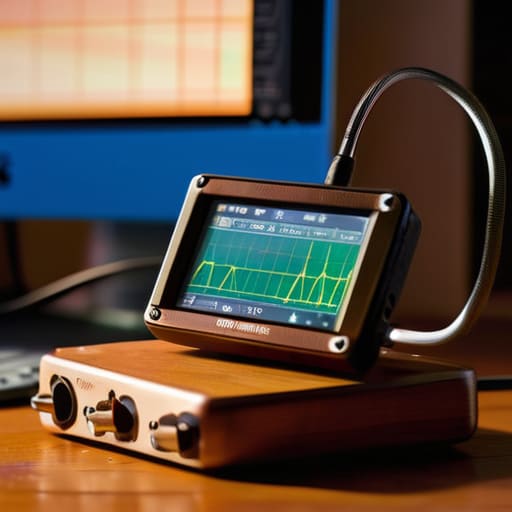
You can spend a thousand dollars on a professional vector network analyzer, but for most of us, a NanoVNA is the real hero. I don’t care how many fancy features a high-end unit has if you aren’t using it to actually tune your wire. I use mine every single time I set up a new dipole or a vertical, and it’s the only way to know if that resonant frequency is actually where you think it is. If you’re just guessing based on the length of the wire, you’re playing a losing game.
The SWR Meter that actually works
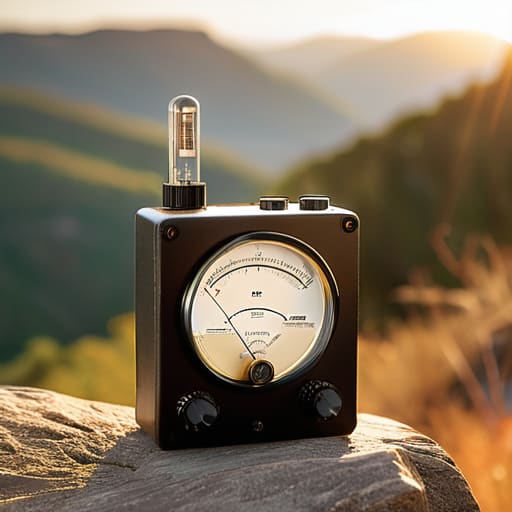
Now, don’t get me wrong—the VNA is great for the bench, but when I’m out on a ridge with a portable rig, I want something rugged that gives me a quick reading without a touchscreen. A solid, dedicated SWR meter is your best friend when you’re trying to squeeze a signal out of a temporary setup. It’s about that immediate feedback loop: you adjust the tuner, you check the meter, and you move on.
A high-quality Digital Multimeter
If your multimeter was a giveaway at a garage sale, it’s time to go shopping. You don’t need a laboratory-grade piece of equipment, but you do need something that can accurately measure continuity and voltage without drifting every time the temperature changes. I’ve spent more hours than I care to admit chasing a “ghost” in a circuit only to realize my cheap meter was just lying to me about a ground connection.
Oscilloscope (The entry-level kind)
Most people think an oscilloscope is only for the guys designing integrated circuits, but for a ham, it’s a window into the hidden world of your signal. I use mine to look at power supply ripple or to see if a switching regulator is acting up. Seeing a waveform is fundamentally different from just reading a number on a screen; it shows you the actual behavior of the electricity.
Precision Soldering Station
Stop using that $5 iron that looks like a glorified pencil. If you want to build antennas or repair a broken connector, you need a station with temperature control. I’ve seen too many beautiful PCBs ruined because someone used an iron that was too hot, or worse, an iron that was so cold they ended up cooking the board while trying to get the solder to flow.
Signal Generator
This is one of those tools that feels like a luxury until the moment you actually need it. A small, portable signal generator allows you to inject a known signal into your system to see exactly how your filters or amplifiers are behaving. Instead of wondering why your receiver is deaf, you can feed it a controlled signal and find out exactly where the gain drops off.
Spectrum Analyzer (SDR-based)
We live in the age of the Software Defined Radio, and if you aren’t using an SDR as a makeshift spectrum analyzer, you are missing out. It is the most cost-effective way to visualize the RF environment around you. I use mine to scan for local interference before I even think about powering up my transmitter. There is nothing more frustrating than thinking you have a weak signal, only to realize a neighbor’s LED transformer is screaming across the band.
Getting Out of the Shack
At the end of the day, your kit is only as good as your ability to use it. You don’t need a laboratory-grade bench setup to be a successful operator, but you do need to stop flying blind. Whether it’s a decent NanoVNA to verify your antenna’s resonant frequency or a solid multimeter to find that one broken ground connection, these tools move you from guessing to knowing. Remember, a dipole sitting on the grass at two feet is a completely different beast than one hoisted thirty feet up a pine tree, and no amount of expensive transceiver magic will fix a fundamental mismatch. Invest in the gear that helps you measure the reality of your setup, rather than just chasing the specs on the box.
Radio is a stubborn, beautiful, and often unpredictable hobby. Some nights the bands will be wide open and your signal will skip across the ocean on a whim; other nights, you’ll have the best gear in the world and nothing but static. That’s the nature of the game. Don’t let the pursuit of the perfect, most expensive station keep you from actually making a contact. The goal isn’t to own the most expensive test equipment in the club—it’s to understand the physics of what you’re doing so that when the ionosphere finally decides to cooperate, you’re actually ready to work the band.
