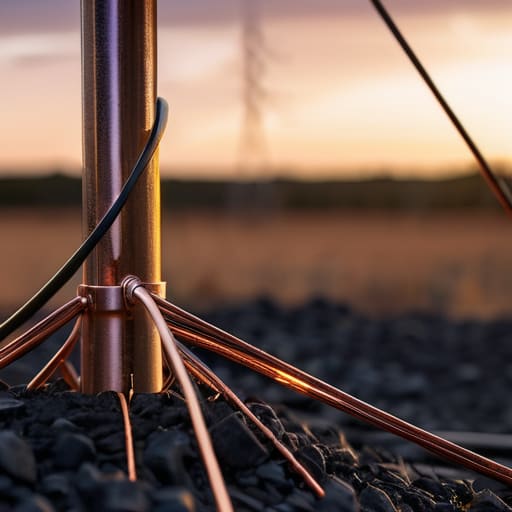
I spent three hours last Tuesday wrestling a fiberglass whip into a rocky crevice on a ridge in the Cascades, only to realize I’d ignored the most basic principle of the setup. I kept looking at the spec sheet, obsessing over the resonant length, while the real culprit was the ground plane. People spend a fortune on high-end tuners and “magic” coax, but when they ask me what is a vertical antenna actually capable of, they usually forget that a vertical is only as good as the earth beneath it. If you don’t give it a decent radial system or enough height to escape the local clutter, you aren’t building a radio station; you’re just building a very expensive, very shiny lightning rod.
I’m not here to sell you a pre-packaged solution or recite a textbook definition that ignores the physics of real-world deployment. In this post, I’m going to strip away the marketing fluff and tell you how these things actually behave when you’re out in the field. I’ll give you the unvarnished truth about ground losses, why your SWR might be lying to you, and exactly how much height you need to actually make a contact. No hype, just the measurements.
Table of Contents
Omnidirectional Antenna Characteristics vs Reality
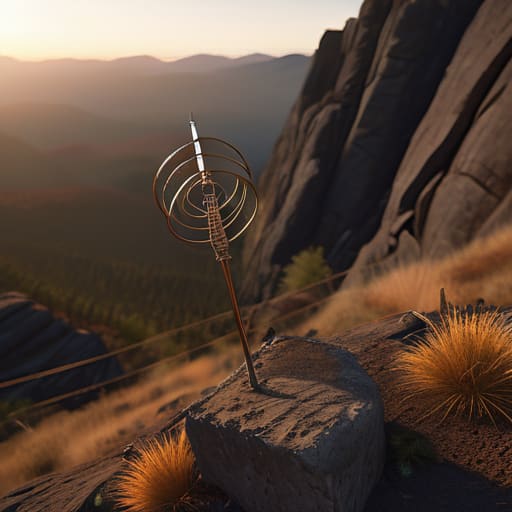
The marketing brochures always show a perfect, glowing donut of energy encircling the antenna, implying you’ll have equal signal strength in every direction. That’s the theory of omnidirectional antenna characteristics, but in the field, reality is rarely that tidy. When I’m out on a ridge, I see how much the local terrain—even just a few heavy shrubs or a slight dip in the soil—can warp that pattern. You aren’t getting a perfect circle; you’re getting a shape that’s been chewed on by your environment.
The real kicker, though, is the vertical component of that pattern. A vertical is designed to push your energy toward the horizon to maximize RF signal propagation, but if you don’t get the ground plane importance right, you’re going to have a bad time. I’ve seen too many people skip the radial system, thinking a single whip is enough. Without a solid ground plane to reflect that signal, your radiation pattern doesn’t just tilt; it collapses into the dirt. If you aren’t providing a decent counterpoise, you aren’t radiating to the world—you’re just heating up the ground beneath your feet.
Why Antenna Element Length Isnt the Only Variable
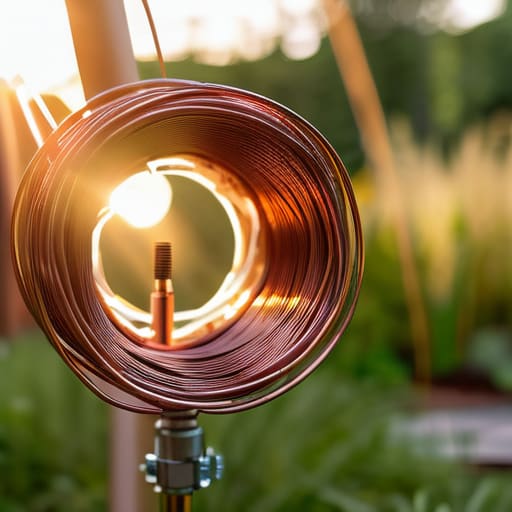
If you spend too much time in the forums, you’ll hear people obsessing over the exact millimeter of an antenna element length as if that’s the only thing standing between them and a DX contact. Look, I’ve spent enough time with a NanoVNA to know that while the math gets you in the ballpark, it doesn’t tell the whole story. You can have a wire cut to the perfect theoretical length, but if you haven’t addressed the ground plane importance, you’re just building an expensive piece of scrap metal.
A vertical isn’t a magic wand; it’s a system. Without a proper radial field or a decent counterpoise, your impedance matching vertical antenna calculations are going to fall apart the second you actually try to feed it power. I’ve seen plenty of “perfect” setups struggle because the user ignored how the ground interacts with the signal. You have to realize that the earth isn’t just a platform; it’s a functional part of the circuit. If you don’t give that signal somewhere to go, your RF signal propagation is going to be much more disappointing than the textbook promised.
Five Things the Datasheets Forgot to Mention
- Ground is your actual antenna. A vertical isn’t just a piece of metal; it’s a system that includes the earth beneath it. If you’re mounting this on a dry, sandy hilltop without a decent radial field, don’t be surprised when your SWR looks like a mountain range and your signal goes nowhere.
- Height is non-negotiable. You can have the most perfectly tuned element in the world, but if you’re running it at 5 feet off the ground, you’re basically just making a very expensive heater for the local weeds. For any decent takeoff angle, you need to get that radiator up—ideally at least a quarter-wavelength high—or prepare to fight the ground losses.
- Polarization matters more than you think. Since verticals are vertically polarized, you’ll have a hard time talking to someone running a horizontal dipole unless the ionosphere decides to do you a favor. If you’re hunting DX, expect a bit of a signal loss due to polarization mismatch, and don’t blame your rig when it’s just physics.
- Watch your feedline loss. Because verticals often require you to run coax up a mast or a pole, you’re adding a lot of extra cable between your transceiver and the radiator. If you’re working low bands like 80m, that thin RG-58 you found in the garage is going to eat your precious signal before it even hits the antenna.
- The “Omni” myth. Everyone says verticals are omnidirectional, and technically they are, but they aren’t perfect circles. My measurements always show some nulls caused by nearby structures or even the way the ground slopes. Don’t assume you’ll have a perfect pattern just because the manual says so; go out there and check your signal reports.
The Bottom Line: What I’ve Actually Seen in the Field
Don’t get blinded by the “omnidirectional” label on a spec sheet; in a real backyard with nearby fences or trees, your pattern is going to be lopsided, and you need to know which direction is actually dead.
Height is non-negotiable. If you’re running a vertical and you can’t get it at least a quarter-wavelength off the ground, you aren’t just losing signal—you’re essentially turning your antenna into a very expensive, very inefficient radiator.
A vertical isn’t a “set it and forget it” solution. Between the ground conductivity and the way your local terrain interacts with the near field, you have to be prepared to tune your radial system or your ground plane, otherwise, your SWR will be the least of your worries.
## The Ground Plane Lie
“The manual tells you a vertical is just a piece of metal radiating in all directions, but that’s a half-truth that’ll leave you chasing signals that aren’t there. In practice, a vertical is only as good as the ground it’s standing on; if you don’t give it a proper radial system or get that element high enough to clear the local clutter, you aren’t building an antenna—you’re just building a very expensive heater for the dirt.”
Wren Castellano
The Bottom Line on Verticals

At the end of the day, don’t let a spec sheet convince you that a vertical is a “set it and forget it” solution. We’ve talked about why the ground plane is just as critical as the radiator itself, and why that omnidirectional pattern isn’t nearly as perfect as the marketing brochures claim once you factor in local terrain and nearby metal. If you’re going to run one, you need to be prepared to manage your ground system and, more importantly, you need to respect the height. A vertical sitting in a backyard near a fence is a completely different beast than one mounted on a ten-foot mast in an open field. Measure your SWR, check your radials, and don’t assume the signal is going where you think it is just because the antenna is pointing up.
There is still something deeply satisfying about the simplicity of a vertical, though. When the sun is down, the bands are opening, and you pull a weak signal out of the noise using nothing but a piece of wire and a good ground, it feels earned. It isn’t about having the most expensive array in the club; it’s about understanding the physics of what you’ve put in the air. So, get out there, get your hands dirty with some copper and coax, and start seeing what the real numbers tell you. That is where the real hobby begins.
Frequently Asked Questions
If I'm running a vertical in a tight backyard, how much of a difference will a radial system actually make compared to just using a single ground stake?
It’s the difference between a signal that actually travels and one that just gets swallowed by the dirt. If you’re just driving a stake into the ground, you’re essentially creating a very inefficient, lossy antenna. I’ve measured the difference myself: without radials, your ground losses will kill your efficiency, especially on the lower bands. In a tight backyard, even a few dozen wires spread out—even if they’re just thin copper—will drastically improve your take-off angle and your SWR.
Can I actually get decent performance on higher bands like 10 or 15 meters with a short vertical, or am I just wasting my time and power?
You aren’t wasting your time, but don’t expect miracles. On 10 or 15 meters, a short vertical can actually be quite efficient because the wavelength is short enough that even a modest height—say, 15 to 20 feet—gets you into a decent radiation pattern. The real killer isn’t the length; it’s the ground system. If you don’t have enough radial wire or a solid ground plane, your efficiency will tank regardless of the band.
How much does the local ground conductivity—like being near a lake versus a dry field—actually change my SWR and signal strength?
It changes everything. If you’re sitting next to a lake, that conductive water acts like a massive extension of your ground plane, pulling your pattern down and boosting your signal. I’ve measured a 2-3 dB difference just by moving a vertical from a sandy patch to a damp field. As for SWR? It’ll shift. If your ground is poor, your impedance changes, and that “perfect” tuning you did in the garage might climb once you actually deploy.
