
I was sitting on a ridge in the Blue Ridge Mountains last October, nursing a lukewarm thermos of coffee and staring at my SWR meter, when I realized I was doing it all wrong. I had a perfectly good dipole hung at about 30 feet, but I was trying to work DX by listening and transmitting on the same frequency like it was 1975. I was essentially shouting into my own ears, wondering why my contacts felt so clunky and unrewarding. Most manuals make it sound like some complex mathematical ritual, but if you don’t understand the fundamental “why” behind how to operate split, you’re just fighting your own hardware for no reason.
I’m not going to give you a lecture on theoretical impedance matching that you can’t use in the field. Instead, I’m going to show you exactly how I manage my RX and TX frequencies to actually gain an edge in a crowded band. I’ll tell you which rigs handle the transition without a hiccup, which setups require a dedicated diplexer, and when you should stop worrying about the math and just listen to what the signal is telling you. No hype, just the real-world physics of getting the job done.
Table of Contents
- Mastering the Radio Transceiver Split Mode for Direct Results
- Vfo a and Vfo B Configuration the Only Way to Listen
- Five Ways to Stop Fighting Your Transceiver and Start Using Split
- The Bottom Line for Your Next Session
- ## Stop Treating Split Like a Toggle Switch
- Don't Leave It to Chance
- Frequently Asked Questions
Mastering the Radio Transceiver Split Mode for Direct Results
When you finally pull the trigger on using the radio transceiver split mode, don’t expect it to be a magic wand that fixes a bad antenna. It’s a tool for precision, not a workaround for poor propagation. In my experience, the real value comes when you use the VFO A and VFO B configuration to decouple your transmit and receive frequencies. I remember a session on a ridge in the Cascades where I was trying to work a DX station on 20 meters; by setting a specific VFO frequency separation, I could stay locked onto the station’s signal while my transmitter sat exactly where the band opening was most stable.
The trick is to stop treating the two frequencies as separate entities and start seeing them as a single, managed link. If you are operating on split frequencies, you have to be disciplined about your logging. I’ve seen too many operators lose their rhythm because they forgot which frequency they were actually pushing out versus what they were hearing. It isn’t just about convenience; it’s about managing your bandwidth so you aren’t shouting into the void while trying to listen to the very person trying to answer you.
Vfo a and Vfo B Configuration the Only Way to Listen
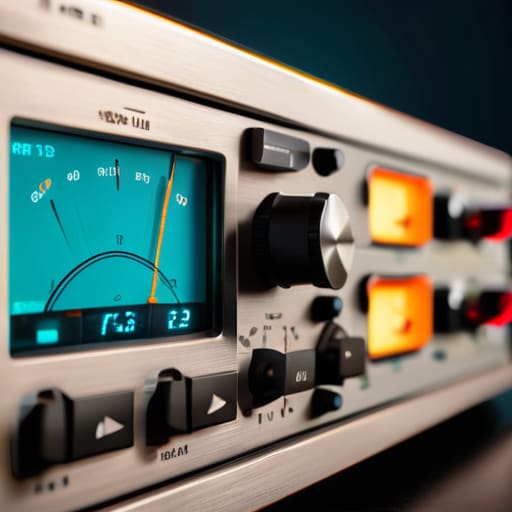
Most people treat their dual VFOs like a simple backup—one for the primary signal and one for a quick scan. That is a waste of a perfectly good processor. If you want to actually see what is happening during a DX contact, you need to treat VFO A and VFO B configuration as a single, unified tool. I always set VFO A to my transmit frequency and lock VFO B to the receive frequency. This isn’t just about convenience; it’s about situational awareness. When you are operating on split frequencies, you need to hear the station’s actual signal, not just the ghost of your own carrier or the frequency offset you’ve applied.
The trick is managing the vfo frequency separation so you don’t lose the beat. If you’re working a narrow-band repeater or a high-speed data mode, that gap between your transmit and receive frequencies becomes your lifeline. I’ve seen too many operators get frustrated because they “lost” the signal, only to realize they were listening to a frequency offset that was too wide for the mode they were in. Don’t just set it and forget it; adjust that gap based on the specific mode you’re running.
Five Ways to Stop Fighting Your Transceiver and Start Using Split
- Stop treating split mode like a toggle switch and start treating it like a tool for frequency management. If you’re working a DX station on 20 meters, they’re likely transmitting at 14.250 but listening at 14.225. If you don’t engage split, you’re just shouting into a void while they’re looking for you elsewhere. I’ve spent more nights than I care to admit staring at a waterfall thinking I was being ignored, only to realize I was just stuck on the wrong side of the band.
- Watch your power levels when you’re operating split, especially if you’re using a narrow-band filter or a rig with sensitive finals. When you’re transmitting on one frequency and receiving on another, you’re essentially managing two different radio environments simultaneously. If you’re running high power on a split, make sure your antenna’s SWR is actually stable across that entire window, not just at the center frequency, or you’re asking for heat soak.
- Use split mode to escape the “frequency pile-up” trap. When a big station starts calling, everyone crowds the same spot. By using split, you can stay on the station’s transmit frequency to hear their calls clearly, but move your receive frequency slightly off-center to catch the quieter, weaker signals that are being stepped on by the big rigs. It’s about finding the gaps in the noise, not just joining the shouting match.
- Don’t forget the physical reality of your antenna height when you’re splitting. If you’re using a multi-band wire antenna that’s only 30 feet up, your pattern might be more lobed than you think. When you move your receive frequency away from your transmit frequency, you might find you’ve moved from a null into a lobe, or vice versa. I always check my signal-to-noise ratio on both frequencies before I commit to a long contact; don’t assume “split” automatically means “better.”
- Keep a notepad or a digital log of the specific offsets you’re using. I’ve found that certain repeater configurations or DX stations have very specific “preferred” split offsets. Instead of hunting for them every time, write down the VFO A/VFO B relationship that worked for that specific contact. It sounds tedious, but in the middle of a rare opening, you don’t want to be fumbling with the tuning knob while the ionosphere is moving on you.
The Bottom Line for Your Next Session
Don’t treat split mode like a magic button; if you aren’t manually coordinating your TX and RX frequencies, you’re going to spend half your DX time listening to yourself talk instead of the station you’re trying to reach.
Always verify your VFO offsets with a real measurement—relying on a radio’s internal logic without checking the actual frequency on a meter is a quick way to miss a contact.
Remember that split operation is a tool for efficiency, not a substitute for good band awareness; if the ionosphere is shifting, your split strategy needs to shift with it.
## Stop Treating Split Like a Toggle Switch
“Operating split isn’t just about clicking a button to move your RX and TX frequencies; it’s about managing the gap between what you hear and what you’re actually pushing out. If you aren’t accounting for the frequency offset in your signal reports, you aren’t really communicating—you’re just making noise in the wrong place.”
Wren Castellano
Don't Leave It to Chance
At the end of the day, operating in split isn’t some advanced trick reserved for the contest pros; it’s just basic radio hygiene. We’ve talked about why you can’t just sit there on a single frequency expecting to hear a reply when the DX station is working a different part of the band, and we’ve looked at how to actually configure your VFOs so you aren’t flying blind. Remember, if you aren’t monitoring your receive frequency while you’re pushing your transmit frequency, you’re essentially operating in the dark. It’s about taking control of your signal path and making sure your transceiver is doing the heavy lifting so you don’t have to. If you follow these steps, you’ll stop wasting precious window time and start actually making the contacts you’re hunting for.
I know it can feel like a lot of extra button-pushing when you just want to get on the air, but there is a real satisfaction in mastering the tools right in front of you. Radio is one of the few places left where you can truly understand the entire chain, from the electrons in your antenna to the way your software handles a split signal. Don’t let the complexity intimidate you; just measure your results, listen to how the band behaves, and adjust accordingly. Once you get the hang of it, you’ll realize that the extra thirty seconds of setup is a small price to pay for a much cleaner, more efficient station. Now, get out there and see what you can find.
Frequently Asked Questions
If I'm running split, how do I know if my antenna is actually resonant on the transmit frequency versus what I'm seeing on the receive VFO?
Don’t let your receive VFO lie to you. If you’re listening at 14.250 but transmitting at 14.050, your SWR meter is looking at the 14.050 frequency, not what you hear. To be sure, tune your transmit VFO to the frequency where you think the resonance is, then check your SWR. If you rely on the receive frequency to judge your match, you’re just guessing—and in RF, guessing usually ends with a blown final.
Does operating split put extra strain on my transceiver's internal processing or cause any weird latency issues during fast-paced contesting?
Look, I’ve seen people panic about their CPU usage like they’re running a high-end gaming rig, but your transceiver isn’t that fragile. Running split mode is just a software instruction telling the radio to look at two different frequencies at once; it’s not like you’re asking it to solve complex calculus. You might see a millisecond of lag on some older, budget SDRs during heavy DSP processing, but in a real contest, you won’t feel it. Just don’t blame the radio if your hand-eye coordination fails you.
When I'm using a narrow-band filter in the path, will running split mode cause any unexpected interference between my RX and TX frequencies?
Short answer: No, not in the way you’re worried about. If you’ve got a decent narrow-band filter in the path, it’s doing exactly what it’s supposed to—keeping the out-of-band noise out. Running split mode just changes where your VFOs are looking; it doesn’t magically bridge the gap between your transmit and receive paths. As long as your isolation is solid and your filter isn’t saturating, you aren’t going to see any weird cross-talk.
