
I remember sitting on a ridge in the Cascades three years ago, staring at my SWR meter and wondering why my signal was hitting a brick wall despite having a “high-gain” setup. I had spent a small fortune on gear because a forum post told me it was the best, but I hadn’t actually accounted for the terrain or my own lack of focus. Most people get stuck in this same loop, trying to figure out the differences between omnidirectional and directional antennas without actually understanding how they interact with the real world. You can’t just buy your way out of a bad setup; if you’re trying to pick up a weak DX station with a whip antenna that’s only six feet off the ground, you aren’t just fighting physics—you’re inviting failure.
I’m not here to sell you a specific brand or recite a textbook definition that won’t help you when the noise floor rises. Instead, I’m going to give you the ground truth based on what I’ve actually measured in the field. We’ll look at where one fails and the other shines, but I’ll also tell you exactly when the height of your mounting point matters more than the pattern itself. No hype, no marketing fluff—just the hard numbers and the real-world trade-offs you need to know before you spend another dime.
Omnidirectional Antennas
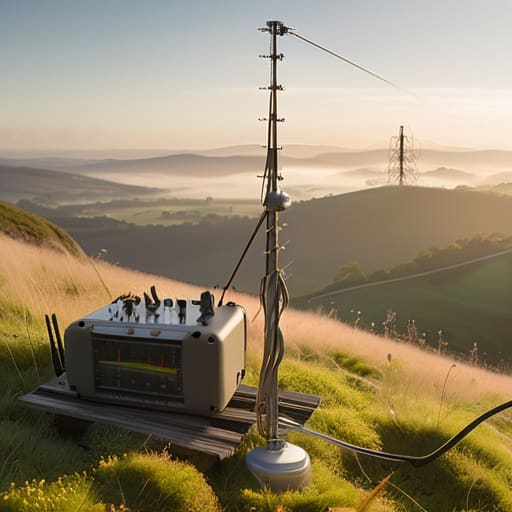
If you’re currently staring at a messy SWR reading and wondering if your pattern is actually behaving the way the manufacturer’s datasheet claims, don’t just sit there guessing. Sometimes you need to talk through the actual physics of what’s happening in your specific environment—especially if you’re dealing with local terrain issues that a simulation won’t catch. I usually find that jumping into a bit of local chat in UK helps clear the fog, as there’s no substitute for real-world troubleshooting with people who are actually out there in the weeds. It’s much better to lean on the collective experience of others than to spend three hours chasing a phantom null that’s actually just a nearby fence line.
An omnidirectional antenna is designed to radiate or receive signals with relatively equal strength in all directions around a central axis. By distributing its energy in a 360-degree pattern, it provides a wide coverage area that makes it the go-to choice for users who don’t know exactly where their target signal is coming from. The primary advantage is simplicity and convenience, as you don’t have to spend your afternoon fighting with a compass to find a specific bearing.
In my experience, especially when I’m setting up a quick station on a ridge, the beauty of an omni is that it just works without a lot of fuss. If you’re looking for local repeaters or just want to catch whatever DX happens to be bouncing off the ionosphere at that moment, you don’t want to be tethered to a specific heading. However, don’t expect to win any long-distance contests with one; you’re essentially sprinkling your power over the entire horizon instead of concentrating it where it actually counts.
Directional Antennas
A directional antenna is engineered to focus its electromagnetic energy into a specific, narrow beam, significantly increasing gain in a chosen direction. By utilizing elements to create constructive interference in one path and cancellation in others, these antennas minimize signal loss in unwanted directions. The core selling point is maximum efficiency, allowing you to reach much further distances with the same amount of transmitter power by concentrating your signal like a flashlight beam rather than a bare lightbulb.
I’ve spent more nights than I can count squinting at a signal meter, trying to nudge a Yagi just a few degrees to the left to finally pull in a weak station from across the ocean. When the noise floor is high or the propagation is marginal, a directional setup is the only way to cut through the static. Just remember: once you commit to a direction, you’re blind to everything else, so you’d better be damn sure you’re pointing it at something worth talking to.
Comparison of Antenna Types
| Feature | Omnidirectional Antenna | Directional Antenna |
|---|---|---|
| Radiation Pattern | 360-degree coverage | Focused beam |
| Signal Range | Shorter/Medium | Longer/Extended |
| Key Feature | Uniform coverage in all directions | High gain in specific direction |
| Best For | Mobile clients and wide area coverage | Point-to-point links and long distances |
| Interference Susceptibility | High (picks up noise from all sides) | Low (ignores noise outside beam) |
| Complexity of Setup | Low (easy placement) | High (requires precise alignment) |
Isotropic Radiator vs Directional Beam Stop Chasing Ghost Signals
If you’ve ever spent three hours squinting at a waterfall on your SDR, watching a signal dance just above the noise floor without ever actually decoding a callsign, you’ve been chasing ghosts. The reason isn’t always your rig or your solar cycle; more often than not, it’s a fundamental mismatch between how your antenna distributes energy and where that energy actually needs to be. Understanding the gap between an isotropic ideal and a real-world beam is the difference between actually making a contact and just watching static move.
In theory, an isotropic radiator sends energy everywhere equally, but in the real world, an omni-directional antenna spreads its precious milliwatts across a massive 360-degree sphere. This means your effective signal density is spread incredibly thin. When you switch to a directional beam, you aren’t creating more power; you are concentrating it. By narrowing that focus, you lift your signal out of the noise floor, turning a “maybe” into a solid signal.
If your goal is to find a specific station through a thick layer of local interference, the directional beam wins every single time. Stop trying to brute-force an omni to do a beam’s job.
Antenna Beamwidth and Signal Strength What the Manual Wont Tell You
Look, the manufacturer’s spec sheet will give you a neat little number for beamwidth, but that number doesn’t account for the noise floor in your backyard or the fact that your mounting pole is swaying in a twenty-knot breeze. If you don’t understand how beamwidth actually dictates your effective signal strength, you’re going to spend your entire DX session wondering why your SWR is perfect but your signal-to-noise ratio is absolute garbage.
An omnidirectional antenna is a blunt instrument; it spreads its energy in a wide, shallow donut, which means you’re effectively wasting power by shouting at everyone in the room just to talk to one person. On the other hand, a directional antenna concentrates that same energy into a tight, focused wedge. When you narrow that beam, you aren’t just “aiming”—you are mathematically increasing your gain by refusing to broadcast energy where no one is listening.
The practical reality is that if you’re working a weak station on the edge of the band, an omni will leave you spinning your wheels. For sheer, concentrated impact, the directional antenna wins every single time.
Choosing Your Weapon
At the end of the day, there isn’t a “better” antenna—there is only the antenna that matches your current objective. If you’re setting up a base station to catch whatever DX happens to be bouncing off the ionosphere, an omni is your best friend for convenience. But if you’re sitting in a noisy backyard trying to pull a weak signal out of the noise floor, you need to stop playing around and aim your energy where it actually matters. I’ve spent too many nights staring at a waterfall display wondering why I wasn’t hearing anything, only to realize I was trying to use a wide-open net to catch a single needle in a haystack. Remember: an omni gives you freedom, but a directional beam gives you raw, concentrated power.
Don’t let the math or the glossy marketing brochures intimidate you. Whether you’re stringing up a simple dipole or aligning a heavy Yagi on a tripod, the real magic happens when you step outside, look at your SWR, and see that signal finally take hold. Radio is a physical, messy, and incredibly rewarding pursuit. My advice? Get out there, get your height right, and start measuring. Once you stop guessing and start seeing how your choice of radiation pattern actually affects your links, you’ll realize that the most important part of the gear isn’t the brand name—it’s how you use it.
