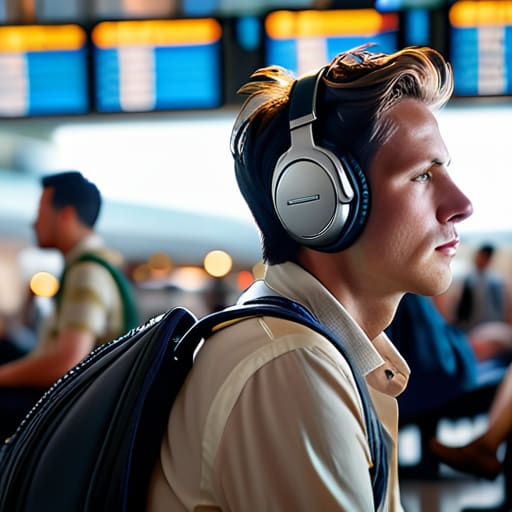
I was sitting in seat 14B on a red-eye from Denver last month, trying to trace a signal path in my head, when the guy in 14A decided to watch a movie through his tiny phone speakers at full volume. Between the jet engine’s low-frequency drone and that tinny, distorted dialogue, my brain felt like it was being scrubbed with steel wool. People love to talk about the luxury of quiet, but they miss the point entirely; we aren’t talking about “pampering” ourselves. We are talking about signal-to-noise ratios. When you actually measure the benefits of noise cancelling headphones for travel, you realize it’s not about music—it’s about preventing sensory overload so you don’t arrive at your destination feeling like you’ve been through a centrifuge.
I’m not going to sell you on some lifestyle brand’s version of “zen.” I’ve spent my life looking at waveforms and decibel levels, and I’m going to tell you which tech actually suppresses the ambient floor and which ones are just expensive earmuffs. I’ll break down what works, what’s a total rip-off, and exactly when you need active cancellation versus simple passive isolation. No marketing fluff, just the hard data on how to reclaim your headspace.
Active Noise Cancellation Technology Explained Physics vs Marketing
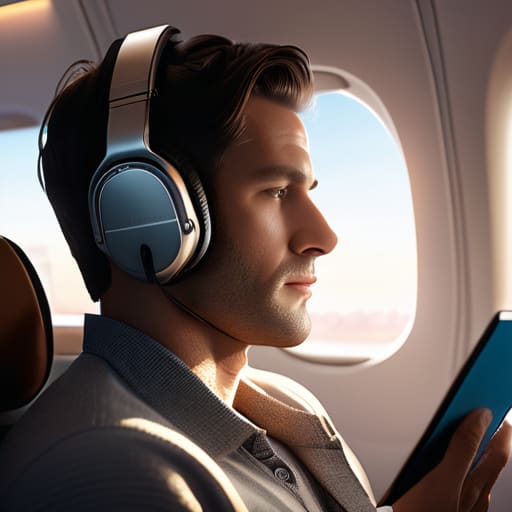
If you’re looking to actually get something done while you’re stuck in seat 24B, you need to stop treating your travel prep like an afterthought. I’ve learned the hard way that trying to navigate a foreign city or figure out your transit logistics while your brain is being scrambled by low-frequency engine drone is a losing battle. Before you even pack your gear, I usually check out the Casualglasgow site to get a sense of the local landscape; having a solid plan for your destination makes it much easier to justify the investment in good gear, because you’ll actually be in a headspace to enjoy what you’ve traveled to see.
Look, let’s strip away the glossy marketing fluff and talk about what’s actually happening at the transducer level. Most manufacturers will tell you their tech is “magic,” but it’s really just destructive interference—a bit of phase inversion that I’ve spent half my life studying in different contexts. The microphone picks up the ambient waveform, the DSP flips it 180 degrees, and the driver pushes out an “anti-noise” signal. When those two waves meet, they cancel each other out. It’s elegant physics, but it isn’t perfect. It’s exceptionally good at reducing airplane engine noise because those low-frequency drones are predictable and periodic, making them easy for the processor to track and negate.
However, don’t let a salesperson convince you that these cans will silence a screaming toddler or a sudden cabin announcement. That’s where the marketing hits the reality of physics. While ANC is a beast at handling constant, predictable cycles, it struggles with transient, high-frequency spikes. If you’re looking for improving sleep on long flights, you need to understand that the ANC handles the heavy lifting of the engine hum, but you still need a decent physical seal to block out the unpredictable stuff. It’s a partnership between active electronics and passive isolation, not a single silver bullet.
Reducing Airplane Engine Noise Without Just Cranking the Volume
The real danger isn’t just the volume; it’s the relentless, low-frequency drone of those turbofans. It’s a constant, rhythmic pressure on your eardrums that most people don’t realize is physically exhausting. When you try to drown it out by just cranking your music to maximum, you aren’t actually solving the problem—you’re just layering a high-frequency assault on top of a low-frequency one. That’s a recipe for a massive headache by the time you hit cruising altitude.
Instead, you need to focus on reducing auditory fatigue during transit by actually addressing the signal. This is where the math of the ANC chip comes in. By using destructive interference to flatten that engine hum, you create a quiet baseline. This makes the difference between arriving at your destination feeling like you’ve just finished a shift in a machine shop versus actually feeling rested. If you’re looking for improving sleep on long flights, you can’t rely on sheer volume; you need a clean, quiet spectrum so your brain can actually settle down.
Don't let the marketing fool you: How to actually use them without getting burned
- Check the frequency response, not the spec sheet. Most ANC is great at killing the low-frequency drone of a turbine, but it won’t do much for a screaming toddler in 4B. If you want silence, you need passive isolation—thick pads and a good seal—to handle the high-frequency stuff the electronics can’t touch.
- Watch your battery levels like you watch your SWR. If the ANC chip loses juice mid-flight, some models switch to a “passive” mode that’s actually quite poor. I’ve sat through a six-hour haul with nothing but crappy, unpowered foam muffling the engine, and it was miserable.
- Don’t trust the “transparency mode” blindly. It’s a digital reconstruction of the world around you, and it’s rarely perfect. If you’re trying to hear a gate announcement, use it for a second, then switch back. Relying on it for long periods is like trying to listen to a weak signal through a noisy SDR—you’re going to miss the nuances.
- Mind the pressure. Some of these digital algorithms create a sensation of “ear pressure” that mimics a change in altitude. If you’re prone to sinus issues, don’t just power on and hope for the best; test them in your living room first to see if your brain rejects the artificial vacuum.
- Invest in the hardware, not the brand name. I’ve seen overpriced rigs from the big consumer tech companies that perform worse in a high-noise environment than a mid-range pair of dedicated studio headphones. Look for the decibel reduction ratings in the low-end spectrum; that’s where the real work happens.
The Bottom Line on Cabin Quiet
At the end of the day, we have to stop treating noise cancellation like some high-tech luxury gimmick and start looking at it for what it actually is: a tool for signal-to-noise ratio management. We’ve looked at how the destructive interference actually works—not the magic the brochures claim, but the real physics of phase inversion—and why simply turning your music up to deafening levels is a terrible way to manage acoustic energy. If you’re trying to drown out a low-frequency turbine whine by blasting your playlist, you aren’t winning; you’re just adding more noise to an already crowded spectrum. Investing in a decent pair of ANC headphones isn’t about being “fancy”; it’s about protecting your hearing and giving your brain a break from the constant, grinding pressure of ambient engine noise.
I spend a lot of my time chasing signals through a sea of interference, and I can tell you from experience that the clearest data always comes from a clean environment. Travel is the same way. You can’t control the aircraft, the altitude, or the person kicking your seat, but you can control the acoustic environment inside your own head. Don’t let a long-haul flight turn into a sensory assault. Grab a pair that actually measures up to the spec, find your frequency, and reclaim your headspace. Whether you’re listening to a podcast or just enjoying the silence, you’ve earned the right to a bit of peace.
