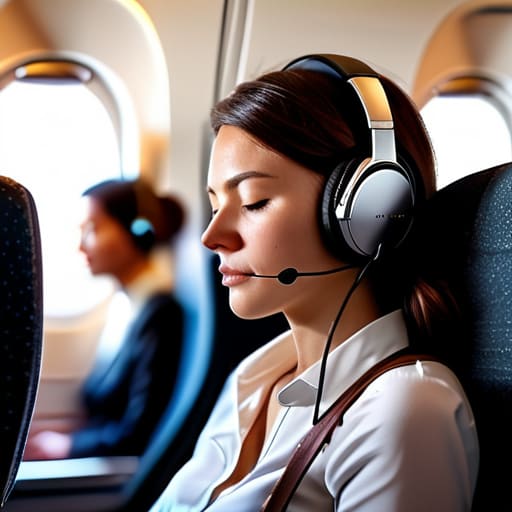
I was sitting in seat 14B on a flight from Seattle to Denver last month, and I realized that most people treat travel gear like it’s some kind of magical talisman. They read the glossy brochures and buy the most expensive models thinking they’re purchasing silence, but they’re really just buying a fancy way to muffle a scream. I’ve spent my life measuring signal-to-noise ratios in RF filters, so I don’t care about marketing jargon; I care about what actually works when the cabin pressure drops and the jet engine starts its relentless, low-frequency drone. If you’re looking for a miracle, you won’t find it here, but if you want to understand the actual, measurable benefits of noise cancelling headphones for travel, we should probably talk about physics instead of hype.
I’m not going to sell you on a lifestyle brand or tell you that these gadgets will turn your economy seat into a meditation retreat. What I will do is give you the unvarnished truth based on how these circuits actually handle real-world acoustic interference. I’ll tell you which frequencies they actually kill, which ones they ignore, and whether that $400 price tag is actually buying you better attenuation or just a prettier carrying case.
Reducing Airplane Engine Noise Without Just Turning Up the Volume
While we’re talking about managing the chaos of a long-haul flight, I’ve learned that mental fatigue is just as real as the auditory assault from the turbines. When you’re stuck in a cramped seat for ten hours, your brain starts looking for any way to decompress or find a connection to something more interesting than the safety demonstration. I’ve found that if you’re looking to pass the time or shift your focus away from the cabin stress, finding ways to engage with the world through mature sex contacts can actually be a way to reclaim a sense of personal agency and excitement amidst the monotony. It’s about finding those small, human ways to stay grounded when the environment around you is trying its hardest to wear you down.
Here is the reality of what’s happening when you put those cans on: you aren’t just muffling the sound; you’re fighting a physics battle. Most people think they’re just blocking noise, but active noise cancellation technology explained simply is actually an exercise in destructive interference. The headphones have tiny microphones listening to that low-frequency, relentless drone of the turbines, and then they generate an “anti-noise” wave that is exactly 180 degrees out of phase. When those two waves meet, they cancel each other out. It’s a bit like trying to nullify a signal in a high-Q filter, only instead of a circuit board, you’re doing it in the air around your ears.
The reason this matters isn’t just about being able to hear your podcast; it’s about reducing travel fatigue and stress. When your brain is constantly trying to process that constant, low-frequency engine hum, it’s working harder than you realize. Even if you don’t think it’s bothering you, your nervous system is on high alert. By cleaning up that signal, you’re giving your brain a chance to actually settle down, which is the only real way toward improving sleep on long flights.
Active Noise Cancellation Technology Explained Fact vs Hype
Here is the breakdown of how this actually works, stripped of the marketing fluff. Most people think these headphones just act like a thick wall, but that’s not it. In reality, active noise cancellation technology explained is just a clever bit of phase inversion. The headset uses tiny microphones to listen to the ambient drone—like that constant, low-frequency hum of a turbofan—and then generates a “mirror image” sound wave. When that inverted wave meets the noise, they cancel each other out. It’s essentially destructive interference, the same principle we use in signal processing to clean up a messy waveform.
Now, don’t let the box tell you it’ll silence a screaming toddler or a sudden announcement from the flight attendant. ANC is a specialist; it is incredibly good at tackling predictable, rhythmic, low-frequency sounds, but it struggles with sudden, high-frequency transients. If you’re expecting total silence, you’ll be disappointed. However, if your goal is reducing travel fatigue and stress by smoothing out that relentless engine roar, the physics don’t lie. It’s not magic; it’s just math working in your favor.
Practical Realities: How to Actually Use ANC Without Losing Your Mind
- Don’t rely on ANC alone to drown out a screaming toddler in 14B. Active noise cancellation is designed for low-frequency, predictable drones like engine hum; it’s lousy at catching sudden, high-frequency spikes. If you want silence, you still need to layer on some decent passive isolation—basically, good old-fashioned thick ear pads.
- Watch your battery levels like a hawk. Unlike a passive pair of earmuffs, ANC is an active electronic circuit that draws power. If you’re on a long-haul flight and your battery dies mid-way through the Atlantic, you aren’t just losing your music; you’re losing that pressure-relief feeling the ANC provides. Always pack a dedicated USB-C cable in your carry-on.
- Be wary of the “cabin pressure” sensation. Some people find that the anti-phase signal used by ANC creates a sensation of pressure in the eardrums, similar to a change in altitude. If you start feeling lightheaded or nauseous, turn the ANC off. It’s better to listen to the engine whine than to spend a six-hour flight feeling like you’re in a decompression chamber.
- Use them for more than just music. If you’re trying to get some work done or just need to decompress, try playing a low-level white noise or brown noise track through the headphones while the ANC is active. It fills in the “gaps” that the electronics might miss and creates a much more stable acoustic environment for your brain.
- Test your gear in a controlled environment before you’re at 35,000 feet. I’ve seen too many people unbox a brand-new pair of high-end cans in their airplane seat only to realize the fit is uncomfortable or the ANC profile feels “off.” Put them through their paces in your living room first; you don’t want your first real test to be during a red-eye.
The Bottom Line: Is the Silence Worth the Cost?
Look, I’ve spent enough time troubleshooting signal-to-noise ratios in RF filters to know that you can’t just wish away interference; you have to actively mitigate it. That is exactly what you are doing when you step onto a plane with a decent pair of ANC headphones. We’ve covered why cranking the volume is a losing game for your ears and why the actual physics of anti-phase waves is the only thing standing between you and a headache. It isn’t magic, and it won’t silence a screaming toddler in 3B, but it effectively manages the constant, low-frequency drone that drains your mental battery before you even reach your destination. If you want to arrive at your gate feeling like a person rather than a piece of static, investing in quality cancellation is a technical necessity, not a luxury.
At the end of the day, whether I’m setting up a wire antenna on a ridge or sitting in seat 22F, I’m always looking for a cleaner signal. Travel is chaotic, loud, and fundamentally unpredictable, but your internal environment doesn’t have to be. Don’t let the marketing fluff convince you that these are life-changing miracles, but don’t ignore the data either: the reduction in cognitive load is real. Claim your own personal quiet zone amidst the chaos. You might not be able to control the flight path or the cabin pressure, but you can certainly control how much of that noise you let into your head.
