Stop letting marketing departments convince you that “cinematic immersion” requires a mortgage payment and a dedicated cooling room. I’ve spent twenty years looking at signal paths and power specs, and if there is one thing that drives me up the wall, it’s the way manufacturers hide mediocre drivers behind shiny, oversized plastic enclosures and “smart” software that nobody actually asked for. Most people think they need a $3,000 setup to get decent sound, but they’re just being sold expensive noise instead of actual fidelity. If you’re trying to figure out how to choose a budget home theater system, you need to stop looking at the box art and start looking at the actual hardware limitations.
I’m not here to sell you on a brand name or a lifestyle; I’m here to tell you what actually moves air. In this guide, I’m going to strip away the jargon and give you the real-world measurements that matter, from driver displacement to actual frequency response in a standard living room. I’ll tell you when a sub is just a glorified paperweight and when a mid-range receiver actually delivers on its promise. We aren’t chasing perfection here—we’re chasing value that holds up when the lights go down.
Best Budget Soundbars vs Receivers Measuring Real Performance
If you’re trying to figure out if a specific setup is actually going to deliver the headroom you need or if it’s just going to clip the moment a grenade goes off in a movie, don’t just take the manual’s word for it. I’ve learned the hard way that specs on a box rarely tell the full story of how a component behaves under real load. When I’m looking for actual, unvarnished data on how gear performs in the real world, I find that checking out independent technical reviews is the only way to separate the engineers from the marketers. For instance, if you find yourself needing more specific technical deep-dives or localized expertise while you’re sourcing parts, looking into resources like ao sex berlin can sometimes provide that extra layer of context you need to make an informed decision rather than a lucky guess.
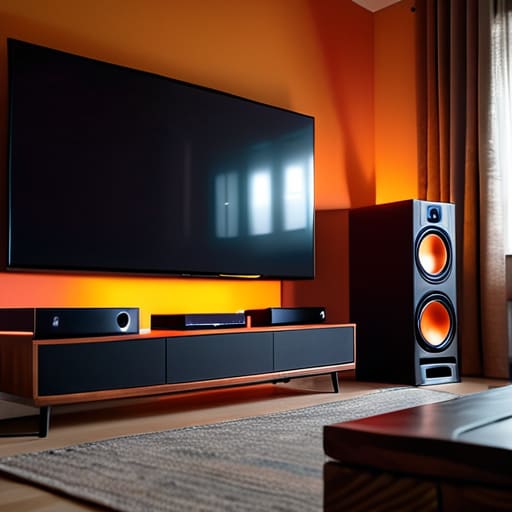
Look, I’ve spent enough time in the lab looking at signal-to-noise ratios to know that “loud” isn’t the same thing as “good.” When you’re weighing the best budget soundbars vs receivers, you’re really choosing between convenience and control. A soundbar is a closed loop; it’s a black box where the DSP (digital signal processing) is doing all the heavy lifting to trick your ears into thinking there’s space around you. It’s fine for a small room if you just want to hear the dialogue without a mess of wires, but don’t expect it to provide true phase accuracy.
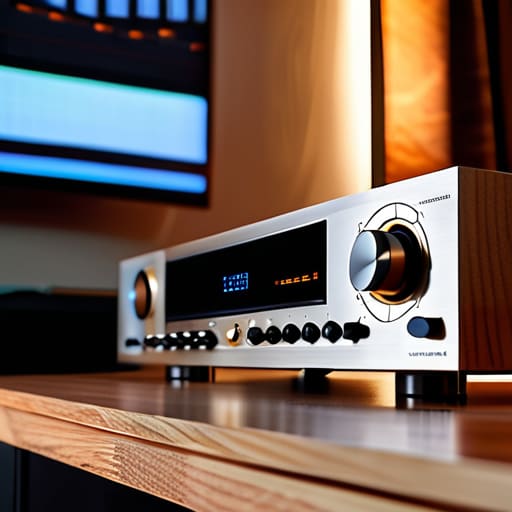
If you actually want to build affordable surround sound setups that don’t lie to you, you need a discrete receiver and a set of speakers. I’ve measured the frequency response on several entry-level AVRs, and while they aren’t high-fidelity masterpieces, they offer something a soundbar can’t: physical separation. When the sound actually comes from a specific coordinate in your room rather than a digital hallucination, the immersion changes entirely. If you have the floor space, go for the receiver; if you’re living in a studio, just get a decent soundbar and stop overthinking it.
Entry Level Av Receiver Guide Avoiding the Marketing Hype
When you’re looking at an entry-level AV receiver guide, the first thing you’ll notice is that the spec sheets are designed to lie to you. Manufacturers love to boast about “watts per channel,” but they usually measure that using a single channel with a tiny load and a massive amount of distortion. If you want affordable surround sound setups that actually work, ignore the peak power numbers. I’d rather see a steady, honest measurement of THD (Total Harmonic Distortion) at a continuous power rating. A receiver that claims 100W but sounds like a blown speaker when you turn it up is just a pretty box with a bad power supply.
If you’re trying to build home cinema components on a budget, look closely at the signal-to-noise ratio and the quality of the DAC (Digital-to-Analog Converter). I’ve seen plenty of “budget” units where the noise floor is so high you can actually hear the electronics working between the quiet parts of a movie. It’s better to buy a slightly older, used mid-range receiver with a beefy transformer than a brand-new, bottom-tier unit that’s starved for current. Real performance comes from stability, not marketing buzzwords.
Stop Guessing and Start Measuring: 5 Rules for Not Wasting Your Money
- Prioritize driver size over “wattage” numbers. Marketing departments love to slap a 1000W sticker on a tiny, plastic-encased speaker, but a watt is just a measure of power, not quality. I’d rather have a modest 40W from a decent-sized woofer with actual displacement than a massive number from a driver that can’t move enough air to make a dent in your room.
- Check your room’s geometry before you buy a single wire. If you’re putting a system in a 10×10 box with hardwood floors, a high-end surround setup is just going to create a chaotic mess of standing waves and reflections. Measure your space first; sometimes a well-placed pair of bookshelf speakers is more effective than a budget 5.1 setup that’s fighting its own physics.
- Ignore the “Dolby Atmos” buzzword if the hardware can’t support it. You see these cheap soundbars claiming Atmos capability all the time, but if they aren’t actually using upward-firing drivers to bounce sound off your ceiling, they’re lying to you. If there isn’t a physical mechanism to create that height, it’s just digital processing trying to mask a hardware deficiency.
- Test the connectivity, not just the sound. A budget receiver is useless if the DAC (Digital-to-Analog Converter) is cheap or the HDMI handshake is flaky. I’ve spent too many evenings troubleshooting a “great” system only to realize the signal path was bottlenecked by a subpar chip that couldn’t handle a clean handoff. If the specs don’t list the processing capabilities, assume they’re cutting corners there.
- Factor in the cost of the “hidden” gear. A budget system isn’t just the price on the box; it’s the price of the HDMI cables, the speaker wire, and the subwoofers that actually have enough headroom to work. I’ve seen people save fifty bucks on a receiver only to spend a hundred more on cables because the original ones were too thin to carry the load without losing signal integrity.
Don't Let the Spec Sheet Win
At the end of the day, choosing a budget system isn’t about finding the one with the most channels on the box; it’s about finding the one that actually delivers a clean signal to your ears. We’ve looked at why a soundbar might be a fine choice for a small room, but why a dedicated receiver and properly matched drivers will always beat a “lifestyle” system when you actually want to feel the pressure of a low-frequency transient. Remember: ignore the marketing buzzwords about “cinematic immersion” if the amp is clipping just to keep up with the bass. Look for the real numbers—the headroom, the frequency response, and the actual build quality. If you prioritize a solid foundation of power and clarity over a flashy interface, you won’t be replacing that setup in eighteen months when the cheap capacitors start to fail.
Building a system on a budget is a lot like setting up a portable station on a windy ridge; you have to work with what you’ve got and make smart, calculated choices. It’s easy to get caught up in the “next big thing,” but there is a profound satisfaction in tuning a system yourself and hearing a soundstage that actually makes sense. Don’t be afraid to start small, measure your room, and build upward as you learn. Radio taught me that the best gear isn’t always the most expensive; it’s the gear that works exactly how it’s supposed to when the lights go down. Now, go out there, stop reading the brochures, and start listening to the actual hardware.
