I remember sitting in a cramped workshop back in the late nineties, staring at a custom-built power amplifier that had just let out a pathetic, acrid puff of magic smoke. I had followed a textbook diagram to the letter, but I’d ignored the actual thermal reality of the enclosure. People love to throw around jargon about “thermal conductivity” and “coefficient of dissipation” like they’re reciting scripture, but when you’re staring at a dead transistor, none of that matters. If you don’t actually understand what is a heatsink for in a practical, real-world sense, you aren’t building a radio; you’re just building a very expensive, very slow-motion incendiary device.
I’m not here to give you a lecture from a physics textbook that assumes you’re operating in a vacuum. Instead, I’m going to tell you how heat actually moves when you’re pushing high duty cycles on a crowded band. We’ll talk about why a massive chunk of aluminum is useless if your airflow is garbage, and I’ll share the specific setups where I’ve seen components actually survive a long DX session. No hype, no overpriced marketing fluff—just the hard physics of keeping your gear from cooking itself.
Table of Contents
- The Brutal Physics of Conduction and Convection in Electronics
- Why Thermal Conductivity of Metals Isnt Just a Textbook Theory
- Five Ways to Stop Treating Your Thermal Management Like an Afterthought
- The Bottom Line: Don't Let Heat Kill Your Gear
- The Real Job of a Heatsink
- Don't Leave Your Thermal Management to Chance
- Frequently Asked Questions
The Brutal Physics of Conduction and Convection in Electronics
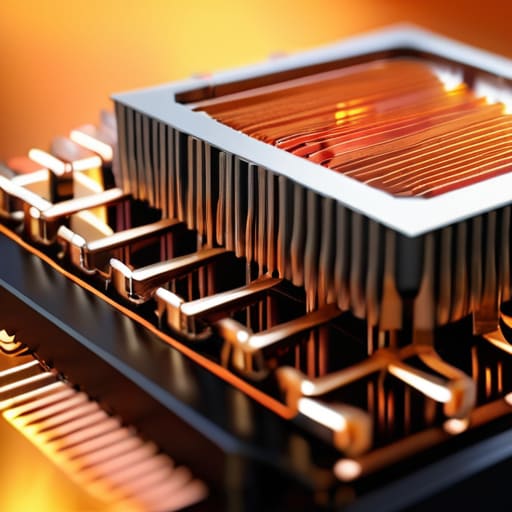
At the end of the day, we aren’t just fighting “heat”; we’re fighting the laws of thermodynamics. It starts with conduction. When your power amplifier or processor starts working, that energy doesn’t just vanish—it turns into thermal agitation right at the silicon junction. To move that energy away, you’re relying entirely on the thermal conductivity of metals within your heatsink. If you use a cheap, low-grade aluminum alloy that doesn’t move heat efficiently, you’ve basically built a thermal dam. The heat stays trapped where it’s most dangerous, and your components start cooking themselves from the inside out.
Once the heat reaches the fins, the game changes to convection. This is where the air does the heavy lifting. You have two choices here: passive vs active cooling. A massive, finned block of copper works beautifully if you have enough natural airflow, but in a cramped, unventilated radio shack, you’re going to need a fan to force that air through. I’ve seen plenty of guys try to run high-duty cycle modes on rigs with nothing but passive cooling, only to watch their frequency stability drift into the gutter because the internal temperature is swinging like a pendulum.
Why Thermal Conductivity of Metals Isnt Just a Textbook Theory
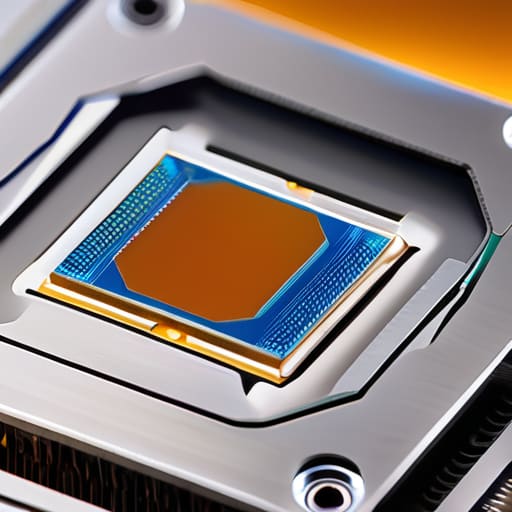
In my engineering days, I saw plenty of people treat the thermal conductivity of metals like a static number pulled straight from a datasheet. They’d pick a piece of aluminum, assume it was a magic wand for heat, and wonder why their power amplifier was still drifting toward thermal shutdown. The reality is that a material’s ability to move heat is only half the battle; if you don’t account for the microscopic air gaps between your component and the metal, you’re essentially trying to push water through a straw filled with sand.
This is where the thermal interface material importance comes into play. I’ve spent more nights than I care to admit troubleshooting rigs where the “heatsink” was technically perfect, but the contact was garbage. You need a decent thermal paste or a precision-machined surface to bridge those gaps. Without it, you aren’t actually utilizing the metal’s properties; you’re just sitting a warm chip next to a cold piece of scrap. It’s not about the theory in the textbook; it’s about how much actual energy you can move before the silicon starts to cook.
Five Ways to Stop Treating Your Thermal Management Like an Afterthought
- Stop assuming a bigger chunk of aluminum equals better cooling. It’s not just about mass; it’s about surface area. If you have a massive, solid block of copper with no fins, you’ve basically just built a very expensive, very inefficient paperweight. You need those fins to actually grab the air.
- Don’t forget the interface. I’ve seen people try to mount a heatsink to a power transistor with nothing but hope and a prayer. You need thermal paste or a pad to fill those microscopic air gaps. Air is a terrible conductor—it’s basically an insulator—so if you leave gaps, your components are going to cook regardless of how big your heatsink is.
- Watch your airflow, or don’t bother. A heatsink sitting in dead air is doing half the job. If you’re building a high-power amplifier, you need to decide if you’re relying on natural convection (which is quiet but slow) or forced air with a fan. If you go the fan route, make sure it’s positioned so it’s actually pulling heat away from the fins, not just swirling hot air around in a circle.
- Mind the mounting pressure. This is where a lot of people trip up. If you tighten those screws down until the board cracks, you’ve gone too far; if they’re loose enough to rattle, you haven’t gone far enough. You need consistent, even pressure across the mating surface to ensure that thermal paste actually does its job.
- Real-world ambient temperature matters more than your math says it will. You can design the most perfect cooling solution for a lab in a climate-controlled room, but if you’re running that same rig in a shed in July, your thermal margins are going to evaporate. Always build in a buffer for the hottest day of the year, not the average.
The Bottom Line: Don't Let Heat Kill Your Gear
A heatsink isn’t a decorative piece of aluminum; it is a critical component that relies on surface area and airflow to prevent your semiconductors from cooking themselves under load.
Metal conductivity matters, but it’s a half-measure if you don’t manage the interface; if you don’t use decent thermal paste to bridge that microscopic gap between the component and the sink, you’re just wasting your time.
Don’t trust a passive heatsink in a cramped, unventilated radio shack; if you’re pushing high duty cycles, you need active convection—real airflow—to actually move that heat away before the components drift or fail.
The Real Job of a Heatsink
At the end of the day, a heatsink isn’t some fancy add-on; it’s a desperate attempt to move heat from a tiny, angry piece of silicon to the air before that silicon decides it’s had enough and quits on you. If you aren’t thinking about the surface area and how that air is actually moving, you aren’t managing heat—you’re just watching your components cook in slow motion.
Wren Castellano
Don't Leave Your Thermal Management to Chance
At the end of the day, a heatsink isn’t just a piece of decorative scrap metal bolted to a PCB; it is the difference between a stable signal and a component that drifts or dies. We’ve talked about why conduction needs a solid interface and why convection requires actual airflow to move the heat away from the fins. If you ignore the physics—if you use a cheap, undersized sink or forget that thermal paste actually matters—you aren’t just risking a minor efficiency loss. You are actively inviting thermal runaway into your rig. I’ve seen enough power amplifiers go south because someone thought “it feels fine to the touch” was a valid metric for stability. It isn’t. Measure your temperatures, check your airflow, and respect the reality of the heat you’re generating.
There is a specific kind of satisfaction that comes from building something that stays cool and consistent, even when you’re pushing it hard on a long DX session. When you understand the “why” behind the hardware, you stop being a person who just follows a manual and start becoming someone who actually understands the machine. Radio is a beautiful, temperamental medium, but it shouldn’t be a mystery. When you master the small, practical details like thermal management, you build a foundation of reliability that lets you focus on what really matters: the contact. Now, go check your mounting pressure and get back on the air.
Frequently Asked Questions
If I’m running a low-power QRP rig, do I actually need a dedicated heatsink, or is the chassis enough?
Look, I’ve pulled QRP rigs out of backpacks after a three-hour contest only to find the chassis was hot enough to fry an egg. If your rig is built with a massive, integrated aluminum frame, you’re probably fine. But if it’s a small, plastic-heavy box, don’t trust the chassis alone. I’ve seen “low power” drift significantly once those internal components hit a thermal ceiling. If you’re pushing it, add the sink.
How do I know if my current heatsink is actually doing its job, or if I'm just looking at a piece of decorative aluminum?
Stop guessing and grab a cheap infrared thermometer. If you see a massive temperature delta—say, 20°C or more—between the component junction and the heatsink surface, your thermal interface is failing or your sink is undersized. Ideally, the heatsink should stay relatively uniform. If it’s burning hot to the touch but your rig is still drifting or dropping power, that aluminum is just decoration. You want heat moving, not sitting there.
Is it worth it to spend the extra money on thermal paste, or am I just paying for marketing fluff?
Look, if you’re just using a tiny bit of generic silicone to bridge the gap between a MOSFET and a finned block, you’re fine. But don’t call it “equal.” If you’re building something that actually pulls power—like a high-gain amplifier or a heavy-duty SDR rig—don’t skimp. That “marketing fluff” is usually just better particle density. I’ve seen rigs throttle because someone used cheap grease on a high-wattage component. Pay the extra few dollars; it’s cheaper than replacing a fried transistor.
