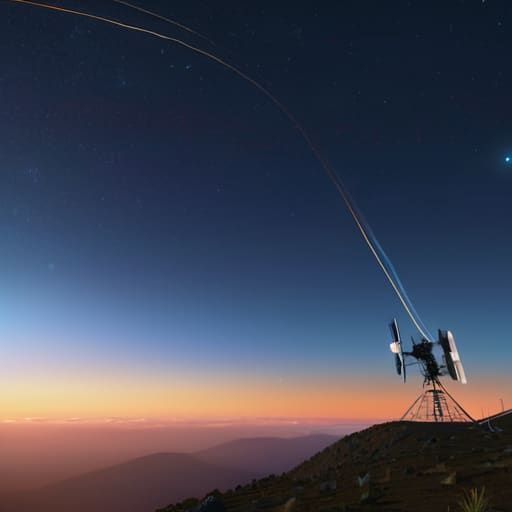
I spent three hours last Tuesday troubleshooting a perfectly tuned dipole, convinced my coax had developed a moisture leak or my tuner was finally giving up the ghost. I was checking every connection, swearing at my SWR meter, and blaming my gear—only to realize the signal hadn’t vanished because of a hardware failure, but because the sun had decided to take a nap. People love to overcomplicate how hf propagation works by drowning you in dense mathematical models or telling you that you need a $5,000 transceiver to make a contact. The truth is, you can have the most expensive rig on the planet, but if the ionosphere isn’t cooperating, you’re just making expensive noise in a vacuum.
I’m not here to feed you the textbook definitions that ignore the messy reality of the real world. Instead, I’m going to strip away the jargon and tell you what actually happens when those radio waves hit the sky. I’ll show you how to read the signs, how to distinguish between a bad antenna and a bad solar cycle, and how to stop guessing in the dark. We’re going to look at the physics through the lens of actual field experience, so you can finally stop fighting your equipment and start listening to the bands.
Table of Contents
- Ground Wave vs Skywave Why Your Signal Hit a Wall
- Signal Refraction in the Atmosphere It Is Not Magic
- 5 Real-World Truths About Why Your Signal Is (or Isn't) Moving
- The Bottom Line: What Actually Matters When You're Tuning In
- The Ionosphere Isn't a Reliable Partner
- The Reality of the Airwaves
- Frequently Asked Questions
Ground Wave vs Skywave Why Your Signal Hit a Wall

Think of it this way: your signal is either hugging the dirt or trying to escape the planet. When you’re working local—maybe a few dozen miles away—you’re relying on the ground wave. The signal follows the curvature of the earth, but it’s a losing battle against physics. If you’re working over salt water, that signal will travel much further than if you’re trying to push it through a dry, rocky valley. The ground effectively “eats” your energy, and once that signal fades into the noise floor, it’s gone.
That’s where the magic—and the frustration—of skywave propagation mechanics comes in. Instead of fighting the terrain, we aim our energy up at the sky, hoping it hits a layer of ionized gas dense enough to bend the signal back down to Earth. This isn’t a mirror; it’s more like signal refraction in the atmosphere. If you hit the ionosphere at too steep an angle, the signal just punches straight through into space, leaving you with nothing but silence. You have to find that sweet spot between the critical frequency and the Maximum Usable Frequency (MUF) to actually make the skip work.
Signal Refraction in the Atmosphere It Is Not Magic

Look, I know it feels like your signal is just bouncing off a ceiling, but it’s actually a bit more nuanced than a simple mirror reflection. When we talk about signal refraction in the atmosphere, we aren’t talking about a hard surface. The ionosphere is a layered soup of ionized gases, and as your radio wave enters these layers, the change in electron density causes the wave to bend—or refract—back toward Earth. It’s more like a straw looking broken in a glass of water than a ball bouncing off a wall.
The trick is that this bending depends entirely on the density of those layers, which is why you can’t just set your frequency and walk away. You have to account for the critical frequency and MUF (Maximum Usable Frequency). If you try to push a signal through at a frequency higher than what the current ionization can handle, the wave won’t bend; it’ll just punch straight through into space, leaving you shouting into the void. I’ve lost many a good evening to that mistake, usually because I underestimated how much the local ionospheric density had shifted since sunset.
5 Real-World Truths About Why Your Signal Is (or Isn't) Moving
- Stop blaming your coax for a dead band. If the MUF (Maximum Usable Frequency) is sitting at 7 MHz because the sun is being lazy, your 20-meter rig isn’t going to do a damn thing. Check the solar flux index before you start tearing apart your feedline.
- Height is not a suggestion; it’s the math. I don’t care how well-tuned your dipole is if it’s sitting two feet off the ground in a damp field. You’ll lose your signal to the earth before it even thinks about heading toward the ionosphere. Get that wire up, or prepare to stay local.
- The ionosphere is a temperamental beast, not a constant. One night you’ll have a perfect skip on 40 meters, and the next, the same setup will be silent. Sometimes the layers are just too thin, or the tilt is wrong. If it’s not working, wait for the mood to shift; don’t go buying more gear.
- Beware the “magic” of Grey Line propagation. It’s not a miracle; it’s just a brief window where the refraction angles work in your favor as the sun rises or sets. It’s a fantastic way to catch a DX station, but it’s a fleeting window, so keep your ears tuned and your logs ready.
- Don’t ignore the noise floor. You can have the most perfect propagation path in the world, but if you’re operating in a suburban backyard with every switching power supply in the neighborhood screaming in the background, you won’t hear a thing. Sometimes “bad propagation” is actually just a bad local environment.
The Bottom Line: What Actually Matters When You're Tuning In
Stop blaming your tuner when the band goes dead; if the ionosphere isn’t reflecting, no amount of hardware tweaking will bring that signal back to you.
Distance isn’t just about power; it’s about the geometry of the skip zone, and understanding where that signal lands is more useful than just cranking the wattage.
Your antenna height isn’t a suggestion—it’s a fundamental part of the equation that dictates how much of your signal actually makes it to the sky instead of just heating up the dirt.
The Ionosphere Isn't a Reliable Partner
Stop blaming your coax or your tuner when the bands go dead; you can have the most perfectly tuned dipole at ten meters above ground, but if the ionosphere decides to take a nap, you aren’t going anywhere. Propagation isn’t a constant—it’s a conversation between your antenna and a layer of the atmosphere that changes its mind every single day.
Wren Castellano
The Reality of the Airwaves

At the end of the day, propagation isn’t some mystical force you can control with a better tuner or a more expensive transceiver. It is a physical interaction between your signal and the layers of the atmosphere, shifting between the predictable path of a ground wave and the temperamental bounce of a skywave. You have to accept that even if your antenna is perfectly resonant and hung at the correct height, the ionosphere decides when it wants to play. I’ve spent more nights than I can count staring at a waterfall display, wondering why a band that was wide open at 19:00 UTC suddenly went dead at 21:00. It wasn’t my coax, and it wasn’t my feedline; it was simply the physics of the sky changing its mind.
Don’t let the frustration of a silent frequency drive you away from the hobby. Instead, use it as an invitation to start watching the solar cycles and the gray line transitions with a bit more curiosity. There is a specific, quiet kind of magic in knowing exactly why a signal reached you from three thousand miles away when everything else was silent. Radio is a conversation with the planet itself, and once you stop fighting the conditions and start learning to read them, you’ll realize that the unpredictability is the best part.
Frequently Asked Questions
If the ionosphere is what's bouncing my signal, why does my contact list change so drastically between 10:00 AM and 10:00 PM?
It’s not your rig and it isn’t a hardware failure; it’s the sun. The ionosphere isn’t a static mirror; it’s a shifting chemical soup. During the day, solar radiation creates dense D-layer ionization that actually eats your HF signals before they can even bounce. By 10:00 PM, that D-layer thins out, allowing signals to reach the higher F-layers and actually travel. You aren’t losing contacts; the “mirror” is just changing its shape.
I've heard people talk about "gray line" propagation—is that just a fluke, or is there actual physics behind why signals suddenly jump across the globe at sunrise?
It’s definitely not a fluke. The “gray line” happens because of the intense temperature gradient at the dawn or dusk terminator—that line between day and night. As the sun hits the atmosphere, it creates a localized, highly refractive layer. I’ve sat on a ridge at 5:30 AM and watched a signal jump from here to Europe that wouldn’t budge an inch at noon. It’s physics, not luck, though you still need a decent antenna height to catch it.
Why does my signal seem to vanish completely during a solar storm even if my antenna is perfectly tuned and my ground plane is solid?
Look, you can have the most perfectly tuned dipole at 15 meters and a ground plane that would make an engineer weep, but you aren’t invincible. During a solar storm, the sun is basically throwing a tantrum. It dumps a massive amount of X-rays and UV into our atmosphere, which over-ionizes the D-layer. Instead of letting your signal pass through to the higher layers, that D-layer becomes a sponge, absorbing your signal before it ever gets a chance to skip. It’s not your gear; it’s just physics being a bully.
