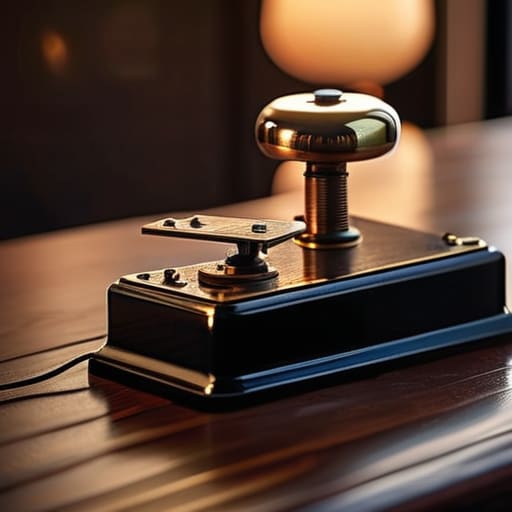
I spent three weeks saving up for a heavy, polished brass paddle because a guy at the local club swore it was the only way to get “real” timing. I thought I was buying a piece of history, but all I actually bought was a hand cramp and a piece of equipment that felt like trying to tap out rhythm on a brick. If you’re currently scrolling through glossy catalogs trying to figure out how to choose a morse key, please, stop looking at the finish. A shiny surface doesn’t make your timing any better, and it certainly won’t help you when you’re operating from a windy ridge at 2:00 AM.
I’m not here to sell you on the prestige of a brand name or the weight of the metal. My goal is to give you the actual, unvarnished truth based on what happens when you’re actually on the air. I’ll tell you which mechanisms actually respond to your muscle memory and which ones are just overpriced paperweights. We’re going to look at weight, spring tension, and contact reliability—the stuff that actually matters when the signal is weak and the ionosphere is being temperamental.
Table of Contents
The Truth About Iambic Paddle vs Single Paddle Mechanics
You’ll see a lot of debate online about iambic paddle vs single paddle setups, and most of it is just people arguing about which way is “correct.” Here’s the reality: an iambic paddle is a piece of logic, not magic. It uses a circuit to ensure that if you press both paddles, you get a perfectly timed alternating stream of dots and dashes. It’s great for speed, sure, but it can also make you lazy. I’ve seen too many operators rely on the machine to do the heavy lifting, and the second their battery gets low or a contact gets dusty, their timing falls apart because they never actually learned the rhythm of the code.
If you’re looking at CW telegraphy equipment for beginners, don’t feel pressured to jump straight into a high-end electronic paddle. There is something to be said for the manual telegraph key mechanics of a straight key or a simple single paddle. It forces you to develop a sense of timing that stays with you, even when you’re working a portable station on a windy ridge with nothing but a wire antenna and a bit of luck. If you can’t send a clean signal on a simple setup, a fancy iambic circuit isn’t going to save your contact.
Why Cw Telegraphy Equipment for Beginners Often Fails the Test
The biggest mistake I see when people start out is treating the purchase of a key like buying a piece of computer hardware—you look at the spec sheet, see a shiny price tag, and assume it’s the “correct” choice. But CW telegraphy equipment for beginners is often marketed with a focus on features rather than feel. You’ll see these high-end, heavy-duty paddles that look like they belong in a museum, but they’re often too stiff for someone who hasn’t developed the muscle memory yet. If you’re fighting the spring tension just to get a clean dot, you aren’t learning Morse; you’re just practicing a forearm workout.
I’ve seen plenty of newcomers get stuck in the “gear trap,” thinking a complex iambic circuit is a shortcut to fluency. It isn’t. A lot of the entry-level gear lacks proper Morse code key ergonomics, meaning the pivot point is slightly off or the weight distribution is wonky. You end up compensating for the hardware’s flaws instead of focusing on your timing. Sometimes, I’ve actually found that a simple, well-made straight key—even if I had to spend an afternoon improvising Morse code keys with some scrap parts—teaches the rhythm far better than a $300 paddle that does all the work for you.
Five Things the Catalog Won't Tell You About Your Next Key
- Forget the weight for a second and focus on the travel. I’ve seen people spend three hundred dollars on a heavy brass key that feels like pushing a brick through molasses, and I’ve seen lightweight, modular paddles that let you find a rhythm in ten minutes. If the spring tension isn’t adjustable to your specific finger strength, it’s just an expensive paperweight.
- Don’t get seduced by “professional grade” aesthetics. A key that looks like it belongs in a museum is useless if the contact points are inconsistent. I always check the reliability of the microswitches or the mechanical contacts first; if they don’t provide a crisp, repeatable break, your timing will never be consistent, no matter how much you practice.
- If you’re looking at an iambic paddle, make sure the controller is actually decent. Some of the cheaper units have a “clunky” hand timing that feels like the machine is fighting you. You want a controller that handles the element spacing smoothly so that when you stop, the sound actually stops, rather than trailing off in a messy, unintentional tail.
- Consider your environment, especially if you’re like me and take your gear into the field. If you’re operating on a hillside in the wind, a heavy, stable base matters more than a fancy finish. I’d much rather have a rugged, simple paddle that I can secure to a rock than a delicate piece of kit that’s going to slide across my desk every time I try to send a burst.
- Test the “feel” of the reset. A lot of beginners ignore how the paddle returns to its neutral position. If it’s too snappy, you’ll fight it; if it’s too sluggish, you’ll end up sending “stuck” characters. I always spend a few minutes just tapping out rhythm without even trying to send a letter, just to see if the mechanical reset matches my natural muscle memory.
The Bottom Line Before You Buy
Stop chasing the “professional” aesthetic; a key’s performance is measured by how it responds to your specific finger tension, not by how much brass it costs.
Don’t get trapped in the iambic vs. single paddle debate until you’ve actually sat with both—the “better” mechanic is simply the one that doesn’t fight your natural rhythm.
Always budget for a decent, adjustable tension mechanism, because if you can’t fine-tune the resistance, you’ll spend more time fighting the hardware than working the band.
Forget the Brass and the Hype
Don’t let a shiny piece of polished brass or a high price tag convince you that you’ve found ‘the one.’ A Morse key isn’t a trophy for your desk; it’s a tool for your hand. If the tension isn’t predictable and the contact doesn’t feel consistent every single time you tap it, it doesn’t matter how much it cost—it’s just expensive clutter that’s going to ruin your rhythm when the band gets crowded.
Wren Castellano
Cutting Through the Noise
At the end of the day, choosing a key isn’t about finding the most expensive piece of machined brass on the market; it’s about finding the tool that doesn’t fight your hand. We’ve talked about why the iambic versus single-paddle debate is personal, why cheap beginner kits often leave you more frustrated than fluent, and why you need to prioritize mechanical reliability over shiny aesthetics. Don’t get caught up in the marketing fluff or the “must-have” lists from magazines that haven’t updated their testing protocols since the Reagan administration. Whether you go with a heavy manual key for that classic feel or a responsive paddle for high-speed contesting, just make sure it’s something you can actually maintain when you’re out in the field and the wind is picking up.
Morse code is more than just a way to squeeze a signal through a narrow bandwidth; it’s a direct, tactile connection to the history of this hobby. There is a specific kind of magic that happens when the rhythm of your key finally syncs up with the pulse of a distant station on a fading band. It isn’t always perfect—sometimes the gear fails, and sometimes the ionosphere just decides to go to sleep—but that’s part of the craft. So, pick a key that feels right, trust your own measurements more than the spec sheet, and get out there. The airwaves are waiting, and they don’t care how much your equipment cost, only that you have something meaningful to say.
Frequently Asked Questions
Does the weight of the key actually change my timing, or am I just fighting my own muscle memory?
It’s a bit of both, but mostly it’s physics. A heavy brass key has more inertia; once you start that movement, it wants to keep going. If you’re used to a featherweight paddle, a heavy key will feel like you’re fighting a slow-motion tug-of-war, which throws off your timing. You aren’t just fighting muscle memory; you’re fighting the literal momentum of the metal. Find a weight that matches your hand’s natural rhythm, not your wallet’s depth.
If I'm planning on doing a lot of portable or SOTA operating, should I prioritize a lightweight paddle over the traditional heavy brass setups?
If you’re heading up a mountain for SOTA, forget the brass. I’ve lugged enough heavy gear to know that every extra gram feels like a pound by the time you hit the summit. I use a lightweight, high-quality paddle that fits in my pack side pocket. Just don’t go too cheap; if the tension is inconsistent, your timing will suffer. For portable work, portability is a performance metric, not just a convenience.
How much does the tension adjustment on a paddle really matter when I'm trying to find a consistent rhythm in noisy conditions?
It matters more than most people realize. If your tension is too light, you’ll find yourself “stabbing” the key in a panic when the QRM gets heavy; if it’s too stiff, you’ll fight the hardware instead of the noise. I’ve found that a slightly higher tension helps maintain a steady rhythm when the ionosphere is acting up. You want enough resistance to give you tactile feedback so your brain doesn’t have to work as hard to find the beat.
