
I spent three hours last Tuesday on a ridge in the Blue Ridge Mountains, wrestling with a wire that the manual promised would be a “multiband miracle,” only to watch my SWR meter dance like a caffeinated toddler. It’s the same old story: someone sells you a dream of convenience, but when you’re actually out in the field, you realize you’ve bought a compromise. People keep asking me, “what is a trap dipole,” as if there’s some magical physics trick hidden in those little plastic housings. The truth is, a trap dipole is just an antenna trying to cheat the laws of electromagnetics by using coils to trick the current into seeing a different length on different bands. It’s a clever hack, but it’s not a free lunch.
I’m not here to sell you on the marketing brochure. In this post, I’m going to strip away the hype and tell you exactly how these things behave when they’re actually under load. I’ll show you where the efficiency drops off, why your ground clearance matters more than the coil rating, and exactly which bands you can actually rely on when the sun is down. No textbook fluff—just the real-world measurements you need before you waste your time stringing wire.
Table of Contents
Antenna Loading Coils Explained Physics vs Hearsay
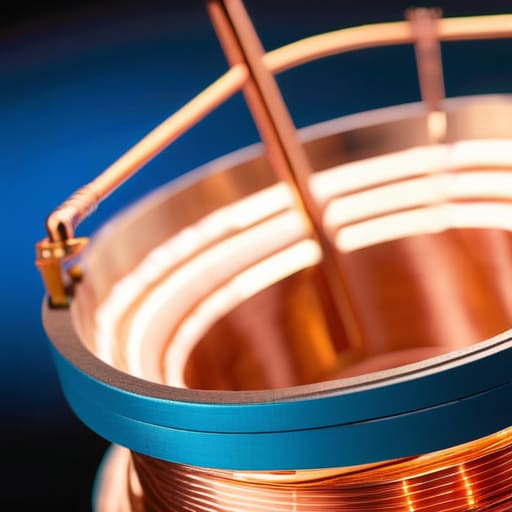
When you look at a trap dipole, you’re looking at a series of compromises designed to cheat physics. In a perfect world, if you want to work 40 meters, you build a wire long enough to be resonant at that frequency. But if you want that same wire to also work on 20 meters, you can’t just leave it long; it would be a mess of high SWR and wasted energy. This is where antenna loading coils explained through the lens of a trap comes in. A trap isn’t just a piece of plastic; it’s a resonant LC circuit—an inductor and a capacitor working together—placed at specific points along the wire.
The goal is to create a high impedance at the trap frequency, effectively “electrically cutting” the antenna so the sections behave like independent radiators. However, there is a massive difference between the math in a textbook and what happens when you actually hang that wire. While these are common electrically short antenna solutions, you pay for that convenience with a narrower bandwidth. I’ve measured plenty of these setups, and the reality is that antenna bandwidth and trap efficiency are in a constant tug-of-war. If the coil is poorly wound or the capacitor is cheap, your “multi-band” antenna becomes a single-band antenna with a very expensive headache.
The Resonant Frequency of Trap Dipoles and Why It Drifts
The problem with the resonant frequency of trap dipoles is that they aren’t static entities; they are living, breathing components that react to their environment. In a perfect textbook, a trap sits at a specific frequency and stays there. In the real world, if you mount that antenna near a metal roof or even just change the height above ground, the inductance of those coils shifts. I’ve seen plenty of operators get frustrated when their “40m/20m” antenna suddenly refuses to resonate on 20m because they moved it from a tall pine to a short fence post.
This drift is usually a symptom of how the trap interacts with the rest of the wire. Because a trap is essentially a notch filter, it relies on a very specific electrical relationship to maintain impedance matching in trap antennas. If the surrounding environment changes the capacitive loading of the wire, the trap can no longer do its job of isolating the segments. You end up with a narrow window of operation where the antenna bandwidth and trap efficiency both take a hit, leaving you with an SWR that looks like a mountain range instead of a flat line.
Five Real-World Rules for Not Wasting Your Time with Traps
- Stop treating them like magic multi-band wires; a trap dipole is a compromise by design. You’re trading radiation efficiency for convenience, and if you’re trying to run a high-duty cycle digital mode on a band where the traps are barely holding on, you’re going to have a bad time.
- Mind your height or don’t bother. I’ve seen people complain about a trap dipole’s performance only to realize they’ve mounted it ten feet off the ground in a backyard. Even with the traps doing their job, if that antenna is too close to the earth, your pattern is going to be a mess and your gain will vanish.
- Expect the “trap drift” to be real. Environmental factors like ice, heavy rain, or even just a change in temperature will shift your resonant frequency. I always keep my NanoVNA handy because what worked perfectly on a dry Tuesday in October might be a high-SWR nightmare after a humid afternoon.
- Watch your feedline impedance. Because those coils introduce inductance and capacitance right into the middle of your radiator, the impedance at the feed point can be much more finicky than a simple end-fed wire. If your SWR is jumping around, don’t just blame the ionosphere; check if your matching network is actually up to the task.
- Don’t use them for everything. If you have the space for a full-sized resonant wire on the band you care about most, use it. Traps are great for a portable setup when you’re hiking up a ridge and only have twenty feet of wire to work with, but they aren’t a substitute for a proper, dedicated antenna.
The Bottom Line on Trap Dipoles
A trap dipole is a compromise, not a miracle; you are trading raw efficiency and a low radiation angle for the convenience of multi-band operation.
Expect your resonant frequencies to shift when you move the antenna; if you don’t mount it at the height the manufacturer intended, those traps won’t hit the bands where you actually want to work.
Don’t rely on the “magic” of the coils alone—if you’re chasing DX, a full-sized wire on a tall mast will beat a trap dipole every single time, regardless of how many bands it claims to cover.
The Compromise in the Wire
A trap dipole isn’t some magical multi-band solution; it’s a calculated compromise where you’re trading raw efficiency for convenience. You’re essentially using those coils to trick the current into seeing a different length of wire, but remember: every time you add a trap, you’re adding a point of failure and a dip in your radiation pattern. If you’re hanging it at 10 meters, it’ll behave; if you try to run it off the ground, don’t come crying to me when your SWR looks like a mountain range.
Wren Castellano
The Reality of the Compromise
At the end of the day, a trap dipole is a tool of convenience, not a tool of perfection. We’ve looked at how those loading coils introduce reactive components that shift your resonance and, more importantly, how they can kill your bandwidth if you aren’t careful. If you are looking for a wire that performs like a dedicated, full-sized resonant element on a single band, this isn’t it. You have to accept that the trade-off is efficiency for versatility. When you’re setting up a quick station on a ridge or in a backyard where you can’t string fifty feet of wire, the trap dipole is a lifesaver—just make sure you measure your SWR and understand your height above ground before you start cranking up the power.
Don’t let the technical limitations discourage you from getting on the air. Radio isn’t about having a mathematically perfect system that sits in a lab; it’s about the connection you make when the conditions are right. Sometimes, a compromised antenna and a bit of luck with the ionosphere are all you need to pull a weak signal out of the noise. My advice? Stop chasing the ghost of a perfect SWR and start focusing on the signal. Get your gear out there, test what actually works in your specific environment, and remember that the best antenna is the one that’s actually deployed.
Frequently Asked Questions
If I'm mounting this on a portable mast, how much does the ground clearance actually affect my ability to hit the lower band?
If you’re mounting that on a portable mast, height isn’t just a suggestion—it’s the whole game. When you drop that antenna closer to the ground, you aren’t just losing signal; you’re changing the impedance and the radiation pattern. On the lower band, where the wavelengths are longer, a low mounting height will choke your efficiency and likely smear your pattern into the dirt. If you can’t get it at least a quarter-wavelength up, don’t expect miracles.
I’ve seen cheap trap dipoles online; how do I tell if the coils are actually high-quality components or just glorified resistors that will cook when I turn up the power?
If you’re looking at those $40 “multi-band” specials on eBay, be careful. A real trap uses high-Q inductors with thick, enameled wire to minimize ESR. If the coil looks like a messy bird’s nest of thin, flimsy wire wrapped around a plastic bobbin, it’s a heat trap. I’ve seen cheap ones turn into glowing resistors during a 100W run. If they won’t tell you the wire gauge or the coil’s Q-factor, assume it’s junk.
Is it worth trying to tune a trap dipole myself, or am I better off just building a dedicated wire for each band and skipping the compromise entirely?
Look, if you have the space and the wire, build the dedicated antennas. A dedicated wire is always going to beat a trap dipole on efficiency and bandwidth. But if you’re hiking up a ridge with a limited pack, tuning that trap dipole is worth the effort. Just don’t expect perfection; once I got mine resonant at 20m at about 12 meters up, the SWR still jumped the moment the wind picked up.
