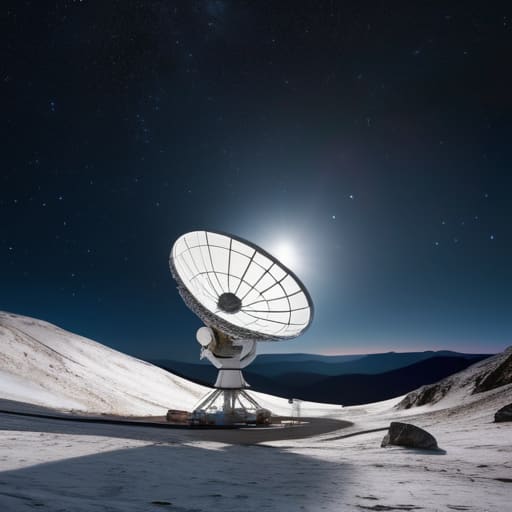
I remember sitting on a ridge in the Catskills three years ago, shivering in a windbreaker that had long since lost its thermal rating, staring at a spectrum analyzer that refused to show anything but noise. I’d spent six hours lugging gear up a trail just to realize my dish alignment was off by a fraction of a degree and my power levels were optimistic at best. People often ask me, “what is moonbounce,” expecting some mystical explanation about cosmic connections, but the truth is much more grounded—and much more frustrating. It isn’t magic, and it certainly isn’t a shortcut to easy DX; it is a brutal, beautiful exercise in link budget management and extreme precision.
If you’re looking for a manual that promises you’ll be hitting the lunar surface with a handheld transceiver and a prayer, you’ve come to the wrong place. I’m going to tell you exactly how EME works, from the actual physics of the signal path to the reality of why your first ten attempts will likely fail. I won’t sugarcoat the gear requirements or pretend that the moon is a reliable repeater. Instead, I’ll give you the measured reality of what it takes to actually make a contact, based on what I’ve actually measured in the field.
Table of Contents
The Physics of Radio Signal Reflection Off the Moon
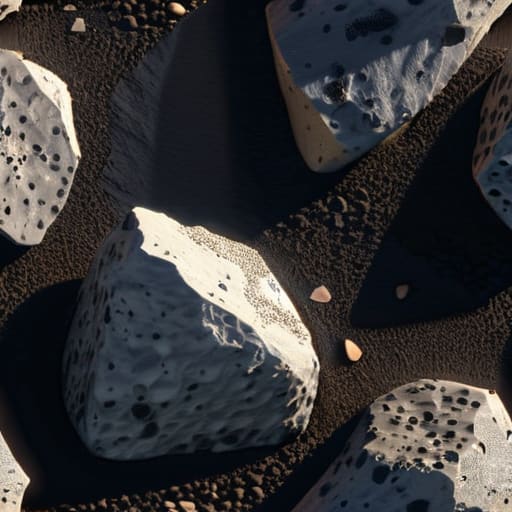
When we talk about the physics of lunar bounce propagation, we aren’t talking about a mirror-smooth surface like a studio backdrop. The Moon is actually a pretty terrible reflector; it’s essentially a giant, jagged ball of basalt and regolith. Think of it more like throwing a handful of pebbles at a gravel driveway. Most of your energy is going to scatter in every direction, which is why your link budget is going to be a nightmare. You aren’t just aiming for a target; you’re trying to catch the tiny fraction of energy that happens to bounce back toward Earth.
To make EME radio communication actually work, you have to compensate for that massive loss. Since the Moon is a “diffuse reflector,” the signal doesn’t come back in a tight, coherent beam. This is why you can’t just use a standard backyard dipole and hope for the best. You need massive gain to overcome the path loss, which is why high-gain parabolic dishes or specialized Yagi arrays are the standard. If you aren’t accounting for that spread, you’re just shouting into a void.
Eme Radio Communication More Than Just Good Luck
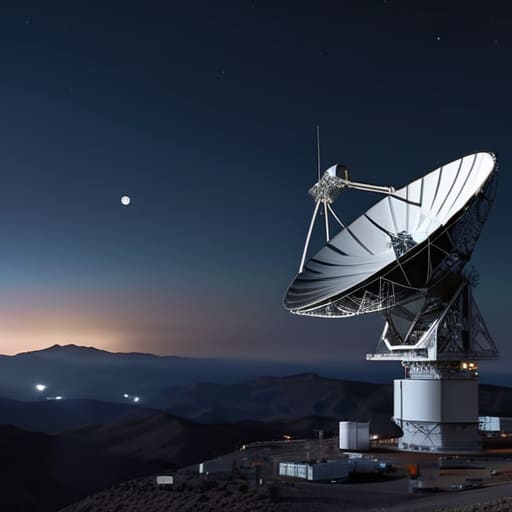
People often treat EME radio communication like a slot machine—you pull the lever, hope for a miracle, and pray the moon is in the right phase. But if you’re relying on luck, you’re going to be disappointed more often than not. Successful lunar bounce propagation is a game of geometry and link budgets. You aren’t just shooting a signal into the sky; you are trying to hit a moving, cratered target that is roughly 384,400 kilometers away and then catch a microscopic fraction of that energy on its way back down.
To actually make this work, you have to move past the “hope and a prayer” stage and start looking at your EME signal strength requirements with a cold, hard eye. You need massive gain to compensate for the path loss, which is why you’ll rarely see anyone doing this with a simple wire dipole. Most of the time, we’re talking about high-gain parabolic dishes or specialized Yagis. I’ve spent plenty of nights staring at a waterfall display, realizing that my setup was technically perfect, but the moon was just at a bad angle for my specific antenna height. It isn’t magic; it’s just a very difficult math problem.
Five Realities of Trying to Talk to the Moon
- Forget about your handhelds; you need serious gain. Because the moon is a terrible mirror, you’re looking at path losses that make a standard terrestrial link look like a walk in the park. If you aren’t running a high-gain dish or a massive Yagi array, you aren’t doing EME, you’re just making noise.
- Timing is everything, and I don’t mean the clock on your wall. You have to track the moon’s position precisely. If your antenna isn’t pointed exactly where the moon is—not where it was ten minutes ago—you’re just wasting electricity.
- Don’t expect a clear signal every time the moon is up. Even with a perfect dish and a high-power rig, you’re at the mercy of the lunar surface. The “terminator” (that line between light and dark) is actually your friend for certain types of signals, but the terrain itself is cratered and uneven, which means your signal strength will fluctuate like a heartbeat.
- Get a decent antenna tracker. I’ve seen too many beginners try to “eye-ball” it or use a manual tripod. If you’re working 10 GHz, being off by even a couple of degrees means you’ve lost the link entirely. It’s a game of precision, not guesswork.
- Prepare for the “Moonbounce Blues” when the weather turns. While the signal travels through the vacuum of space just fine, your local atmosphere—specifically rain and heavy cloud cover—can eat your signal before it even leaves your backyard. If it’s pouring rain, don’t be surprised if your link goes dead.
The Bottom Line on EME
Don’t mistake a lucky skip for a reliable link; EME is a game of high-gain antennas, massive power, and being extremely precise about where the moon is in the sky.
You aren’t just fighting distance; you’re fighting the massive path loss of bouncing a signal off a rock, so if your antenna isn’t sized correctly for the frequency, you might as well be shouting into a pillow.
Success in moonbounce isn’t about magic—it’s about understanding the geometry of the lunar limb and having the patience to wait for the right orbital window.
## The Reality of the Link
“Don’t let the romanticism fool you into thinking you’re doing something mystical; you’re just trying to catch a handful of photons that survived a 480,000-kilometer round trip through a very messy atmosphere. It’s not about magic, it’s about having enough gain to make the math work when the moon is the only mirror you’ve got.”
Wren Castellano
Bringing it Back to Earth
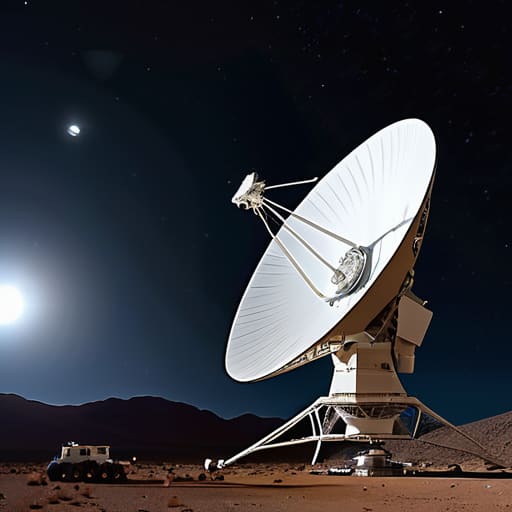
At the end of the day, EME isn’t about chasing some mystical signal or hoping for a miracle; it’s about understanding the brutal reality of path loss and the precise geometry of the lunar cycle. You need high-gain antennas, a massive amount of power, and a deep respect for the fact that you are trying to bounce a tiny fraction of a watt off a rock 238,000 miles away. If your dish isn’t aligned to within a fraction of a degree, or if you haven’t accounted for the specific phase shifts caused by the moon’s rotation, you’re just making noise. It’s a discipline of precision over guesswork, and once you stop treating the ionosphere like a magic wand and start treating it like the complex physical medium it is, you’ll actually start making contacts.
I know it sounds daunting—and frankly, it is—but there is nothing quite like that first moment when a signal breaks through the noise floor from a station halfway around the world. It’s a reminder that even when we feel isolated, we are part of a massive, interconnected physical system. Don’t let the technical hurdles scare you off; just measure everything, build your station with intent, and keep your eyes on the lunar transit. When that beacon finally hits your receiver, you won’t just feel lucky—you’ll know exactly why it worked.
Frequently Asked Questions
Do I really need a massive dish to make this work, or can I get away with something smaller if I'm just trying to prove the concept?
If you’re just trying to prove the concept to yourself, you don’t need a three-meter dish, but you can’t exactly use a whip antenna either. You need gain. A small, well-built parabolic dish—even something you’ve cobbled together—will work, provided your tracking is spot on. Just don’t expect much. If you’re using a small setup, you’ll be fighting a massive path loss, and you’ll be praying the moon is in a particularly good mood.
What kind of power budget am I actually looking at—is this something a standard HF rig can handle, or am I going to need a dedicated high-gain setup?
Forget the idea of using an HF rig. You’re not bouncing signals off the ionosphere here; you’re fighting the inverse square law on a cosmic scale. An HF rig might have the frequency, but it lacks the sheer output and the specialized low-noise floor you need. Unless you’re running a massive amplifier and a dish that looks like a satellite array, you’re just shouting into a void. You need high gain and serious power.
How much does the antenna's height above the ground actually matter when I'm aiming at something 238,000 miles away?
It feels like a trick question, doesn’t it? You’re aiming at a rock 238,000 miles away, so why care about a few meters of dirt? Because of ground plane interaction. If your antenna is sitting on a tripod at two meters, your radiation pattern isn’t the clean lobe the datasheet promised; it’s distorted by ground reflections. For EME, you need every bit of gain you can scavenge. Get that antenna up high to clear the local clutter and stabilize your pattern.
