
I spent three days last summer trying to troubleshoot a noise floor that looked like a mountain range, only to realize my “high-end” shielded coax was actually acting like a damn antenna. It’s a classic mistake, and honestly, it’s why I can’t stand the way most textbooks explain what is rf shielding without mentioning the reality of ground loops or poor termination. People will tell you that just because a box is made of aluminum, your signal is safe, but if you aren’t actually measuring the attenuation at the specific frequency you’re working on, you’re just playing a guessing game with expensive metal.
I’m not here to sell you on some magical, all-encompassing solution that costs a month’s salary. Instead, I’m going to give you the practical truth about how to actually block interference without creating a new set of problems. We’ll talk about real materials, the math that actually matters, and why a poorly implemented shield is often worse than no shield at all. I’ll show you how to test your setup so you can stop chasing ghosts and start hearing the signals you actually care about.
Table of Contents
- Faraday Cage Principles Moving Beyond the Theoretical Guesswork
- Emi Shielding Materials What Actually Blocks the Noise
- Five Lessons from the Bench: Shielding Without the Guesswork
- The Bottom Line: Stop Guessing and Start Measuring
- ## The Difference Between a Shield and a Guess
- Stop Guessing and Start Measuring
- Frequently Asked Questions
Faraday Cage Principles Moving Beyond the Theoretical Guesswork
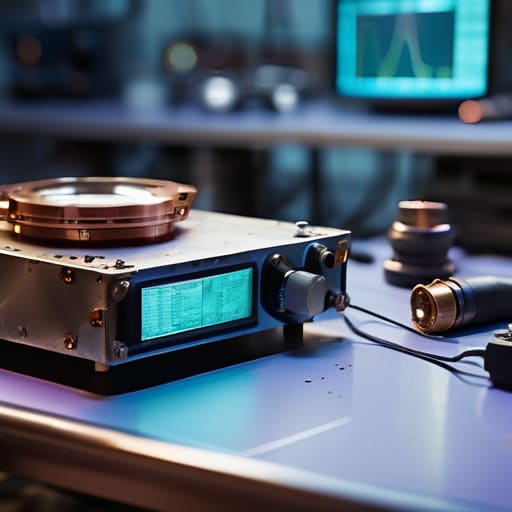
When people talk about Faraday cage principles, they usually treat it like a magic spell—wrap something in metal and the noise goes away. In a textbook, it’s a perfect distribution of charge on a continuous conductor. In my workshop, it’s a lot messier. If you have a single gap in your enclosure that is even a fraction of a wavelength wide, you haven’t built a shield; you’ve built a slot antenna. I’ve seen plenty of guys try to solve electromagnetic interference mitigation by slapping some copper tape over a seam, only to realize they’ve ignored the aperture leakage that’s letting the interference right through the front door.
To get actual radio frequency attenuation that matters, you have to stop thinking about “coverage” and start thinking about continuity. It isn’t just about the material you choose, though EMI shielding materials like Mu-metal or even high-grade copper make a difference; it’s about the integrity of the connection. If you aren’t performing a proper shielding effectiveness measurement with a signal generator and a spectrum analyzer, you are just guessing. I don’t care how heavy the box is—if the seams aren’t electrically bonded, you’re just carrying a very expensive, very ineffective paperweight.
Emi Shielding Materials What Actually Blocks the Noise
When you’re looking at EMI shielding materials, you have to stop thinking in terms of “solid” versus “hollow” and start thinking about conductivity and permeability. Most people think a thick sheet of steel is the silver bullet for electromagnetic interference mitigation, but that’s a half-truth. If you’re dealing with low-frequency magnetic fields, you need something with high permeability, like Mu-metal, to actually redirect those field lines. If you’re just trying to stop high-frequency RF from leaking out of a poorly designed SDR enclosure, a simple copper foil or even a conductive spray might do the job—provided you actually ground it properly.
The real trap is assuming that because a material is “metal,” it provides infinite radio frequency attenuation. It doesn’t. I’ve seen plenty of hobbyists wrap a component in aluminum foil only to find the noise floor hasn’t budged an inch. Without a continuous, low-impedance path to ground, you aren’t building a shield; you’re just building a very expensive, floating antenna. If you aren’t performing a proper shielding effectiveness measurement with a signal generator and a spectrum analyzer, you’re just playing a guessing game with your noise floor.
Five Lessons from the Bench: Shielding Without the Guesswork
- Stop treating shielding like a magic cloak. If you wrap your transceiver in copper mesh but leave a massive gap for your coax to exit without a proper ferrule or bulkhead, you haven’t built a shield; you’ve built a very expensive, very inefficient slot antenna.
- Measure your noise floor before and after you add the shield. I’ve seen people spend three hours meticulously taping foil around a power supply only to realize the noise is actually leaking in through a poorly filtered USB cable. If the spectrum analyzer doesn’t show a drop, the shield isn’t doing its job.
- Grounding is not a suggestion, it’s the whole point. A shield that isn’t tied to a solid, low-impedance ground plane is just a floating piece of metal that can actually couple more interference into your signal path than if you’d left it alone.
- Respect the frequency. What works to block 60Hz hum from your house wiring is going to do absolutely nothing against the high-frequency switching noise from a modern laptop charger. You have to match your material’s skin depth and conductivity to the actual frequencies that are ruining your signal.
- Watch your apertures. Every hole you drill for a connector, a light, or a vent is a potential leak. I’ve spent many a late night on a ridge realizing my “shielded” field box was useless because I’d left a two-centimeter gap around the mounting bracket of the antenna connector.
The Bottom Line: Stop Guessing and Start Measuring
Shielding isn’t a “set it and forget it” solution; if you haven’t measured the noise floor before and after you added that enclosure, you don’t actually know if it worked or if the ionosphere just decided to behave for twenty minutes.
Material matters, but continuity matters more—a piece of copper foil is useless if you’ve left a gap large enough for your interference to leak through like water through a sieve.
Don’t overspend on “premium” shielding just because the box looks professional; focus your budget on high-quality, low-loss connectors and ensuring your ground plane is actually doing its job.
## The Difference Between a Shield and a Guess
“If you’re just wrapping your transceiver in aluminum foil and calling it a day, you aren’t shielding; you’re just making a mess. Real RF shielding isn’t about finding a magic material that stops everything; it’s about understanding the specific frequency you’re fighting and actually measuring whether your enclosure provides enough decibel attenuation to drop that noise floor below the level of your signal.”
Wren Castellano
Stop Guessing and Start Measuring

At the end of the day, RF shielding isn’t about finding a magic material that solves every problem; it’s about understanding the relationship between your enclosure, your frequency, and your source of interference. We’ve talked about why a Faraday cage works and which materials actually hold up under real-world testing, but remember that shielding is never absolute. You can wrap a rig in copper mesh or line a box with Mu-metal, but if you leave a gap in your grounding or ignore a poorly filtered power supply, you’ve essentially built a sieve rather than a shield. Don’t just throw expensive materials at a noise floor problem and hope for the best; measure your decibel attenuation and verify that your shielding strategy actually addresses the specific wavelengths you’re fighting.
There is a certain satisfaction in finally hearing a clear signal through the static, knowing that it wasn’t just a lucky break with the ionosphere, but the result of a well-engineered station. Radio is a game of physics, and while that can feel intimidating when you’re staring at a spectrum analyzer full of spikes, it’s also incredibly rewarding. Once you stop relying on “best guesses” and start treating your setup like a series of measurable electrical problems, the whole hobby changes. You move from being a passenger to being the person actually in control of the airwaves. So, grab your meter, check your grounds, and get back to the hunt.
Frequently Asked Questions
If I wrap my SDR in a copper mesh, am I actually blocking the interference or just creating a new antenna for it to pick up?
If you just drape a loose mesh over your SDR, you’re likely just building a very expensive, very inefficient antenna. For shielding to work, you need electrical continuity. If there are gaps larger than the wavelength of the interference you’re fighting, that noise is going to pour right through. You need a tight, grounded enclosure. If you aren’t measuring the noise floor before and after with a real spectrum analyzer, you’re just guessing.
How much of a decibel drop can I realistically expect from a cheap conductive spray versus a solid aluminum enclosure?
If you’re looking for a magic bullet, you won’t find it in a can of conductive spray. In my testing, a solid aluminum enclosure provides a consistent, reliable attenuation—often 60dB or better depending on the seam integrity. A cheap spray? You might see a 15-20dB drop if you’re lucky, but it’s rarely uniform. You’ll get “hot spots” where the coating is thin or uneven. If you aren’t measuring the actual leakage, you’re just gambling with your noise floor.
Does the shielding actually matter if my antenna is still sitting five feet away from my unshielded power supply?
It matters, but it’s not a magic bullet. If that power supply is dumping noise into your receiver, shielding the rig might help, but you haven’t solved the source. I’ve seen people spend a fortune on expensive enclosures only to realize their unshielded transformer was acting like a localized broadcast station. If you can’t move the supply, shield it first. Otherwise, you’re just trying to build a fortress while the enemy is already inside the walls.
