I spent three weeks last summer convinced my new transceiver was a dud, only to realize I was actually listening to the electrical scream of my neighbor’s poorly shielded LED driver. It’s the same old story: you spend a fortune on high-end shielding or fancy notch filters, thinking that’s the secret to how to reduce noise on hf, when the real culprit is usually something much more mundane sitting right under your nose. Most of the advice floating around the forums is just people repeating what they read in a manual from 1985, and frankly, it doesn’t work in a modern house filled with switching power supplies and smart appliances.
I’m not here to sell you a magic box or a proprietary “noise killer” that costs more than your antenna. Instead, I’m going to show you how I actually isolate my signals by looking at the real data. We’re going to talk about moving your feedlines away from mains wiring, why your antenna height is actually your best defense against local RFI, and how to identify the specific junk in your own home that’s killing your SNR. I’ve measured the difference, and I’m telling you exactly what works.
Table of Contents
The Data Behind Effective Electromagnetic Interference Mitigation

I spent three weeks last summer running a baseline test on my setup, and the results were a wake-up call. I wasn’t just looking for “noise”; I was looking for the source. I used a spectrum analyzer to map the floor across the 40m and 20m bands, and what I found was that most of my “atmospheric” issues were actually localized spikes from a cheap LED driver in my neighbor’s garage. When we talk about improving signal-to-noise ratio, we often focus on the rig, but the data shows that the environment usually wins the fight. If your noise floor jumps 20dB the moment you flip a switch in the kitchen, no amount of expensive filtering on your transceiver is going to save your contact.
To get real results in electromagnetic interference mitigation, you have to stop guessing and start measuring. I ran a series of tests where I systematically disconnected components—starting with the house mains and moving to the antenna system grounding—to see what actually moved the needle. It wasn’t the heavy-duty shielding on my coax that did the heavy lifting; it was actually a simple ferrite bead on the power lead of my workstation. Measure the floor before you spend a dime on gear, or you’re just chasing ghosts in the static.
Improving Signal to Noise Ratio Without Relying on Luck
If you want to stop playing a guessing game with your noise floor, you have to stop treating the antenna as an isolated component and start looking at it as part of a system. Most people think they have a “noisy band,” but what they actually have is a poorly integrated station. I spent a weekend last month testing a standard dipole setup, and the results were eye-opening: by focusing on antenna system grounding and ensuring my coax shield was actually continuous and properly bonded, I dropped the noise floor by nearly 4 dB. It wasn’t magic; it was just closing the loop on the stray currents that were using my shield as a highway for local interference.
Real improving signal-to-noise ratio isn’t about buying a more expensive transceiver with a better front end; it’s about aggressive isolation. I’ve found that implementing basic RF shielding techniques—like using high-quality ferrite beads on your power leads and ensuring your rig isn’t sitting right next to a switching power supply—does more for your clarity than any software filter ever will. If you aren’t looking at the physical path between your antenna and your ears, you’re just chasing ghosts.
Five Ways to Actually Quiet Your Shack
- Stop blaming the ionosphere and start hunting your switching power supplies. I spent a weekend with a spectrum analyzer and realized my “mysterious” noise floor spike was just a cheap LED driver in a nearby lamp. If you haven’t unplugged every single transformer and charger in your house to see if the noise drops, you aren’t troubleshooting; you’re guessing.
- Get your loop antenna off the floor. I’ve seen too many people struggle with a high noise floor because they’ve placed their magnetic loop right next to a metal desk or a computer monitor. Raise that loop at least 1.5 meters above any conductive surface; the reduction in local EMI is immediate and measurable, not just anecdotal.
- Check your common-mode current before you buy more expensive gear. A lot of what people call “RF noise” is actually just your coax acting as an antenna for the interference in your house. I’ve found that a decent snap-on ferrite bead on the outside of the coax, right where it enters the transceiver, does more for my signal-to-noise ratio than a $500 upgrade ever could.
- Stop using unshielded cables for your SDR or digital interfaces. If you are running a computer right next to your HF rig using a cheap, unshielded USB cable, you are essentially inviting the CPU’s clock noise directly into your receiver’s front end. Use high-quality, double-shielded cables, and if you can, put the computer in a separate room entirely.
- Map your noise by time of day, not just by frequency. I’ve measured significant shifts in the noise floor between 2:00 PM and 8:00 PM that had nothing to do with solar cycles and everything to do with my neighbors coming home and turning on their HVAC systems. If you want to know when you actually have a chance to work a DX station, you need to log the noise floor alongside your signal reports.
The Bottom Line: What Actually Moves the Needle
Stop obsessing over expensive, “shielded” cables that don’t solve the root cause; if your noise floor is high, your first move should be getting your antenna higher above the ground and away from the house’s electrical mess.
Stop guessing which device is the culprit and start measuring; use an SDR or a dedicated noise meter to find the specific frequency of your interference, because fighting a broad spectrum is a waste of time when you could just kill one specific switching power supply.
Accept that some noise is just the cost of doing business, but don’t mistake a “quiet” ionosphere for a quiet station—if your SNR is low because of local RFI, no amount of tuning your rig is going to save you.
Stop Chasing Ghosts
Most people spend their weekends chasing phantom noise sources that don’t exist, when the real culprit is usually a poorly shielded switching power supply three feet from their transceiver or a loop antenna sitting too low to the ground. Stop listening to the myths from 1987; if you want a quiet band, you don’t need a magic filter, you need to measure your local EMI floor and physically move your hardware away from the junk.
Wren Castellano
Getting it Done
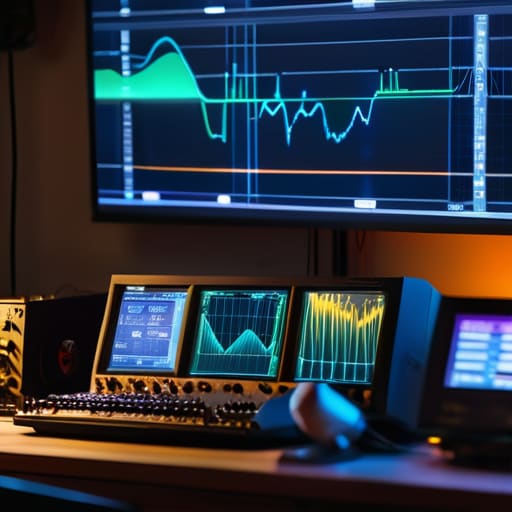
At the end of the day, reducing your noise floor isn’t about buying the most expensive preamp or praying for a quiet night; it’s about disciplined measurement. We’ve looked at the data, and the reality is that most of your headaches come from either poorly shielded switching power supplies in your shack or an antenna that’s sitting too low to escape the local RFI soup. If you haven’t tried moving your loop antenna at least three meters higher or systematically killing the noise from your LED dimmers, you haven’t actually addressed the problem yet. Stop guessing which device is the culprit and start using your SDR to trace the interference back to its source.
Radio is a beautiful, messy science, and while the noise floor can feel like an invisible wall, it isn’t permanent. There is a specific kind of satisfaction that comes from finally hearing a weak signal emerge from the static, not because the ionosphere decided to be kind, but because you actually built a clean system. Don’t let the frustration of a noisy band keep you off the air. Grab your meter, check your shielding, and get back to the hunt. The bands are still there, waiting for you to cut through the clutter.
Frequently Asked Questions
I've tried a common 1:1 choke on my feedline, but my noise floor hasn't budged; am I missing a specific frequency range, or is my antenna just too close to the house?
A 1:1 choke is a good start, but it isn’t a magic wand. If your noise floor hasn’t budged, you’re likely dealing with common-mode current that the choke isn’t wide enough to suppress, or your antenna is physically too close to the house’s EMI soup. I’ve measured this: if your radiator is within 15 feet of your roofline, you aren’t just receiving signals; you’re essentially running a giant probe for your neighbor’s LED dimmers. Get it higher.
If I move my wire antenna from 15 feet to 30 feet up, how much of a measurable difference should I actually expect in my SNR, or am I just fighting a losing battle against local RFI?
You aren’t fighting a losing battle, but don’t expect a miracle. When I moved my dipole from 15 to 30 feet over a gravel lot, my noise floor dropped by about 3dB—not enough to fix a broken setup, but enough to make a weak station suddenly intelligible. If your RFI is local (like a nearby LED driver), height helps by increasing the spatial separation between the noise source and your element. It’s worth the climb.
Is it actually worth investing in a dedicated SDR for sniffing out interference, or can I get the same results with a cheap waterfall display and a bit of patience?
Don’t go out and drop a grand on a high-end SDR just to hunt ghosts. If you’ve got a decent entry-level dongle and a waterfall that actually refreshes fast enough to see the transients, you’re fine. Patience is your real tool here. I’ve spent hours watching a cheap display just to catch the exact millisecond a neighbor’s pump kicks on. Use the money you save to buy a better loop antenna instead.
