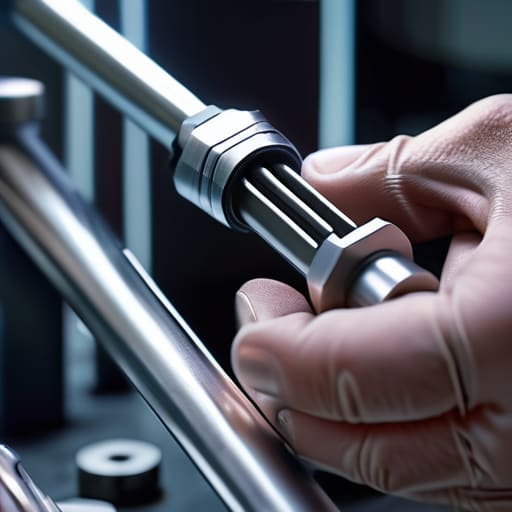
I spent three hours on a ridge in the Blue Ridge Mountains last autumn, fighting a biting wind and a stubborn coax connection, only to realize I’d stripped the threads on a perfectly good N-type connector because I thought “tight enough” was a matter of feel. We’ve all been there—standing in the dark, wondering why your SWR is jumping like a startled rabbit. People will tell you that you don’t need specialized tools for amateur radio, but if you’re tired of guessing, you need to understand what is a torque wrench for connectors and why your intuition is often lying to you. It isn’t about being precious with your gear; it’s about preventing the kind of mechanical failure that leaves you chasing phantom signal losses when you should be making a contact.
I’m not here to sell you a $500 precision instrument you’ll use once a decade, nor am I going to give you some textbook definition that doesn’t apply to a real-world field setup. I’m going to tell you exactly which tools actually matter for maintaining consistent contact pressure, how much tension is actually required to keep a signal clean, and when you can get away with a standard wrench versus when you’re risking a disaster.
Table of Contents
Why Hand Tightening Is a Lie for Signal Integrity
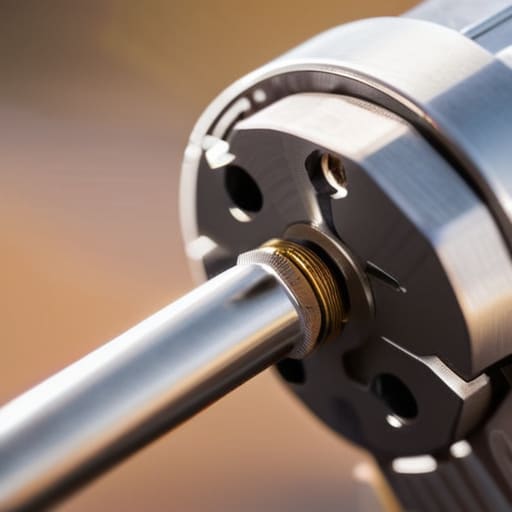
We’ve all been there: you’re out on a ridge, the sun is dipping, and you’re frantically tightening a coaxial connection because your SWR is spiking. You think, “If I just give it one more quarter-turn, it’ll seat better.” That’s a lie. Hand-tightening relies on “feel,” and unless you’ve spent twenty years doing nothing but assembly, your feel is probably wrong. When you over-tighten, you aren’t just securing a connection; you’re introducing mechanical stress in RF assemblies that can warp the dielectric or crush the center conductor. Once that geometry changes, your VSWR is going to dance regardless of how much you sweat.
On the flip side, if you under-tighten, you’re inviting oxidation and intermittent contact. In high-frequency work, signal integrity and connector tightness are inseparable. A loose connection creates a tiny air gap or a microscopic layer of debris that acts like a parasitic resistor. I’ve seen setups that looked perfect on a spectrum analyzer until a light breeze hit the antenna, only for the signal to drop because a connector wasn’t seated to the exact inch-pound required. You aren’t just tightening a screw; you’re maintaining a precise electrical environment.
Precision Assembly Tools vs Old Wives Tales
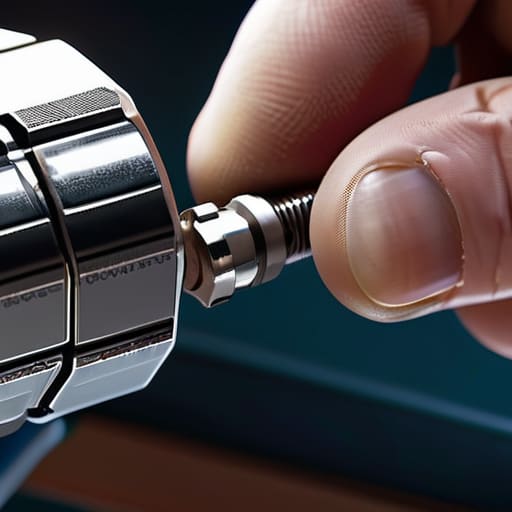
We’ve all been in that workshop where the “rule of thumb” is king. You’ll hear some old-timer tell you that if it feels snug, it’s good, or that you should just “give it a little extra” if you’re working on a high-power line. That’s a dangerous way to treat a high-frequency system. When we talk about preventing connector damage, we aren’t just being precious about expensive gear; we are managing the physics of the interface. If you under-tighten, you get oxidation and air gaps; if you over-tighten, you deform the center conductor or crush the dielectric. Neither scenario likes your signal.
The reality is that modern RF engineering relies on specific RF connector torque specifications for a reason. These aren’t suggestions. Using precision assembly tools allows you to hit the exact Newton-centimeters required to maintain a consistent contact pressure. I’ve seen too many setups where the VSWR was jumping around not because of the antenna, but because of inconsistent mechanical stress in RF assemblies. If you aren’t using a calibrated tool, you’re basically just gambling with your signal integrity.
Five Ways to Stop Turning Good Hardware into Scrap
- Know your specs before you touch the tool. Every connector—whether it’s an N-type on a high-power transceiver or a delicate SMA on an SDR—has a specific inch-pound rating. If you treat an SMA like it’s a heavy-duty BNC, you aren’t just being “thorough,” you’re actively stripping the threads.
- Don’t go chasing the “click” too hard. A torque wrench isn’t a suggestion; it’s a limit. Once you hear that click, stop. I’ve seen too many beginners think that if it clicks once, they should give it one more little nudge just to be sure. That’s how you crush the dielectric and ruin your VSWR.
- Calibrate your gear, or don’t bother using it. If you’re pulling a torque wrench out of a junk drawer that’s been sitting in a damp shed for a decade, the spring tension is probably shot. If the tool isn’t accurate, you’re just guessing with extra steps, and that’s exactly what we’re trying to avoid.
- Watch the temperature swings. If you’re setting up a portable station on a ridge in the autumn, remember that metal expands and contracts. I always torque to the spec at ambient temperature, but if you’re working in extreme heat or freezing wind, keep in mind that your “perfect” connection is going to be under a bit more physical stress than it would be in my lab.
- Clean the threads first. There is no point in using a precision torque wrench if there is grit, oxidation, or old dried-out grease in the threads. A little bit of contact cleaner and a soft brush ensures that the resistance you’re feeling is the actual clamping force, not just you fighting a piece of dirt.
The Bottom Line on Connector Torque
Stop relying on “feel” to decide when a connector is tight; human intuition can’t replicate the repeatable, micron-level precision needed to prevent intermittent signal loss or oxidation.
A torque wrench isn’t just for high-end lab gear—it’s a necessity for any permanent installation where thermal expansion and vibration will eventually turn an over-tightened or loose connection into a headache.
Consistency is everything; if you want your SWR readings to be meaningful and your front-end performance to stay stable across different temperature swings, you need to hit the manufacturer’s spec every single time.
## The Cost of "Good Enough"
“I’ve spent too many nights on a ridge troubleshooting a high SWR that turned out to be nothing more than a connector I’d over-tightened with a pair of pliers. In RF, ‘tight enough’ is just another way of saying you’ve introduced a variable you can’t control; a torque wrench isn’t about being precious with your gear, it’s about ensuring that when the band opens, the failure isn’t sitting right there in your feedline.”
Wren Castellano
Stop Guessing and Start Measuring
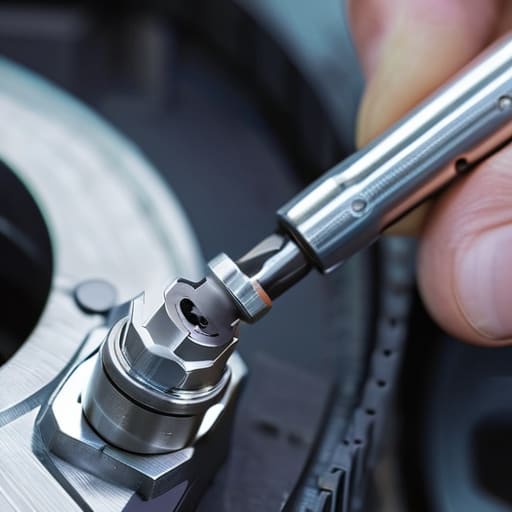
At the end of the day, a torque wrench isn’t some luxury item for people with too much time and too much money; it is a fundamental tool for anyone serious about their RF path. We’ve talked about how hand-tightening is a gamble, how inconsistent it is, and why relying on “feel” is a recipe for high VSWR or, worse, a connector that shears off when the temperature drops. By using a calibrated tool, you ensure that every connection—from your coax to your antenna feedpoint—is performing exactly as the manufacturer intended. It takes the guesswork out of the assembly and replaces it with measurable, repeatable certainty. If you want your link budget to actually match your math, you have to stop treating your connectors like they’re indestructible.
There is a certain kind of satisfaction that comes from knowing your station is built to last, not just until the next heavy rain or the next big solar cycle. When I’m out on a ridge with a portable setup, I don’t want to be troubleshooting a loose center conductor because I got over-eager with a crescent wrench. I want to know that my gear is solid so I can focus on the signal. Radio is a beautiful, complex dance between physics and hardware, and while we can’t control the ionosphere, we can certainly control the quality of our own connections. Build it right, build it once, and then go find the signal.
Frequently Asked Questions
If I'm working with tiny SMA connectors on an SDR, is a standard torque wrench even practical, or am I going to strip the threads?
Look, if you try to use a standard 1/4-inch drive wrench on an SMA, you’re going to have a very bad time. You’ll strip the threads before you even feel the resistance. For SDR work, you need a dedicated precision micro-torque wrench—the kind designed specifically for SMA or N-type connectors. They’re small, they’re fiddly, and they cost more than a cheap handheld, but they’re the only way to ensure you aren’t turning your expensive transceiver into a paperweight.
Can using a torque wrench actually prevent VSWR spikes, or is that just overthinking a simple connection?
It’s not overthinking; it’s physics. If you under-tighten, you get oxidation and intermittent contact that drifts as the temperature shifts. If you over-tighten, you deform the center conductor or crush the dielectric, creating a permanent impedance mismatch. I’ve seen plenty of “perfect” setups see their VSWR spike the moment the sun hits the antenna because a connector was just tight enough to work in the garage, but not enough to stay stable in the field.
Is there a specific torque spec I should be aiming for with N-type connectors on a portable wire antenna setup?
Look, there isn’t a single magic number because it depends on whether you’re using stainless steel or brass, but for standard N-type connectors, you’re usually looking at somewhere between 12 and 15 inch-pounds. Since you’re running a portable wire setup, you’re likely dealing with more vibration and temperature swings than a fixed station. Don’t just eyeball it; get a small inch-pound wrench. If you over-tighten, you’ll crush the dielectric and ruin the VSWR.
