I spent three hours last Tuesday lugging a dipole and a heavy battery pack up a ridge in the Catskills, only to sit there in dead silence while my SWR meter sat perfectly steady. I didn’t have a hardware failure, and my antenna—suspended at a solid 12 meters above the ground—wasn’t the problem. The truth is, you can spend thousands on the latest SDR or a high-end transceiver, but none of that matters when the sun decides to throw a tantrum. People love to get bogged down in complex mathematical models to explain how solar activity affects radio, but most of the time, you’re just at the mercy of a temperamental ionosphere that has no interest in your carefully tuned setup.
I’m not here to sell you a subscription to a solar weather service or tell you that a new piece of gear will fix a geomagnetic storm. What I can do is give you the ground truth based on what I’ve actually seen through my receiver. I’ll break down the real-world connection between sunspots and signal propagation, and I’ll tell you exactly when to stop fighting the noise and just pack up your gear for the day.
Table of Contents
- Sunspot Cycle and Signal Reliability the Hard Data
- Solar Maximum vs Solar Minimum Radio Propagation Realities
- My Field Notes: How to Actually Use This Data Without Losing Your Mind
- The Bottom Line for Your Shack
- ## The Variable in Your Equation
- The Reality of the Long Game
- Frequently Asked Questions
Sunspot Cycle and Signal Reliability the Hard Data
I don’t care much for the vague “it’s a busy sun” explanations you get in the weather reports. If you want to understand why your DX contacts suddenly dried up, you have to look at the actual numbers. We are currently navigating the transition toward a solar maximum, and the data doesn’t lie. During these peaks, the increased sunspot count means the ionosphere is getting a constant, heavy dose of ionization. For those of us working the higher HF bands, this is usually a win; the F2 layer becomes a much more efficient mirror for your signal.
However, there is a flip side to that coin. High activity isn’t just a steady stream of good propagation; it’s a series of spikes and crashes. When a significant solar flare impact on HF communication occurs, you aren’t just looking at a temporary fade—you’re looking at a complete blackout on the sunlit side of the Earth. I’ve sat on a ridge waiting for a specific window, only to have a sudden burst of X-ray radiation slam the lower ionosphere into a state of absorption. It’s not your antenna height or your tuner acting up; it’s just the physics of the atmosphere changing the rules mid-game.
Solar Maximum vs Solar Minimum Radio Propagation Realities

When we talk about solar maximum vs solar minimum radio propagation, we aren’t just discussing numbers on a chart; we’re talking about the difference between a wide-open highway and a road blocked by fallen trees. During a solar maximum, the increased sunspot activity keeps the F2 layer of the ionosphere thick and energized. For those of us working HF, this is the sweet spot. You can bounce signals off the sky to reach the other side of the planet on much higher frequencies than usual. I’ve spent many evenings during peak cycles sitting on a ridge, watching the bands open up on 20 meters or even 15 meters when I’d normally expect nothing but static.
However, don’t let the high activity fool you into thinking it’s always easy mode. High solar activity also means more frequent ionosphere disturbances and radio waves getting tossed around by unpredictable solar events. A sudden solar flare impact on HF communication can cause a total blackout on certain bands for minutes or even hours. It’s a bit of a double-edged sword: you get more capacity, but you also get more chaos.
My Field Notes: How to Actually Use This Data Without Losing Your Mind
- Watch the SFI, not just the sunspot number. The Solar Flux Index tells you how much radiation is actually hitting the atmosphere; if the SFI is dropping while the sunspots look high, don’t be surprised when your HF bands suddenly feel like they’re made of molasses.
- Learn to love the gray line. When the sun is below the horizon for both you and your target, you’re relying on the D-layer being thin—this is when those long-distance DX contacts happen regardless of whether the sun is in a “mood” or not.
- Don’t chase the high bands during a geomagnetic storm. If the K-index is spiking, your VHF and UHF signals might be fine, but your HF propagation is going to get chewed up by increased ionization in the wrong layers; pack up the heavy gear and wait for the storm to pass.
- Time your DX attempts with the solar cycle, not your schedule. If we’re approaching solar maximum, start practicing your high-frequency setups now; if you’re stuck in a solar minimum, stop wasting your battery power trying to hit the 10-meter band and move down to 40 or 80 meters where the physics are actually on your side.
- Keep a log of the conditions, not just the contacts. I always note the K-index and the SFI next to my signal reports; six months from now, you’ll realize that “miracle” contact wasn’t because of your new tuner, but because the ionosphere was perfectly tuned for that specific frequency.
The Bottom Line for Your Shack
Stop chasing high-frequency DX during a solar minimum; if the sun isn’t giving you the ionization you need, no amount of expensive filtering or high-gain antennas will force a signal through a dead ionosphere.
Use the solar cycle to plan your gear—invest in HF rigs and large wire antennas when the cycle is ramping up, but keep your VHF/UHF setups ready for when the higher bands inevitably go quiet.
Correlation isn’t always causation, so don’t scrap a perfectly good antenna just because your contacts dropped; always check the solar flux index first to see if it’s a hardware problem or just the sun taking a nap.
## The Variable in Your Equation
You can spend six months tuning your dipole to perfection and mounting it thirty feet up on a solid mast, but if the sun decides to throw a tantrum, your SWR meter won’t save you. You have to learn to stop fighting the ionosphere and start reading it; sometimes the best piece of gear in your shack is just a bit of patience and a realization that the sky isn’t cooperating today.
Wren Castellano
The Reality of the Long Game
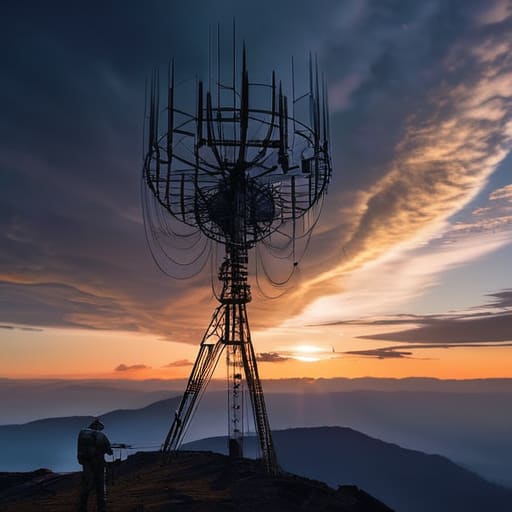
At the end of the day, you have to stop treating the sun like a broken component in your station and start treating it like a variable you can’t control. We’ve looked at the data: solar maximum brings the DX opportunities that make us stay up until 3:00 AM, while solar minimum forces us to get creative with NVIS or stick to the local FM repeaters. You can have a perfectly tuned dipole at exactly 10 meters above ground—and trust me, I know it matters—but if the ionosphere is a blank slate, that SWR meter won’t save you. Propagation isn’t a constant; it is a shifting, breathing cycle of peaks and troughs that requires us to be as much meteorologists as we are engineers.
Don’t let a quiet band discourage you from heading out to that ridge with your gear. There is a specific kind of magic in the hobby that you only find when you learn to read the sky as well as you read your spectrum analyzer. Whether you are chasing a rare station during a solar peak or just working local ragchews when the sun is being stubborn, remember that the unpredictability is exactly what makes this worth doing. Radio is a conversation with the universe, and sometimes, you just have to wait for the universe to answer back.
Frequently Asked Questions
If the sun is in a high-activity phase, does that mean my HF bands are going to be usable 24/7, or should I still expect those dead zones?
Don’t let the high sunspot numbers fool you into thinking it’s a constant party. Even at solar maximum, you’re going to see dead zones. Propagation is a moving target. You might have incredible DX on 20 meters during the day, but as the sun goes down and the D-layer clears, your band openings will shift or vanish entirely. It’s a cycle of peaks and troughs, not a steady stream of signal.
I've heard people talk about solar flares killing signals—is there a way to actually predict those outages before I hike up a hill to set up my station?
You can’t predict a flare with 100% certainty, but you don’t have to hike up a hill blind. Check the NOAA Space Weather Prediction Center before you pack the gear. Look for “Solar Flare Alerts” and “Radio Blackout” classifications. If they’re forecasting an X-class flare, expect the HF bands to go dark for a bit. It’s not a guarantee, but it’s better than sitting on a ridge in the wind listening to nothing but static.
Does increased solar activity actually improve my signal-to-noise ratio, or does it just bring more interference into the mix?
It’s a bit of both, depending on how you look at it. Higher solar activity boosts the ionization in the F-layer, which gives you much better signal strength on the HF bands. But that same energy also ramps up the noise floor. You aren’t just getting a cleaner signal; you’re getting a louder signal sitting on top of a louder background. If your antenna is well-heightened and your noise floor is low, you’ll feel the win.
