I remember sitting in the corner of my local club back when I was fifteen, surrounded by the smell of ozone and heated solder, listening to the rhythmic, staccato dance of Morse code. I spent months reading manuals that treated a QSO like some sterile, mathematical exchange of data packets, but that’s not what it actually feels like when you’re sitting on a ridge at 2:00 AM. If you’re looking for a textbook definition of what is a qso, you can find one in any basic handbook, but those books won’t tell you about the sudden, electric jolt of adrenaline when a faint signal finally pulls itself out of the noise floor.
I’m not here to give you a lecture on signal-to-noise ratios or academic jargon that doesn’t move the needle. Instead, I’m going to strip away the fluff and tell you what a QSO really is from the perspective of someone who has spent decades chasing them across every band imaginable. I’ll show you the difference between a technical exchange and a meaningful connection, and I’ll be honest about when a successful contact was due to your gear versus when you just got lucky with a particularly generous ionospheric skip.
Table of Contents
Mastering Ham Radio Communication Basics and Signal Integrity
When you’re actually sitting there, headphones on, trying to pull a weak signal out of the noise floor, you realize that ham radio communication basics aren’t really about the technical definitions—they’re about the physics of the connection. It’s one thing to know the theory, but it’s another to manage the actual signal integrity when your antenna is only six meters above a damp field. I’ve learned the hard way that a contact can fall apart in seconds if you don’t respect the propagation environment. You aren’t just pushing buttons; you are managing a delicate balance of power, frequency, and atmospheric luck.
The real meat of the exchange happens during the signal report exchange. This isn’t just a polite formality; it’s the data you need to understand if your setup is actually performing or if the ionosphere is just doing all the heavy lifting for you. I always tell my students that if you aren’t paying attention to the signal-to-noise ratio during the contact, you aren’t really operating—you’re just guessing. Once you’ve stabilized that link, that’s when the magic happens, and that’s when you know you’ve truly mastered the art of operating a radio contact.
Operating a Radio Contact When the Ionosphere Actually Cooperates
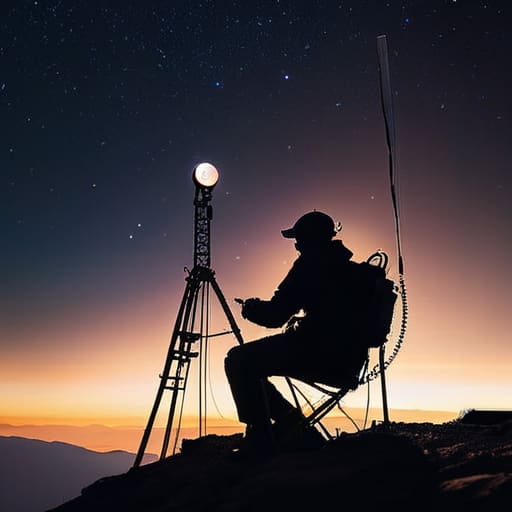
There is a massive difference between a technical QSO and one that happens when the ionosphere is actually in a good mood. I’ve spent many evenings on a ridge with a dipole at 12 meters, watching the S-meter dance because the F2 layer decided to play nice. When the propagation is hitting that sweet spot, operating a radio contact stops feeling like a struggle against noise floor and starts feeling like a conversation. You aren’t just fighting for every decibel; you’re riding a wave that’s carrying your voice halfway around the world.
In these moments, the signal report exchange becomes more than just a formality of amateur radio terminology. When the path is clear, you can actually hear the nuance in the other operator’s voice, even through the slight hiss of the band. It’s a reminder that while we obsess over SWR and antenna height—and believe me, I’ll tell you that a wire at 10 meters performs vastly differently than one at 5—the real magic is the atmospheric physics. When the conditions align, the radio frequency communication feels less like engineering and more like a shared miracle.
Five Real-World Truths About Making a Contact
- Don’t mistake a signal for a conversation. You can have a perfect S9 signal and a rock-solid SWR, but if you aren’t actually exchanging information—callsigns, signal reports, or even just a brief exchange of locations—you haven’t had a QSO; you’ve just been shouting into the void.
- Listen before you leap. I’ve seen too many new operators jump straight to the mic the second they hear a faint signal. Wait for a break in the pileup or a clear window. A successful QSO starts with patience and a good ear, not just a loud transmitter.
- Log it while the details are fresh. I know, it feels like a chore, but trying to reconstruct a contact three days later because you “think” it was a 59 is how you end up with a messy logbook. Note the time, the frequency, and the mode immediately. If you don’t write it down, for all intents and purposes, it didn’t happen.
- Respect the mode. A QSO on CW is a completely different psychological experience than one on FT8. FT8 is great for seeing what’s out there when the band is marginal, but don’t let the automation fool you into thinking it’s the same thing as the back-and-forth rhythm of a voice contact.
- Acknowledge the “luck” factor. Sometimes you’ll have a QSO that feels like magic, and sometimes you’ll struggle for twenty minutes just to get a single syllable through. If the band is behaving, great—but don’t get discouraged if a contact falls apart because the MUF (Maximum Usable Frequency) dropped suddenly. Even the best antenna can’t fix a bad ionosphere.
The Reality of Making a Connection
A QSO is more than a technical handshake; it is the successful convergence of your signal integrity, your hardware’s performance, and the unpredictable state of the ionosphere.
Don’t mistake a lucky contact for a perfect setup—if the band is wide open, even a mediocre antenna will pull a QSO, but real skill is making that contact when the conditions are leaning against you.
Effective communication requires understanding the “why” behind the signal, meaning you need to account for everything from your antenna’s height above ground to the actual noise floor in your specific location.
## Beyond the Logbook Entry
A QSO isn’t just a checkbox in your logbook or a formal exchange of signal reports; it’s that specific, fleeting moment when the noise floor drops, the propagation holds, and you realize you’ve actually bridged the gap between your backyard and someone else’s world.
Wren Castellano
Beyond the Logbook
At the end of the day, a QSO is more than just a line in your logbook or a successful signal-to-noise ratio on your waterfall display. We’ve talked about the technical mechanics—the importance of signal integrity, the way your antenna height dictates your ground plane, and how the ionosphere can either hand you a contact on a silver platter or leave you staring at static. But remember, a contact isn’t truly “complete” just because you exchanged callsigns and signal reports. It’s the successful bridge between two physical points in space, made possible by your gear, your setup, and a little bit of atmospheric luck. If you’ve managed to pull a signal out of the noise through a well-tuned antenna and a bit of persistence, you’ve done the real work.
As you head out to the field or sit down at your shack tonight, don’t get too caught up in the pursuit of perfect metrics. You can have the most expensive transceiver on the market, but it won’t matter if you lose the sense of wonder that comes when a voice finally breaks through the fuzz. Amateur radio is one of the few places left where you can actually touch the physics of the world around you. So, get your antenna up, check your SWR, and go find someone to talk to. Whether the bands are wide open or barely breathing, that first successful contact is always going to feel like magic.
Frequently Asked Questions
How do I actually log a QSO correctly so I don't mess up my award applications later?
Look, don’t just scribble a callsign and a timestamp on a napkin. If you want those DXCC or Worked All States awards without a headache, you need the details: exact UTC time, frequency, mode, and—this is where people trip up—the signal report. I always note if it was a weak FT8 contact or a solid SSB exchange. Most importantly, use a reliable logging program. Manual errors are the fastest way to turn a great contact into a wasted one.
Does the quality of my antenna height and setup actually change the "value" of a QSO, or is a contact a contact regardless?
Look, if you’re just checking a box for a logbook, then sure—a contact is a contact. But if you’re talking about the actual experience, height changes everything. When I’ve got a wire hung twenty feet off the ground in a cluttered backyard, I’m fighting noise and low angles just to hear a whisper. But when that antenna is up at sixty feet on a clear ridge? The signal-to-noise ratio shifts, the clarity improves, and suddenly that QSO feels earned, not just stumbled upon.
What's the difference between a successful QSO and just hearing someone through the noise without being able to bridge the gap?
Hearing someone through the static is just eavesdropping; it’s passive, and frankly, it’s frustrating when you can’t find the rhythm. A successful QSO is an active, two-way exchange where the signal-to-noise ratio actually allows for a closed loop. It’s the difference between seeing a light in the distance and actually being able to wave back and have them wave back at you. If you can’t exchange callsigns, you haven’t made a contact—you’ve just listened to the noise.
