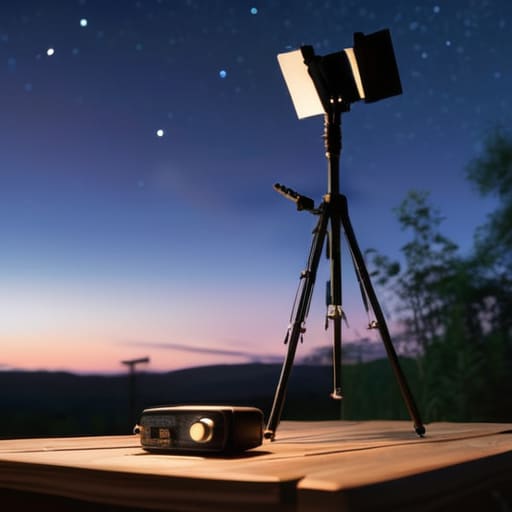
I remember sitting on a ridge in the Blue Ridge Mountains three years ago, shivering in a damp windsock, staring at a signal meter that hadn’t budged an inch. I had followed a “beginner’s guide” to the letter, yet I couldn’t pull a single packet through the noise. The problem wasn’t my gear; it was that the guide assumed you were operating from a laboratory with a clear view of the horizon, rather than a real-world spot with actual terrain interference. Most people approach learning how to operate satellites by buying a thousand dollars’ worth of tracking software and high-end SDRs before they even understand how much their local topography is going to screw them over.
I’m not here to sell you a subscription to a tracking service or tell you that you need a motorized mount to have fun. My goal is to show you the real physics of the pass—from calculating your actual look angles to understanding why your antenna gain means nothing if you’re tucked behind a hill. I’ll tell you exactly what worked for me, what failed miserably, and when you should stop tweaking your settings and just wait for the ionosphere to stop acting up.
Table of Contents
- Beyond Orbital Mechanics Basics Real Tracking Math
- Ground Station Equipment That Actually Earns Its Keep
- Five Things the Manual Won't Tell You About Actually Making Contact
- The Bottom Line for Your First Pass
- ## The Myth of the "Set and Forget" Station
- Final Checks Before You Go Up
- Frequently Asked Questions
Beyond Orbital Mechanics Basics Real Tracking Math

Look, you can memorize the orbital mechanics basics all you want, but knowing that a satellite is “up there” isn’t the same as actually catching its signal. When you’re dealing with low earth orbit operations, the math isn’t just a theoretical exercise; it’s the difference between a clean downlink and nothing but static. Most people think they can just point a Yagi and hope for the best, but unless you’re accounting for the precise Doppler shift—which can pull your frequency off by several kilohertz in a matter of seconds—you’re essentially shouting into a void.
I’ve spent enough nights on ridges to know that even the best satellite tracking software can lie to you if your local time settings or your elevation data are off by even a fraction. If your software says the bird is at 30 degrees but you haven’t accounted for the refraction caused by the local atmosphere, you’ll be tracking a ghost. I always tell my students: don’t trust the screen blindly. Cross-reference your predicted pass with a manual calculation of the azimuth once in a while. It keeps you sharp, and more importantly, it keeps you from wasting expensive battery power on a pass that was never actually there.
Ground Station Equipment That Actually Earns Its Keep
You can spend a small fortune on a high-end transceiver, but if your antenna isn’t tracking with precision, you’re just broadcasting expensive noise into the void. For low earth orbit operations, I’ve learned the hard way that a static omni-directional antenna is fine for a quick experiment, but if you want to actually pull a signal out of the noise floor, you need directionality. I usually run a dual-axis Yagi setup. I’ve found that mounting the array at least fifteen feet above the deck is non-negotiable; if you’re too close to the ground, the multipath interference from the terrain will smear your signal before the satellite even hits the horizon.
When it comes to the actual ground station equipment, don’t get blinded by the marketing specs on those “all-in-one” satellite kits. Most of them are overpriced for what they actually deliver. I prefer a modular approach: a solid SDR with a decent clock stability, paired with dedicated satellite tracking software that actually talks to my rotators without needing a firmware hack every Tuesday. It’s about building a signal chain where you know exactly where the loss is occurring, rather than praying to a black box that promises the moon but can’t even handle a simple Doppler shift.
Five Things the Manual Won't Tell You About Actually Making Contact

- Stop obsessing over the Doppler shift math in a vacuum; the real headache is the shift as your antenna’s gain fluctuates while you’re swinging it through a null. I’ve found that if you don’t compensate for the frequency drift at least 200 Hz ahead of the actual calculation, you’ll be chasing a ghost signal for the entire pass.
- Your antenna height is non-negotiable. I’ve seen people try to work birds from a balcony at ten feet up, and they wonder why the signal-to-noise ratio looks like a heart monitor in a crisis. Get your feedhorn or your Yagi at least fifteen feet above any nearby obstructions; if you aren’t clearing the local clutter, you aren’t working the satellite, you’re just working the noise floor.
- Don’t trust your battery meter when you’re tracking a bird. When that high-gain LNA kicks in and you’re pulling current to drive the tracking motors, voltage sag is real. I always carry a dedicated LiFePO4 pack that I know can handle the transient spikes, because there is nothing more frustrating than losing a contact right as the satellite hits zenith because your voltage dipped below the rig’s threshold.
- Learn to read the sky, not just your screen. If the ionosphere is acting up or there’s heavy localized moisture, your UHF/VHF links might look fine, but your microwave links will tank. I always check the local weather and the solar flux index before I pack the tripod; if the atmosphere is too thick or the sun is being temperamental, I’d rather save my energy for a ground station contact.
- Practice your manual tracking before you rely on a computer-controlled rotator. Software is great until a sensor fails or a packet gets dropped, and suddenly you’re staring at a perfectly good satellite that you can’t find. I spent a whole summer doing manual sweeps just to build the muscle memory—knowing exactly how fast a LEO moves at a 30-degree elevation is something a piece of code can’t teach you.
The Bottom Line for Your First Pass
Forget the idea that a high-end transceiver is a magic wand; if your antenna isn’t mounted high enough to clear the local treeline and get a clean line of sight, you’re just wasting expensive electricity.
Don’t trust the orbital math blindly—always cross-reference your tracking software with a real-time view of the sky, because a software glitch or a poorly timed cloud bank can kill your window faster than a hardware failure.
Success in satellite work is often just a game of timing and patience; sometimes the gear is perfect and the math is spot on, but the ionosphere simply isn’t in the mood to cooperate, and you just have to wait for the next pass.
## The Myth of the "Set and Forget" Station
“Stop treating satellite work like you’re tuning a FM station in your car. If you aren’t accounting for the exact moment your antenna clears that treeline and the specific window where the ionosphere isn’t busy eating your signal, you aren’t operating; you’re just pointing a piece of metal at the sky and hoping for a miracle.”
Wren Castellano
Final Checks Before You Go Up
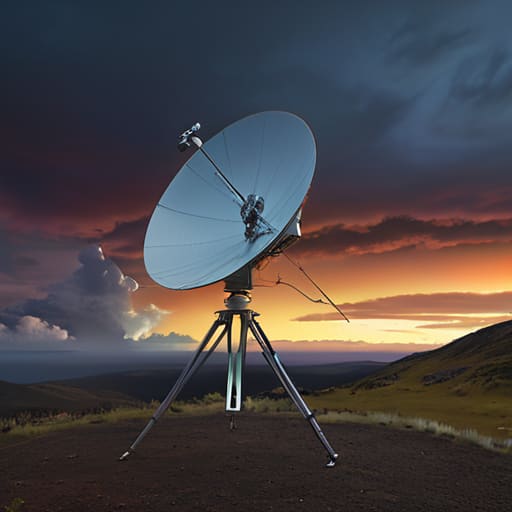
At the end of the day, satellite work isn’t about having the most expensive tracking mount or the fanciest software on your laptop. It’s about the marriage of your ground station setup and the reality of your local environment. You’ve got to account for the math, ensure your antenna is clear of obstructions—and I mean truly clear, not just “mostly” clear—and have the right gear that doesn’t fail when the signal starts to fade. Remember, if you’re seeing a sudden drop in signal strength despite a perfect line of sight, don’t immediately blame your hardware; check your local weather and the current solar cycle first. Sometimes, the physics of the atmosphere simply won’t cooperate, no matter how much you spent on your Yagi.
There is a specific kind of magic that happens when you finally lock onto a bird, hear that rhythmic pulse through your headset, and realize you are communicating with something moving at seventeen thousand miles per hour. It’s a reminder that we aren’t just sitting in our backyards; we are part of a much larger, interconnected system. Don’t let the technical hurdles or the steep learning curves keep you on the sidelines. Get your gear set up, measure your signal, and get on the air. The view from the ground is a lot more interesting when you’re actually looking up.
Frequently Asked Questions
I’ve got a decent Yagi and a decent tuner, but how much does my actual antenna height above the ground mess with my tracking accuracy when the satellite is low on the horizon?
It’s not just about tracking accuracy; it’s about your signal-to-noise ratio. When that satellite is hugging the horizon, your antenna is fighting through a massive amount of ground multipath and local interference. If your Yagi is sitting at six feet, you’re basically trying to listen through a wall of static. Get it up at least fifteen, ideally twenty feet, to clear the immediate clutter. Otherwise, you aren’t tracking a satellite; you’re tracking reflections.
Is it actually worth spending the extra money on a dedicated tracking controller, or can I just get by with a laptop and some decent software if I'm patient?
Look, if you’re just hunting for a quick contact on a predictable LEO bird, a laptop and some decent software will get the job done. But there’s a massive difference between “it works” and “it works when you’re actually trying to communicate.” A dedicated controller handles the timing and motor interrupts with much tighter precision. If you’re tired of your antenna lagging behind the pass while you’re wrestling with a Windows update, spend the money.
How much of my signal loss is actually due to my gear, and how much is just the ionosphere having a bad day?
Look, if you’re seeing a drop in signal, don’t immediately blame your coax. I’ve seen guys swap out perfectly good LMR-400 for something “premium” only to find the problem was a localized scintillation event. Check your link budget first. If your antenna is sitting at six feet instead of twenty, that’s your gear. But if your SWR is rock solid and the noise floor is rising for no reason? The ionosphere is just having a bad day.
