
I remember sitting in my father’s workshop when I was twelve, watching him meticulously tune a transceiver, only to see him spend the next three hours staring at a pile of expensive, shiny new gear that didn’t actually improve his pile-up performance. People often ask me what is contesting, expecting a definition filled with talk about high-speed keying or massive antenna arrays that cost more than my first car. But if you think contesting is just about who has the most expensive SDR or the flashiest software, you’ve already lost the battle. It isn’t a gear race; it’s a test of discipline and how well you can manage your own fatigue while the noise floor climbs and the ionosphere decides to play games with your propagation.
In this post, I’m stripping away the marketing fluff and the “expert” jargon to give you the ground truth. I won’t tell you that a specific $5,000 amplifier will magically win you a trophy, because I know from experience that a well-placed wire antenna at the right height beats a bloated setup every time. I’m going to explain the reality of the craft—the grit, the timing, and the actual mechanics of signal hunting—so you can walk into your first event knowing exactly what you’re up against.
Table of Contents
- Chasing Dx vs Following Strict Sweepstakes Rules and Regulations
- The Real Math Behind Contest Entry Verification
- Survival Tips for When the Bands Turn into a Madhouse
- The Bottom Line: What You’re Actually Signing Up For
- More Than Just a Scorecard
- The Bottom Line on the Pileup
- Frequently Asked Questions
Chasing Dx vs Following Strict Sweepstakes Rules and Regulations
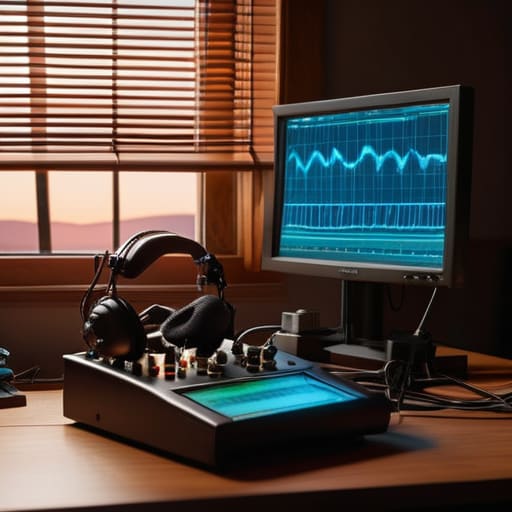
There is a fundamental divide in this hobby between those who just want to hunt DX and those who live for the scorecard. When I’m out on a ridge with a wire antenna, my goal is usually just to see how far I can stretch a signal—finding a weak station in a remote part of the world is a rush that doesn’t require a clock. But once you step into the arena of organized competition, the game changes entirely. You aren’t just listening for signals anymore; you are navigating a complex web of sweepstakes rules and regulations that dictate exactly how you log a contact and what counts toward your score.
In a formal contest, it isn’t enough to simply hear someone; you have to prove you followed the protocol. This is where people often trip up. If you miss a specific exchange element or fail to meet the contest entry verification standards, that contact is essentially dead weight on your log. It’s a different kind of mental load—one that shifts from the technical challenge of signal propagation to the disciplined management of data and timing. One requires a good antenna and patience, while the other requires a sharp eye and a very disciplined logbook.
The Real Math Behind Contest Entry Verification

You might think that once you’ve logged the contact and sent the QSO, your job is done. It isn’t. In the world of high-level competition, the actual work begins when you submit your logs. Contest entry verification is where the amateur meets the professional. It’s a rigorous process where log managers or automated systems cross-reference your timestamps, signal reports, and exchange data against the logs of everyone else on the air. If your clock drift is significant or your exchange data is inconsistent with the station you claim to have worked, those points simply vanish. I’ve seen operators lose entire weekend scores because they didn’t account for the slight lag in their computer’s NTP sync.
It’s also worth noting that if you are participating in a sponsored event, the stakes shift from points to prizes. Understanding the specific prize eligibility requirements is vital; many people get caught up in the thrill of the hunt only to realize they’ve disqualified themselves by missing a mandatory exchange element required by the sponsor. Whether you’re chasing a trophy or looking at how to enter radio giveaways, you have to treat your logbook like a legal document. If the math doesn’t add up, the score doesn’t count.
Survival Tips for When the Bands Turn into a Madhouse
- Don’t overcomplicate your station before the first call sign drops. I’ve seen people spend six months building a perfect automated logging system only to realize they haven’t practiced the actual speed required to keep up with a pileup. Get your hardware stable, get your antenna at a decent height—at least 20 feet if you’re running a wire—and learn to work the rhythm of the pileup before you worry about the bells and whistles.
- Listen more than you talk, especially in the first hour. Everyone wants to be the hero jumping into the fray, but if you aren’t listening to the cadence of the contest and identifying where the “big guns” are sitting, you’re just adding noise to the band. Find the gap in the traffic, identify the pattern, and then slot yourself in.
- Log everything, even the failures. If you spend twenty minutes fighting a signal that turns out to be a local repeater or a station you can’t actually verify, don’t just shrug it off. Note the frequency, the signal strength, and the time. When the ionosphere decides to shift mid-contest, you’ll want that data to figure out if your antenna’s pattern is actually performing the way you thought it was.
- Manage your fatigue like you manage your power supply. Contesting is a marathon, not a sprint, even if the rules make it feel like a 100-meter dash. If you’re running a portable setup on a hill, you’ve already done the hard work of getting there; don’t blow your mental capacity in the first two hours and spend the rest of the weekend staring blankly at a waterfall display.
- Accept that luck is a legitimate variable. You can have the most perfectly tuned, low-loss feedline and a high-gain Yagi, but if the MUF (Maximum Usable Frequency) decides to tank right when you’re in a hot zone, you aren’t going to make those contacts. Don’t let a bad run convince you your gear is broken; sometimes the sky just isn’t cooperating, and you have to learn to read that as well as you read your SWR meter.
The Bottom Line: What You’re Actually Signing Up For
Contesting isn’t a substitute for DXing; it’s a different discipline entirely, moving from the patient hunt for weak signals to a high-speed sprint against the clock and the noise floor.
Success isn’t just about your rig’s power; it’s about your ability to manage the logistics of logging, verifying contacts, and staying disciplined when the bands get crowded.
Don’t mistake a lucky run during a solar peak for mastery; sometimes the ionosphere does the heavy lifting, but the real skill is being able to pull a signal out of the mud when the conditions are mediocre.
More Than Just a Scorecard
Contesting isn’t about chasing a number on a spreadsheet; it’s about the grit it takes to pull a signal out of a crowded band when the noise floor is rising and the ionosphere is starting to drift. It’s the difference between just listening to the radio and actually forcing it to work for you.
Wren Castellano
The Bottom Line on the Pileup
At the end of the day, contesting isn’t a monolith. It’s a spectrum that ranges from the surgical precision of a high-speed CW sweepstakes to the chaotic, high-energy hunt for a rare DX station during a solar peak. We’ve looked at how the rules dictate your workflow, how the math of verification determines your score, and how the goal shifts depending on whether you’re chasing a certificate or just trying to beat your own personal best. Whether you are meticulously logging every signal or just trying to pull a weak station out of the noise during a crowded pileup, you are participating in a fundamental test of skill, gear, and patience. Just remember: a high score on a paper log means nothing if you didn’t actually understand the physics of why that signal was there in the first place.
If you’re feeling intimidated by the sheer speed of the seasoned operators, don’t be. Every one of them started by missing calls and getting lost in the noise. Contesting is essentially just a way to force yourself to learn the bands faster than you ever would during a casual evening of ragchewing. It’s about testing your station, your antenna height, and your ability to stay focused when the ionosphere is being difficult. So, pick a weekend, set up your rig, and just get on the air. You might find that the real reward isn’t the points on the leaderboard, but the sheer, unfiltered rush of making a contact when the odds were stacked against you.
Frequently Asked Questions
Do I really need a high-end transceiver to be competitive, or can I hold my own with a basic HF rig and a well-tuned wire antenna?
Look, I’ve seen guys with $15,000 rigs sitting in silence while someone with a basic Yaesu and a well-placed dipole pulls in a contact. You don’t need a luxury transceiver to be competitive, but you do need a rig that won’t quit when the heat rises. If you’ve got a solid wire antenna—mounted at least 30 feet up, mind you—and you know how to work the noise, you can hold your own.
How much does my antenna's height above ground actually affect my ability to pull in weak stations during a crowded contest window?
It’s everything. You can have a mathematically perfect dipole, but if you’ve got it sitting four feet off a damp field, your take-off angle is going to be way too low. In a contest, you aren’t just fighting noise; you’re fighting the local floor. Getting that antenna up even an extra ten or fifteen feet can sharpen your pattern and lift your signal out of the muck, giving you the precious few dB needed to snag a weak station before the window closes.
Is it worth investing in expensive automation software, or is the "human element" of manual logging still the best way to ensure my entries actually get verified?
Look, I’ve seen plenty of guys blow a weekend on high-end automation software only to realize they spent more time troubleshooting the database than actually working the pileup. Automation is great for keeping your head above water when the bands are screaming, but it won’t save you from a bad signal report or a missed exchange. If you can’t manually verify what your eyes are seeing on the waterfall, you’re just automating mistakes.
