I spent three hundred dollars on a “high-gain” handheld antenna last summer, thinking it would magically turn my local repeater into a global gateway. I sat there on a ridge in the Cascades, watching the SWR meter dance, only to realize I was essentially shouting into a bucket. People will sell you all sorts of expensive silicon and fancy coatings, but if you want to learn how to operate on 2m effectively, you need to stop chasing the marketing hype and start looking at your geometry. Most of the advice you’ll find online ignores the most basic physics: if your antenna is sitting three feet off the ground behind a pine tree, it doesn’t matter if it cost fifty bucks or five hundred.
I’m not here to give you a lecture from a textbook or tell you what some manufacturer’s brochure says. I’m going to tell you what actually happens when you’re out in the field, from the specific heights that actually clear the Fresnel zone to why your signal suddenly vanishes when the sun goes down. I’ll show you how to get real results without wasting your paycheck on gear that won’t make a lick of difference.
Table of Contents
Fm Modulation Basics Why Your Audio Sounds Like Garbage
Most people assume that if they can hear a signal, they’re doing it right. They aren’t. If you’re listening to a transmission that sounds like someone is talking through a mouthful of gravel or a wet sponge, you’re likely dealing with poor fm modulation basics or, more commonly, a massive over-deviation issue. When you crank your mic gain up to “maximum” on a cheap handheld, you aren’t making your voice clearer; you’re just slamming the modulator and clipping the waveform. It results in that nasty, distorted audio that makes it impossible for the person on the other end to actually decipher your callsign.
Then there’s the issue of the “squelch dance.” I’ve seen too many newcomers mess with their handheld transceiver settings in a desperate attempt to find a signal, only to end up opening the squelch wide enough to let in every bit of local RF noise. If you’re working in repeater vs simplex operation modes, you have to be mindful of how your audio levels interact with the repeater’s limiter. If you’re too hot, the repeater’s audio processor will mangle your signal before it even hits the air. Keep your mic gain moderate, listen to your own output, and stop trying to shout through the electronics.
Handheld Transceiver Settings That Actually Move the Needle
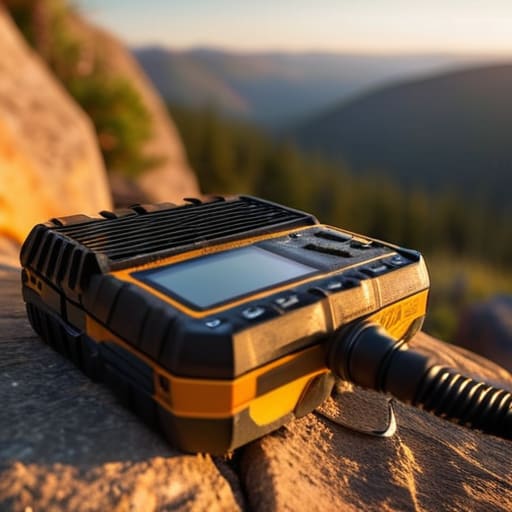
Most people pull a handheld out of the box, hit the transmit button, and wonder why they’re only reaching the guy in the next room. If you’re stuck in a cycle of static, stop messing with the volume and look at your squelch and power settings. I’ve spent enough time on ridge lines to know that “High Power” isn’t a magic wand; if your battery is sagging or your vhf antenna setup is a flimsy rubber duck, you’re just turning your radio into a very expensive space heater. Set your squelch just high enough to kill the floor noise, but not so tight that you’re clipping the start of your transmissions.
When it comes to handheld transceiver settings, the real game-changer is understanding your offset. If you’re moving between repeater vs simplex operation, you need to be intentional. Don’t just blindly blast on a repeater frequency; verify your tones and offsets first. I once spent twenty minutes troubleshooting a “dead” radio only to realize I hadn’t even engaged the CTCSS tone required by the local repeater. It wasn’t a propagation issue; it was a settings issue. Check your offsets, verify your tones, and stop assuming the radio is broken just because the settings are wrong.
Stop Aiming and Start Measuring: 5 Ways to Actually Get Through
- Get your antenna off the ground. I don’t care if you’re using a handheld or a mobile rig; if that antenna is sitting on a tabletop or tucked behind a metal desk, you’re fighting physics you can’t win. I’ve measured the drop in signal strength when moving a dipole from three feet to ten feet up, and it’s the difference between a clear signal and nothing but static. Height is your best friend on 2m.
- Check your SWR before you get comfortable. I know, everyone tells you to do it, but don’t just look at the number on a cheap meter and walk away. If you’re using a cheap Baofeng and your SWR is sitting at 2.5:1 because you’re using a crappy, unshielded coax, you’re just turning your radio into a very expensive space heater. Use decent RG-58 or better, and actually verify the match at the antenna end, not just at the rig.
- Watch your squelch settings like a hawk. Most people set their squelch too low because they want to hear everything, but then they spend half their time listening to atmospheric noise and local interference. I’ve found that setting it just one notch above the noise floor makes a massive difference in how much mental energy you waste filtering out the junk.
- Use a real repeater list, not just the ones in your manual. The default frequencies programmed into most HTs are often useless for your actual location. Spend twenty minutes with an online database or a local repeater finder to see what’s actually active in your area. There’s no point in cranking your power if you’re transmitting into a dead zone.
- Learn to read the environment. Sometimes you’ll be sitting in your backyard with a perfect antenna and get nothing, then move fifty feet toward a treeline or a specific building and suddenly the signal clears up. It isn’t magic; it’s multipath propagation and local terrain. If you aren’t paying attention to how your physical surroundings affect the signal, you’re just guessing.
The Bottom Line for 2m Success
Stop ignoring your antenna height; if you’re operating a handheld with a rubber duck antenna sitting on a desk, you aren’t “operating,” you’re just making noise. Get that antenna at least six feet off the ground—ideally higher—or you’ll spend your whole session fighting local reflections instead of reaching distant stations.
Dial in your squelch and mic gain properly before you start calling CQ. If your audio is clipping because your gain is cranked to the max, you’re actually making it harder for the receiving station to decode your voice, no matter how loud you think you’re being.
Understand that 2m is a game of physics, not just settings. A perfectly tuned rig won’t save you if you’re stuck in a valley or facing a massive concrete obstruction, so learn to read your signal strength and adjust your position rather than just clicking the PTT harder.
The Height Reality Check
Everyone talks about the antenna design, but if you’re running a dual-band handheld from the bottom of a garden shed, your SWR reading is the least of your problems. You can have the most expensive repeater in the world, but if your antenna is sitting three feet off the ground, you aren’t communicating—you’re just heating up the dirt. Get it up high, get it away from the house, and stop blaming the hardware for your lack of elevation.
Wren Castellano
Stop Tinkering and Start Listening
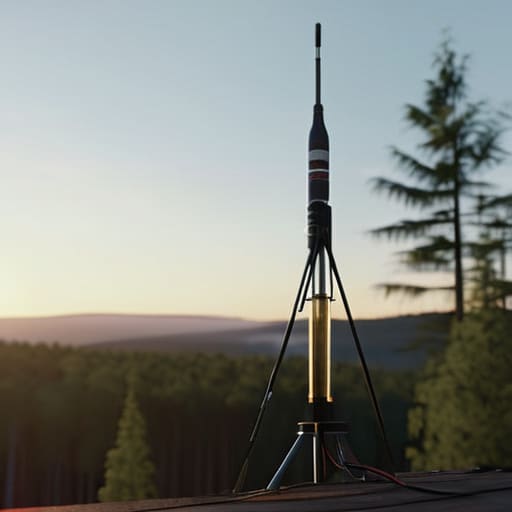
At the end of the day, successful 2m operation isn’t about having the most expensive Yaesu or Icom rig in the local repeater group. It’s about the fundamentals: getting your antenna high enough to clear the local clutter—and I mean actually high, not just sitting on a tripod in your backyard—and making sure your audio isn’t clipping the receiver into oblivion. We’ve talked about why your modulation matters and how those tiny settings in your handheld menu can be the difference between being heard and being static. If you take nothing else away, remember that physics doesn’t care about your budget; it only cares about your height above ground and the clarity of your signal.
There is a specific kind of magic that happens when you finally dial in your settings, clear the local interference, and hear a voice come through the noise from twenty miles away. It’s a connection that feels earned because you didn’t just press a button; you understood the machine. Don’t let the complexity of the gear intimidate you into staying silent. Get out there, get your antenna up, and start making contacts. The airwaves are waiting, and honestly, the best way to learn is to just start transmitting.
Frequently Asked Questions
I’ve got a decent repeater in range, but why does my signal seem to drop out completely whenever I move just a few feet into my backyard?
It sounds like you’ve stumbled into a null, and it’s likely not your radio’s fault. If you’re moving just a few feet and losing everything, you’re probably sitting in a multipath interference pattern—essentially, your signal is bouncing off a neighbor’s siding or a tree and arriving at your antenna out of phase, cancelling itself out. Try getting that antenna at least ten feet higher; even a small change in elevation can break those destructive interference patterns.
Is it actually worth spending the extra money on a high-gain mobile antenna, or am I just paying for a better brand name?
Look, if you’re buying a “high-gain” antenna just because the box has a fancy logo, you’re probably being fleeced. Gain isn’t magic; it’s just a trade-off. A high-gain mobile whip narrows your pattern, which is great for hitting a repeater on the horizon, but it’ll make your signal drop like a stone if you’re working someone in a valley or a different direction. Measure the real-world coverage, not the marketing specs. If you can’t mount it at least 3 feet above the beltline, that extra gain is just wasted money.
Should I be worried about the SWR on my handheld when I'm using a cheap aftermarket antenna, or is that just something people repeat to sell more tuners?
Look, I’m not going to tell you to go out and buy a $50 tuner for a $30 Baofeng. That’s a waste of money. But don’t ignore the SWR just because it’s “cheap.” If you’re seeing a 3:1 ratio because that aftermarket whip is poorly matched, you aren’t just losing signal—you’re turning that wasted energy into heat right against the radio’s finals. If it’s under 2:1, you’re probably fine. If it’s higher, get a better antenna.
