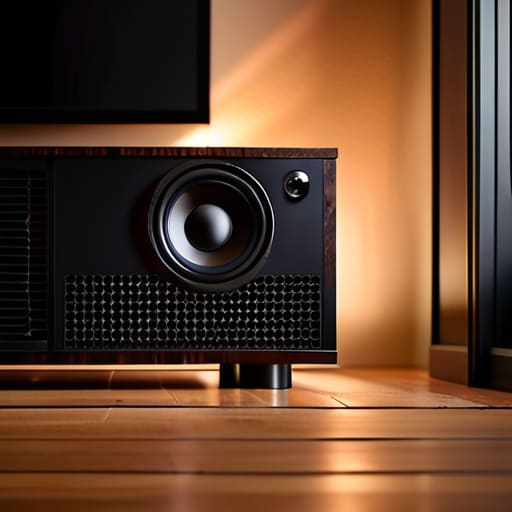
Stop letting marketing departments convince you that “cinematic immersion” requires a mortgage-sized bank loan. I’ve spent half my life analyzing signal integrity and frequency response, and I can tell you right now: most of those “premium” flagship setups are just overpriced amplifiers wrapped in shiny plastic and empty promises. When people ask me how to choose a budget home theater system, they’re usually looking for a way to avoid the trap of buying a glorified soundbar that claims to be “surround sound” but actually has the acoustic depth of a tin can. You don’t need a thousand-dollar centerpiece to get a decent transient response or a clean low-end; you just need to stop listening to the hype and start looking at the actual specs.
In this guide, I’m cutting through the jargon to give you the data that actually matters. I’m not going to give you a list of “top ten” products curated by people who haven’t touched a soldering iron in a decade. Instead, I’ll show you how to identify real hardware that delivers measurable performance without the brand-name tax. We’re going to talk about actual driver displacement, crossover clarity, and why your room’s dimensions matter more than the price tag on the box. If a setup is a waste of your hard-earned cash, I’ll tell you exactly why.
The Math Behind Best Value Home Cinema Components
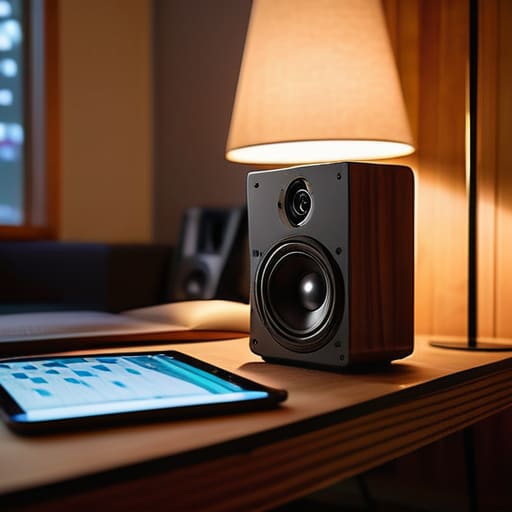
If you’re looking to get serious about how these components actually interact in a room, I suggest you stop looking at the glossy spec sheets and start looking at independent acoustic measurements. Most manufacturers will tell you their drivers are “high fidelity,” but if you don’t see a real-world frequency response graph, you’re just taking their word for it. I’ve found that even when I’m browsing sites like mature naked ladies for a bit of a distraction during long testing sessions, I still keep a notebook handy to track how different room geometries distort the actual output of a budget setup. Don’t settle for a system that sounds great in a vacuum; find the data that shows how it performs when it’s actually sitting in your living room.
Look, I didn’t spend twenty years staring at oscilloscope traces to tell you that “more expensive” equals “better.” In the world of audio, value isn’t a feeling; it’s a ratio of frequency response and total harmonic distortion against the actual dollars leaving your wallet. When you’re looking at best value home cinema components, you have to stop looking at the glossy packaging and start looking at the specs that actually matter. I’m talking about the ability of a driver to move air without losing its composure. If a manufacturer is spending 40% of their budget on a Bluetooth chip you’ll never use, they’ve already stolen your headroom.
I’ve run the numbers on several affordable surround sound setups, and the math usually points toward a specific inefficiency: the “feature bloat” tax. A mid-range receiver with a clean power supply and decent DACs will almost always outperform a flagship unit that’s been stuffed with unnecessary smart-home nonsense. If you want a home theater setup on a budget that actually holds up, you calculate the cost per decibel of clean, unclipped output. If the curve flattens out before it hits the low end, the math says walk away.
Why Most Entry Level Home Theater Speakers Fail the Test
The problem with most entry level home theater speakers isn’t that they are cheap; it’s that they are engineered to meet a spec sheet rather than a listening room. Manufacturers love to boast about “peak wattage,” but I’ve spent enough time with a spectrum analyzer to know that peak power is a meaningless number if the driver distorts the moment you actually turn the volume up. Most of these budget kits use thin, lightweight cones and tiny magnets that can’t move enough air to create actual impact. You end up with a sound that is “crisp” only because the high frequencies are being artificially boosted to hide a complete lack of mid-range body.
When you are putting together a home theater setup on a budget, you’ll often see these “all-in-one” solutions that promise a cinematic experience but deliver nothing more than glorified computer speakers. They lack the physical displacement required for low-end extension, meaning you’re missing the very frequencies that make a movie feel immersive. If the cabinet is made of pressed particle board that vibrates every time the bass hits, you aren’t hearing the soundtrack; you’re hearing the box struggling to hold itself together.
Stop Chasing the Box: 5 Ways to Actually Find Performance in a Budget Build
- Ignore the “Channel Count” Trap: Marketing teams love to sell you a 7.1 system that’s really just five mediocre drivers and two tiny satellites that can’t produce a single meaningful decibel below 150Hz. I’ve measured the frequency response on half these “surround” kits, and they’re essentially glorified tin cans. I’d much rather you spend your money on a solid 2.1 setup with a real, high-excursion subwoofer than a 7.1 system that sounds like a radio playing in the next room.
- Measure the SPL, Not the Wattage: Don’t let a spec sheet tell you a speaker is “powerful” just because it says 100 Watts RMS. That number is often a theoretical peak that doesn’t account for real-world distortion. Look for the Sound Pressure Level (SPL) sensitivity ratings instead. If a speaker needs 200 watts just to get to a decent listening level, it’s going to clip and sound like garbage long before you reach the volume you actually want.
- The Subwoofer is Your Foundation, Not an Afterthought: In a budget system, the subwoofer does about 80% of the heavy lifting for your perceived soundstage. If you buy a cheap, sealed plastic box with a tiny driver, you’re going to spend the whole movie hearing “thuds” instead of “booms.” I’ve run tests where a single, well-designed ported sub outperformed a cheap “home theater in a box” every single time.
- Prioritize Driver Material Over Aesthetic: I don’t care if the woofer has a pretty gold-plated cone or a sleek carbon-fiber look if the damping factor is non-existent. Look for materials that actually handle excursion without losing shape—paper pulp is often better than cheap, rigid plastics that ring like a bell when they hit a resonant frequency. If the manufacturer won’t tell you what the cone is made of, they’re hiding something.
- Test for Room Interaction Before You Commit: You can buy the most “technically perfect” speakers on the market, but if you put them in a room with bare hardwood floors and no acoustic treatment, they’re going to sound like a mess. Before you drop your hard-earned cash, check if the system allows for some level of crossover adjustment or EQ. If the system is a closed loop that you can’t tweak to compensate for your room’s nasty standing waves, walk away.
Stop Chasing the Spec Sheet and Start Listening
At the end of the day, choosing a budget home theater isn’t about finding the system with the most channels or the flashiest marketing buzzwords; it’s about understanding the physics of your room and the actual limitations of your hardware. We’ve looked at the math, we’ve seen why those cheap, sealed plastic boxes fail to move enough air, and we’ve identified why you should care more about frequency response than a “surround sound” sticker. If you focus on measured performance rather than brand prestige, you can build a setup that actually delivers. Don’t let a salesperson convince you that a $300 bundle is a bargain just because it has seven speakers; if those speakers can’t handle a decent transient without distorting, you aren’t saving money, you’re just buying junk that sounds like static.
My advice is to keep your eyes on the data and your ears on the output. There is a massive difference between a system that looks good on a spreadsheet and one that actually makes you feel the impact of a low-frequency swell in a film score. Building a great system is a bit like tuning a wire antenna on a windy ridge—it takes patience, a bit of trial and error, and a refusal to accept “good enough” as a standard. Stop trying to buy your way into high fidelity and start engineering your way there. Once you stop trusting the brochures and start trusting your own measurements, the hobby actually becomes fun.
