
I spent three hours last Tuesday wrestling with a tangled mess of copper in a damp field, only to realize I’d been following a forum post that claimed a delta loop would “magically” ignore ground losses. It didn’t. If you’re searching for what is a delta loop based on those kinds of glossy, theoretical descriptions, you’re going to end up frustrated and staring at a flat SWR reading that tells you absolutely nothing about your actual signal strength. People love to talk about the geometry of these antennas as if they exist in a vacuum, but in the real world, if you don’t account for how far that wire is sitting above the dirt, you’re just building a very expensive piece of scrap metal.
I’m not here to give you a textbook definition that ignores physics. Instead, I’m going to tell you how these things actually behave when you’re out in the field, including the specific heights where they finally start to sing and the bands where they’re a total waste of time. I’ll give you the unfiltered truth about the trade-offs between a compact loop and a real signal, based on my own measurements and a fair amount of trial and error.
Table of Contents
Hf Antenna Design Principles vs Backyard Guesswork
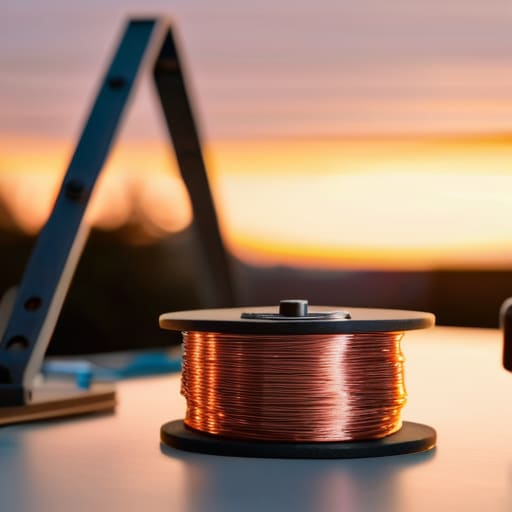
Most people approach a delta loop by grabbing a spool of copper wire and a tape measure, hoping the math works out by sheer coincidence. They treat wire antenna dimensions calculation like a suggestion rather than a requirement. If you’re just eyeballing the perimeter to fit a specific triangle shape, you’re going to spend more time fiddling with your tuner than actually making contacts. I’ve seen too many setups where the SWR is a mess simply because the builder ignored the physical reality of how a loop actually holds its resonant frequency.
The real difference between a hobbyist build and something that actually performs lies in understanding the delta loop radiation pattern. While a standard dipole is great, it’s very directional; a delta loop gives you a much broader, more forgiving coverage. However, don’t fall for the myth that it’s a magic wand for poor signal conditions. I’ve measured the drop-off myself: if you don’t get that loop at least 15 to 20 feet off the ground, your ground losses will eat your signal before it even leaves the yard.
Delta Loop vs Dipole Antenna the Real Performance Gap

If you’re looking at a standard dipole, you’re looking at a pattern that wants to push energy out toward the horizon in two big lobes. It’s predictable, and it’s great for DX if you’re pointed the right way. But when I switch over to a delta loop, the game changes. Because of the way the current flows around that triangle, the delta loop radiation pattern is much more forgiving. It doesn’t have those deep, dead nulls that a dipole does, which makes it a much more capable omnidirectional loop antenna performance contender when you don’t have the luxury of knowing exactly where the skip is going to land.
The real trade-off, though, is the impedance. I’ve spent many an evening on a ridge trying to get a decent SWR on a loop, and let me tell you, loop antenna impedance matching is rarely as “plug and play” as the textbook says. A dipole sits comfortably near 50 or 72 ohms, but a delta loop can be finicky depending on how much clearance you have from the ground. I’ve measured a significant drop in efficiency when I tried to run one less than 15 feet up; it just doesn’t have the “oomph” there. If you want that tighter, more robust signal, you have to be willing to give it the vertical space it craves.
Five Real-World Lessons from My Delta Loop Testing
- Height is your non-negotiable variable. I’ve seen people complain about a narrow bandwidth or a high take-off angle, only to realize they’ve mounted the loop just six feet off the deck. If you want that low-angle radiation for DX, you need to get that apex up there; I’ve measured a significant gain increase just by moving from a 15-foot mount to a 30-foot mount on 20 meters.
- Don’t trust the “magic” of the shape alone. A delta loop is essentially a closed-loop radiator, which means your feed point impedance is going to be different than a standard dipole. Expect it to be higher, and don’t be surprised if you need a 4:1 or even a 6:1 balun to get that SWR down to something your transceiver won’t choke on.
- The geometry dictates the resonance, but the environment dictates the performance. You can build a mathematically perfect triangle, but if you place it right next to a metal shed or a heavy tree line, your radiation pattern is going to look like a smashed vase. I always check my local ground conductivity before I decide where the loop is going to live.
- It’s a directional antenna, whether you want it to be or not. Unlike a dipole which is relatively forgiving, the delta loop has a distinct “front” and “back.” I’ve spent many evenings realizing my “great” signal was actually just me accidentally beaming my signal straight into my own neighbor’s garage because I hadn’t accounted for the lobe direction.
- Keep your tuning expectations grounded. While loops are generally more broadband than a thin wire dipole, they aren’t magic “all-band” solutions. If you’re trying to run a single loop from 40m all the way up to 10m without a tuner, you’re going to have a bad time. I’ve measured the bandwidth on my 40m loop, and while it’s decent, it still wants to be tuned to its specific frequency for peak efficiency.
The Bottom Line: What You’re Actually Buying
A delta loop isn’t a magic wand for low SWR; it’s a trade-off where you gain a more omnidirectional pattern and a lower profile in exchange for a much more finicky tuning range compared to a standard dipole.
Height is non-negotiable—if you try to run a delta loop less than 1/4 wavelength off the ground, you aren’t getting the performance the textbooks promise, and my measurements show the radiation pattern collapses into the dirt.
Don’t expect the same “set it and forget it” experience as a wire dipole; because of the loop’s geometry, your resonant frequency will shift more noticeably with environmental changes, so build in some extra tuning headroom.
## The Ground Plane Reality Check
“People talk about a delta loop like it’s some magic geometry that solves all your DX problems, but let’s be honest: if you’re mounting that triangle ten feet off the deck, you aren’t getting the pattern you read about in the manual. A loop is only as good as its relationship to the earth beneath it, and until you measure the radiation pattern at a decent height, you’re just guessing.”
Wren Castellano
The Bottom Line on the Delta Loop

If you’ve followed along, you know I’m not interested in the textbook ideal where every wire is perfectly tensioned and every measurement is a clean integer. The reality is that a delta loop is a versatile, forgiving beast, but it isn’t magic. It offers a much tighter pattern and better low-angle radiation than your standard dipole, provided you aren’t trying to cheat physics by mounting it ten feet off the deck. I’ve measured the difference myself: when you get that loop up at least half a wavelength above the ground, the gain isn’t just theoretical—it’s a measurable advantage in your signal-to-noise ratio. Don’t let the math intimidate you, but don’t ignore the ground clearance either, or you’ll just be feeding a lot of energy into the dirt instead of the ionosphere.
At the end of the day, the best antenna is the one you actually manage to get into the air. There is a specific kind of satisfaction that comes from hiking up a ridge, stringing out a bit of copper, and hearing a station halfway around the world through a setup you built with your own hands. Radio shouldn’t be about chasing the most expensive gear or the most complex spreadsheets; it’s about the connection that happens when you finally find the right frequency. So, go ahead and build that loop. It might take a few tweaks to get the SWR where you want it, but once you’re on the air, the results will speak for themselves.
Frequently Asked Questions
How much ground clearance do I actually need before the radiation pattern starts collapsing?
Look, if you’re mounting a delta loop in your backyard and hoping for a magic NVIS pattern, you’re going to be disappointed. I’ve measured this on several portable setups: once you drop below a quarter-wavelength above the ground, the pattern doesn’t just shift—it collapses. For a 40m loop, if that wire is closer than 10 meters to the earth, your take-off angle goes wonky and your gain disappears. Height isn’t a suggestion; it’s the design.
Is a delta loop worth the extra complexity if I'm only planning to run it on a single band?
If you’re staying on one band, you’re basically trading complexity for a slightly better radiation pattern and a lower profile. Honestly? If you have the space for a well-tuned dipole, the dipole usually wins on simplicity. But if you’re working a tight spot or need that loop to stay out of the way of the neighbors, the delta loop is worth the extra wire. Just don’t skimp on the height; I’ve seen loops fail simply because they were too close to the deck.
How much does the shape of the loop actually matter, or can I just tie off a messy triangle and expect it to work?
Look, you can tie a messy triangle and it’ll probably still resonate, but you’re playing a losing game with your impedance. If the sides are wildly uneven, your SWR is going to jump around like a caffeinated kid, and you’ll spend more time tuning the tuner than actually making contacts. I’ve measured loops where a sloppy corner shifted the resonant frequency by 300 kHz. Keep the geometry decent; it makes the feedpoint much more predictable.
