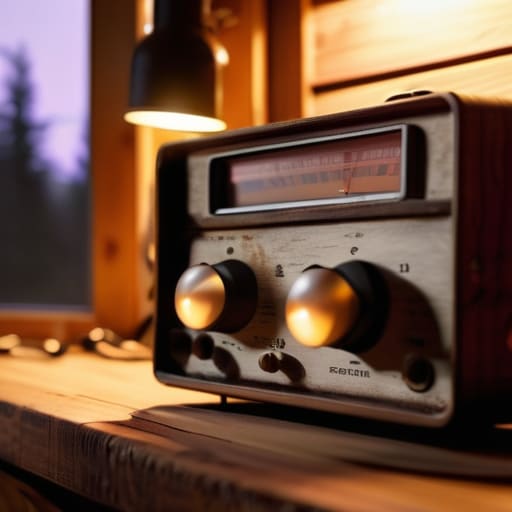
I remember sitting on a ridge in the Blue Ridge Mountains about five years ago, nursing a lukewarm thermos of coffee and staring at a tiny, five-watt transceiver that looked more like a toy than a serious piece of kit. I had a simple wire antenna suspended about six meters above the ground, and despite the lack of raw power, I was pulling in stations from halfway across the world that my high-power rigs couldn’t touch on a quiet night. People often ask me, “what is qrp operating,” as if it’s some sacred, mystical discipline reserved for monks or people who enjoy suffering. It isn’t. It’s just the art of making every single milliwatt count by actually understanding your signal path instead of just blasting noise into the ether.
In this post, I’m stripping away the romanticism and the gear-head hype to give you the actual mechanics of low-power work. I won’t give you a sales pitch for a thousand-dollar portable rig; instead, I’ll tell you what actually works when your noise floor is high and your antenna is suboptimal. We are going to look at the real numbers—from antenna height to efficiency—so you can stop guessing and start making contacts.
Table of Contents
Measuring Low Power Signal Propagation vs Pure Luck
I’ve spent enough nights on ridge lines to know the difference between a solid link and a fluke. When you’re working with limited juice, you can’t just rely on the ionosphere being in a good mood. I’ve had sessions where I thought I’d mastered low power signal propagation because I hit three continents in an hour, only to find out the gray line was doing all the heavy lifting for me. If you aren’t tracking your signal-to-noise ratio and watching how the band shifts, you aren’t operating; you’re just gambling.
To move past the luck factor, you have to get disciplined about your setup. In my experience, efficient antenna design for QRP is what separates a successful contact from a wasted battery charge. I don’t care how many fancy QRP transceiver features a manufacturer promises; if your antenna is sitting two feet off the ground in a field of tall grass, you’re fighting a losing battle against your own ground losses. I always aim for at least 10 meters of elevation when I’m out portable, because that’s where I actually start seeing the numbers move.
Essential Qrp Transceiver Features That Actually Matter
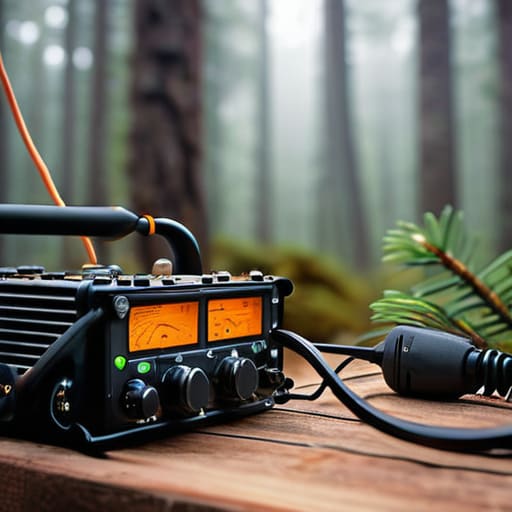
When you’re looking at a spec sheet for a new rig, don’t get blinded by the shiny color screen or the sheer number of digital modes it supports. If you’re serious about portable HF radio operation, the first thing I look at is the power consumption and the efficiency of the final stage. I don’t care if it claims to be “low power” if it draws fifty amps from your battery just to put out five watts. You want a transceiver that treats your battery life like a finite resource, not a suggestion.
Second, pay attention to the receiver sensitivity and the noise floor. In QRP, you aren’t going to overpower the local interference; you have to dance around it. A rig with a decent dynamic range and decent filtering means you can actually pull a weak signal out of the mud when the band is crowded. I’ve sat on ridges with rigs that had great transmit specs but terrible receivers, and let me tell you, you’ll spend more time staring at a blank waterfall than actually making contacts. If the receiver can’t handle the local noise, all those QRP transceiver features on the box are just marketing fluff.
Five Things I’ve Learned the Hard Way About Going Low Power
- Watch your noise floor like a hawk. When you’re running 5 watts instead of 100, you don’t have the luxury of shouting over the local electrical noise. If your setup is sitting next to a cheap switching power supply or a poorly shielded LED driver, you aren’t doing QRP; you’re just listening to your own interference.
- Antenna height is your best friend, or your worst enemy. I’ve seen a simple wire dipole at 10 meters perform better for QRP than a fancy vertical at 2 meters, simply because the ground plane wasn’t swallowing the signal. If you can’t get your antenna up high, you’re going to have to work twice as hard for half the contacts.
- Don’t fall for the “compact” marketing trap. A radio might be small enough to fit in your pocket, but if the receiver front-end is garbage, it’s useless for QRP. You need high dynamic range so the signal you’re looking for doesn’t get buried by the noise of a nearby station.
- Learn the art of the “short and sweet” QSO. QRP isn’t the time for a twenty-minute chat about your weekend. You need to be efficient—get the signal report, confirm the exchange, and move on. If you linger too long, you’re just wasting the precious signal-to-noise ratio you worked so hard to find.
- Accept that the ionosphere is the boss. I’ve had days where a 1-watt signal went halfway around the world because the MUF was sitting perfectly, and I’ve had days where 50 watts couldn’t punch through a local fade. If the bands are dead, no amount of expensive gear is going to save you; sometimes you just have to pack up and wait for a better mood.
The Bottom Line on Going Low Power
QRP isn’t a magic trick; it’s a game of margins where your antenna height and your noise floor matter infinitely more than how many watts you’re pushing into the feedline.
Don’t get blinded by shiny features; if a transceiver doesn’t have a clean low-power mode and a decent receiver for your local noise environment, it’s just an expensive paperweight for the field.
Success in QRP is half physics and half timing—you can have the most efficient dipole in the world, but if the ionosphere isn’t cooperating, you’re just wasting battery life.
The QRP Reality Check
“People treat QRP like it’s some sort of spiritual discipline, but let’s be honest: it’s actually a game of math and noise floors. You aren’t just ‘whispering’ across the bands; you are fighting to stay above the local interference while trying to find a patch of ionosphere that isn’t currently behaving like a brick wall.”
Wren Castellano
The Bottom Line on QRP
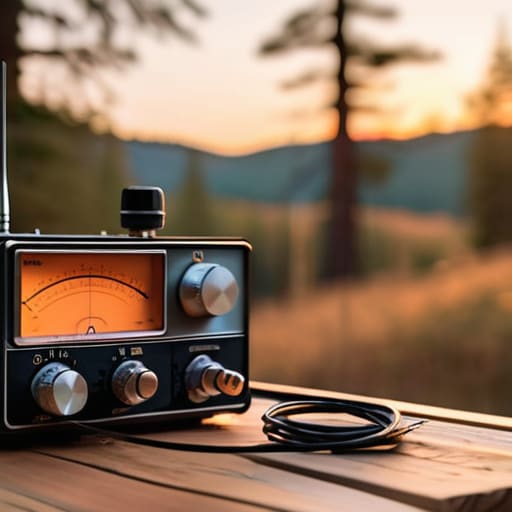
At the end of the day, QRP isn’t about buying the most expensive, miniaturized rig on the market or pretending you can work the world with a handheld and a prayer. It’s a discipline of efficiency. We’ve talked about why your noise floor is more important than your wattage, why you need a transceiver that actually handles its filters well, and why a well-placed dipole at ten meters is worth more than a hundred watts of wasted energy. If you focus on maximizing your signal-to-noise ratio rather than just chasing a higher number on your power meter, you’ll stop shouting into the void and start actually making contacts. Remember, a successful QRP session is won in the setup and the antenna placement, not in the spec sheet of your radio.
There is a specific kind of satisfaction that comes from hearing a faint, weak-signal station break through the static on a setup that fits in a backpack. It’s a reminder that radio is still a physical, measurable science that rewards patience and precision over raw brute force. When you finally pull in that DX contact using nothing but a few watts and a bit of clever engineering, you aren’t just lucky—you’ve mastered the medium. So, get out of the shack, find a hill with decent ground conductivity, and see what you can do. The ionosphere might be temperamental, but your technique shouldn’t be.
Frequently Asked Questions
If I'm working QRP, how much does my antenna's height above ground actually impact my ability to make contacts compared to just cranking up the wattage?
Look, if you’re thinking that doubling your wattage is going to compensate for a wire dragged through the weeds, you’re wasting your time. I’ve seen 5 watts from a dipole at 15 meters up outperform 50 watts from something sitting two feet off the ground every single time. Height isn’t just a detail; it’s your primary tool for getting your signal out of the local noise floor and into the sky.
Is it worth investing in a dedicated high-performance tuner for low-power setups, or am I better off just building a resonant wire antenna?
Look, if you’re building a dedicated wire antenna, do the work to make it resonant. A tuner is just a compromise in a box; it’ll swallow your precious few watts in heat and loss, and in a QRP setup, every milliwatt counts. I’ve measured the efficiency drop on cheap tuners, and it’s not pretty. Build the wire right for the band, keep it at least 10 meters up, and save your money for better coax.
How do I figure out if my local noise floor is going to kill my QRP attempts before I even bother hiking up to a site?
Don’t guess; grab your SDR and a calibrated loop antenna. Set it up at your house, away from the fridge and the LED dimmers, and look at the noise floor across the bands you actually intend to use. If you’re seeing a floor sitting at -70 dBm on 40 meters in your backyard, you’re going to have a hard time with QRP unless you find a spot significantly quieter. If the noise is baked into your local environment, no amount of hiking will save you unless you’re looking for a massive drop in the local RF smog.
