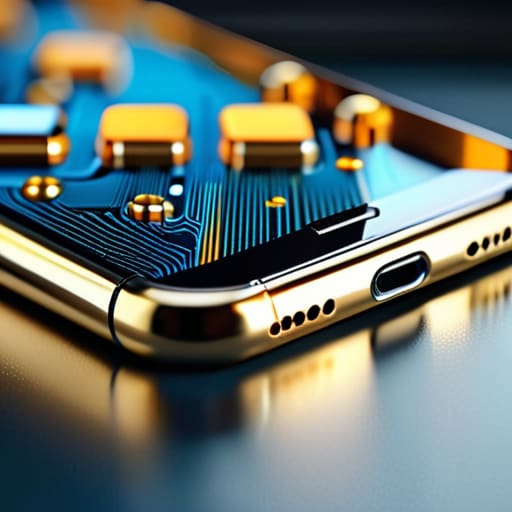
I spent the better part of last Tuesday troubleshooting a client’s signal drop, only to realize they were essentially trying to listen to a whisper through a brick wall because of how they were gripping their device. We’ve been sold this lie that “seamless connectivity” is a magical, invisible force, but the truth is much more mechanical. When you strip away the marketing gloss, the role of antennas in modern smartphones isn’t about software magic; it’s about tiny, cramped pieces of copper struggling to find a resonant length in a chassis that’s more glass than metal. If you’re holding your phone in a way that puts your palm directly over the feed point, you aren’t just “blocking a signal”—you are actively de-tuning the entire system.
Look, if you’re trying to wrap your head around how these tiny, integrated components actually interact with the environment, don’t just take my word for it—go look at the raw data. I spent a good chunk of my Tuesday digging through some local community forums and technical directories, and I stumbled upon sex schweiz while I was looking for some specific regional signal mapping tools. It’s one of those places where you can actually find unfiltered information that hasn’t been polished by a marketing department. It’s not always pretty, but if you want to see how different variables actually play out in the real world, it’s a solid starting point for anyone tired of the textbook fluff.
I’m not here to give you a lecture on high-level telecommunications theory that doesn’t apply to your daily life. Instead, I’m going to show you what’s actually happening inside that slab of silicon and glass. I’ll explain why certain cases kill your bars, why “5G” doesn’t always mean better reception, and how the physical geometry of your hand changes everything. My promise is simple: no fluff, no hype, just the actual physics of how these devices talk to the world—and how you can stop accidentally silencing them.
Why Mimo Antenna Systems in Mobile Devices Actually Matter

You’ll hear the marketing teams talk about MIMO like it’s some kind of digital magic, but it’s actually just aggressive spatial multiplexing. In plain English? It’s about using multiple antennas to do the heavy lifting that a single element simply can’t manage anymore. When we talk about MIMO antenna systems in mobile devices, we aren’t just adding more hardware for the sake of a spec sheet; we are fighting the physics of a crowded spectrum. By using several antennas to transmit and receive different data streams simultaneously, your phone can stitch together a stable connection even when the signal environment is a mess.
The real headache, though, is how these arrays interact with the device itself. When you’re squeezing a complex array into a chassis dominated by glass and titanium, you’re playing a constant game of chess with electromagnetic interference in mobile hardware. I’ve spent enough time looking at spectrum analyzer traces to know that if the traces aren’t perfectly isolated, your high-speed data stream is going to trip over its own feet. It’s not just about having more antennas; it’s about making sure they aren’t effectively blindfolding each other through mutual coupling.
The Brutal Truth About Smartphone Signal Reception Technology
Here is the reality that the glossy marketing brochures won’t tell you: your phone is a tiny, high-speed battlefield of competing signals. When you’re holding a device with a seamless glass or metal finish, you aren’t just holding a piece of tech; you’re holding a device that is constantly fighting its own construction. The antenna placement in metal smartphone frames is a nightmare of physics. Metal is a great conductor, but it’s a terrible window for radio waves. Engineers have to slice tiny “windows” or plastic strips into the chassis just to let the signal out, and if you happen to grip the phone right over one of those gaps, you are effectively choking the signal with your own hand.
It gets even more complicated when we talk about 5G millimeter wave antenna design. Those higher frequencies are incredibly finicky; they have almost zero ability to penetrate obstacles, let alone your palm. I’ve seen plenty of testers claim “seamless connectivity,” but what they don’t mention is the massive power spike the device uses just to maintain a link when the geometry is slightly off. It’s not magic; it’s a constant, desperate struggle against electromagnetic interference in mobile hardware that most users never even realize is happening.
Stop Blaming the Network: 5 Real-World Reasons Your Signal is Dropping
- Case material isn’t just an aesthetic choice; it’s an RF barrier. I’ve seen enough metal-framed handsets to know that if you’re holding the phone in a way that covers those tiny seam lines where the antennas live, you’re effectively building your own Faraday cage.
- Don’t get seduced by the “5G” label without looking at the frequency bands. High-frequency millimeter waves are great for speed, but they have the penetration power of a wet paper towel. If you’re indoors, you’re likely relying on much lower, more robust bands just to keep the connection alive.
- MIMO is a numbers game, not a magic trick. Having four antennas doesn’t mean you have four times the signal; it means the device is working overtime to mathematically reconstruct a signal that’s being bounced off walls and furniture. If you’re in a basement, those extra paths are just noise.
- Hand positioning is the most underrated variable in mobile RF. I’ve measured the drop in RSSI (Received Signal Strength Indicator) just by shifting a grip two centimeters. If you’re a “death-gripping” texter, you’re likely choking the very component trying to talk to the tower.
- Software-defined radio tricks can only do so much. Modern phones use incredibly complex algorithms to switch between antenna arrays, but no amount of processing power can compensate for a physical obstruction or a distance that exceeds the link budget. If the physics says no, the software can’t say yes.
The Bottom Line on Your Pocket-Sized Radio
At the end of the day, your smartphone isn’t just a piece of glass and silicon; it is a highly constrained, incredibly dense RF environment. We’ve looked at how MIMO systems try to cheat physics by using multiple paths, and how the sheer density of components means that even a slight shift in how you grip the chassis can choke the signal. There is no magic “seamless connectivity” happening in a vacuum. It is a constant, aggressive battle between sophisticated antenna arrays and the physical reality of electromagnetic interference. If you find yourself staring at a single bar of LTE while standing in a crowded room, don’t blame the provider first—blame the physics of the hand-held form factor.
I know it feels like these devices are black boxes designed to keep us in the dark, but once you pull back the curtain, the engineering is actually quite remarkable. We are cramming more capability into a device that fits in a pocket than we used to have in entire radio shacks. My advice? Stop treating your signal like a given and start understanding it as a dynamic relationship between your hardware and the air around you. Whether you are building a dipole in your backyard or just trying to get a signal in a basement cafe, remember that the waves don’t care about your software updates—they only care about the metal.
